Buy the working enclosure before the frogs
Start with the parts that hold the environment together: secure enclosure, safe substrate, monitoring tools, water routine and ventilation. Put them together and run them before the frogs arrive. A fancy background cannot replace a habitat that you can measure and clean.[1][2]
Do not use a small frog as a reason to build a small plan. The animal feels every lapse in temperature, moisture and air. A complete, simple setup is much kinder than a beautiful partial one that needs another purchase before it can work properly.[1][3]
Monitoring and food are recurring needs
The ongoing list includes food cultures, temperature and humidity checks, cleaning materials and the small replacements that keep water and air systems working. Write that list before you decide. It shows what the habitat will ask from your time and budget after the novelty wears off.[1][2]
Keep some room for a piece of equipment that fails at an inconvenient time. A misting part, fan or monitor can turn a simple day into a care problem if you have no backup plan. That is why basic redundancy beats elaborate decoration.[1]
Let the display grow after care is solid
Leaves, wood and a planted look can make a frog enclosure wonderful to watch. Add them in a way that preserves airflow, access and a clear view of the frogs. The best display is one you can maintain without ripping it apart every time you clean.[3][2]
If the basic microclimate and food plan already stretch the budget, wait. An observation animal deserves a home that works on an ordinary week, not a plan held together by wishful upgrades.[1][3]
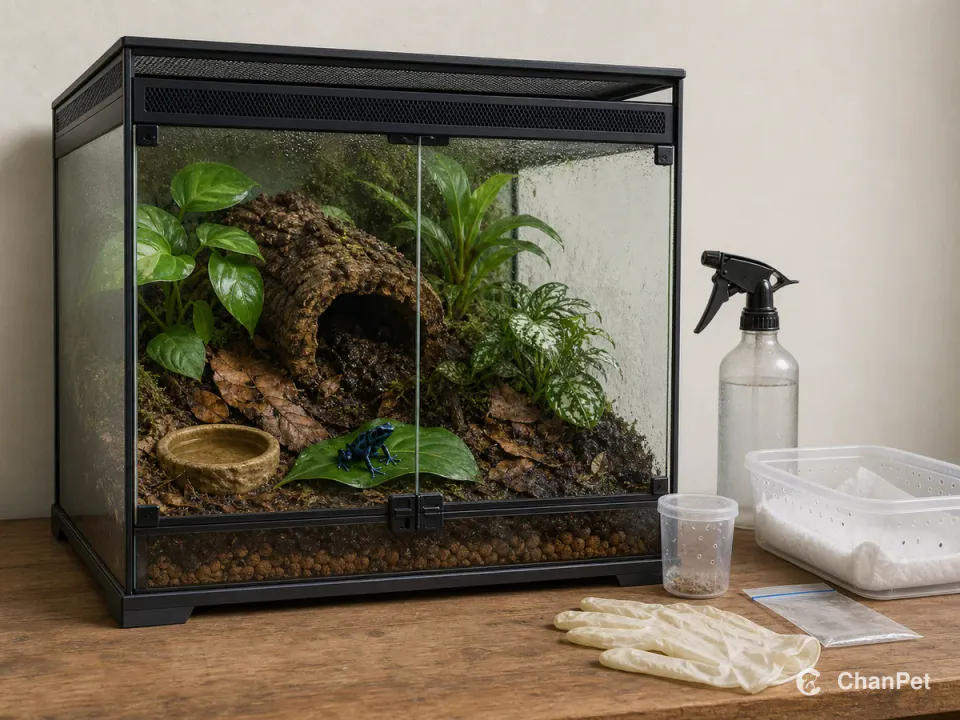
A limited budget first protects the closed ventilated enclosure, humid microclimate, and steady live food, with backup misting, transport, and exotic-veterinary preparation kept ready.[1][2][3]
The habitat is the essential purchase
Compare animal care needs around the essentials you can keep reliable, not the smallest first purchase.
A simple habitat still needs a full care plan
Common questions
Which purchases should come before dart frogs?
Can I spend less by skipping climate monitors?
Temperature and humidity are central to amphibian husbandry. Monitoring helps you know whether the habitat is holding the conditions the frogs depend on.[1]
Sources
Sources used in this article
- [1]Environment and Husbandry for AmphibiansMerck Veterinary Manual
- [2]Poison Dart FrogsBowling Green State University Herpetarium
- [3]Poison Dart FrogSacramento Zoo