Buy the vertical home as one system
Start with the enclosure that gives a giant day gecko usable height and secure routes. The species is arboreal, so the home needs more than floor space. Doors, ventilation, safe climbing structure, and access for cleaning all belong in the first decision.[1][2]
Put lighting and the tools that help you observe the habitat beside that first purchase. A lamp without a safe layout, a clear schedule, or a way to track the enclosure is only part of the job. Finish the working environment before buying visual extras.[1][2]
Make room for the repeat purchases
Giant day geckos eat arthropods, so the budget needs a regular insect-food routine. Containers, food handling, cleanup, and travel cover have a cost in time as well as money. These needs continue after the first excitement of setting up the enclosure.[1][2]
Set aside basic cleaning and hygiene supplies from the start. FDA guidance recommends keeping reptile-related supplies away from food areas and using dedicated tools. A separate care kit is a practical core expense, not an optional finishing touch.[3]
Wait on the parts that only change the look
A planted backdrop or elaborate display can come later. First make sure the gecko can climb, rest, feed, and be observed safely in a habitat that you can clean. A simple enclosure with complete care beats a beautiful one built around postponed essentials.[1][2]
Keep a small reserve for a broken item or an unexpected support need. That reserve protects the care plan when a light, closure, or routine needs attention at an inconvenient moment. If it leaves no room for that, delay the project.[2][3]
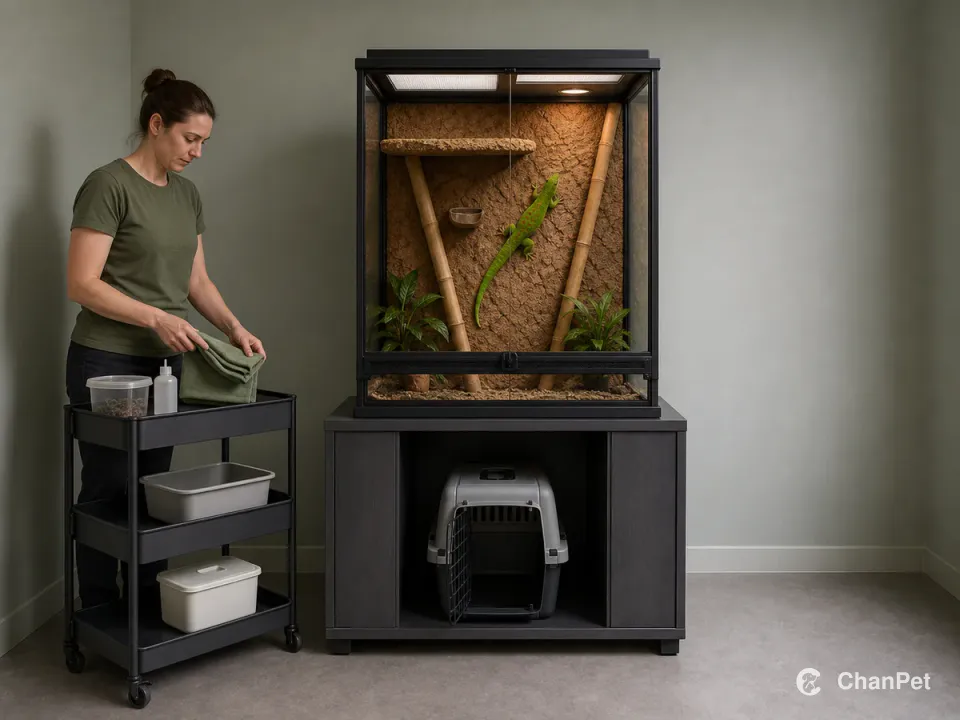
The budget first covers the tall habitat, light, feeder insects, hygiene, and a complete veterinary carrier.[1][2][3]
The care system comes before the showpiece
Compare animals around the essential habitat and ongoing care you can fully fund before bringing one home.
A smaller first bill can create a larger care problem
Common questions
Which day gecko purchases should come first?
Can I save money by using kitchen tools for day gecko care?
Keep reptile care tools and supplies away from food preparation. Dedicated items make hygiene easier to maintain and reduce household mix-ups.[3]
Sources
Sources used in this article
- [1]Madagascar giant day geckoSmithsonian's National Zoo and Conservation Biology Institute
- [2]Madagascar Giant Day GeckoSacramento Zoo
- [3]Salmonella, Feeder Rodents, and Pet Reptiles and AmphibiansU.S. Food and Drug Administration