Read the records before the price tag
Before you decide what the cat costs, ask what information comes with it. Request veterinary history and any available breed-relevant screening records. UC Davis includes Exotic Shorthair among the breeds appropriate for PKD1 testing, which makes a clear discussion about records part of a responsible start.[1]
The ECVO manual lists eye disorders known or presumed to be inherited in the breed. The record will not predict every future event, yet it gives your own veterinary team a starting point. Paying attention to that history is a wiser saving than skipping it.[2]
Give ordinary observation a place in the budget
Keep a simple note of appetite, litter habits, play and anything unusual around the eyes or face. A regular veterinary relationship gives that note somewhere useful to go. The point is to describe a real change clearly, rather than relying on a vague feeling that the cat seems different.[2][1]
At regular visits, ask the veterinary team to assess the cat's body condition and show you what they are checking. A plush coat and rounded outline can make photographs a poor guide. Hands-on assessment and a steady history are more useful for care decisions.[3]
Leave room for the visit you did not plan
Set aside room in the household plan for a veterinary concern that arrives between routine appointments. Eye discomfort, a change in appetite or a change in general condition deserve timely professional guidance. A reserve makes it easier to act while the question is still small.[2][1]
If money is tight, delay the items that only decorate the cat's corner. Keep food, litter, a carrier, regular care and the emergency reserve at the center. The cat benefits from reliable systems more than from a room styled around a particular breed look.[3][1]
Want a clearer view of your Exotic Shorthair's current body condition? Use our WSAVA international nine-point body check for ribs, waist, and abdomen, then discuss the observation with your veterinarian.[3]
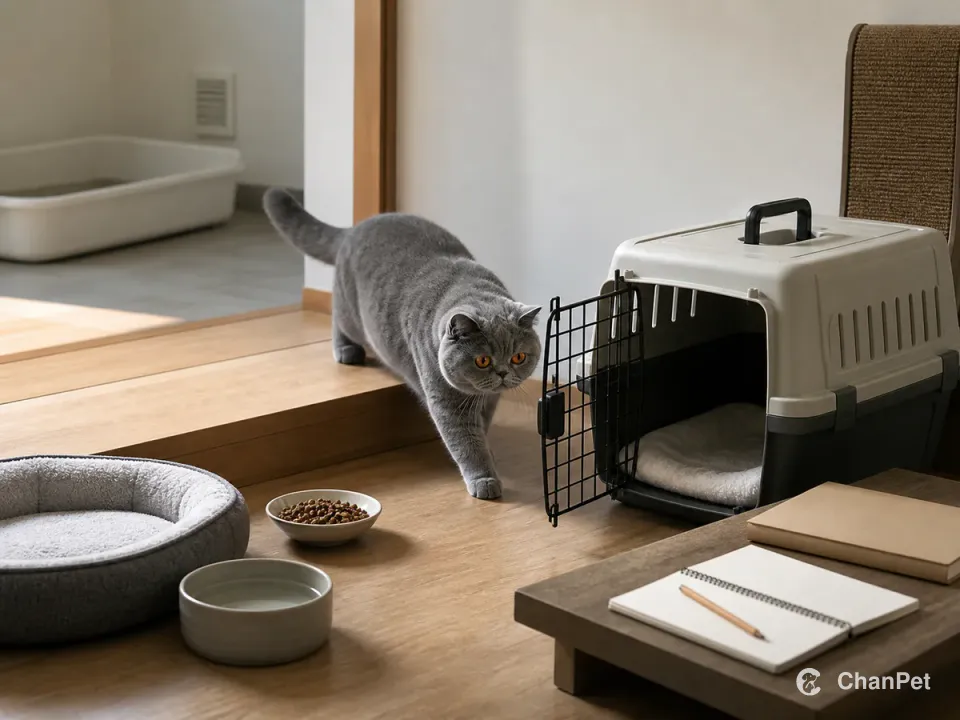
A durable carrier, organized health history, and dependable daily basics come first; decorative upgrades can wait.[2][1][3]
A careful budget protects the questions you may need to ask
Budget for clarity, not just for supplies
A good record, a known veterinary team and a small reserve make it easier to act when a change appears. Those supports are worth more than a low purchase price or a decorative accessory.[2][1][3]
Common questions
Why ask for PKD1 screening records?
UC Davis lists Exotic Shorthair among the Persian-derived breeds appropriate for PKD1 testing. Records help you begin an informed conversation with the breeder, rescue and veterinary team.[1]
Why can a rounded cat look hard to judge in photos?
A photo does not replace a veterinary body-condition assessment. Ask the veterinary team to show you how they assess the individual cat at regular visits.[3]
Sources
Sources used in this article
- [2]ECVO Manual: Breeds — Exotic ShorthairEuropean College of Veterinary Ophthalmologists
- [1]Polycystic Kidney Disease (PKD1)University of California, Davis Veterinary Genetics Laboratory
- [3]Body Condition Score: CatWorld Small Animal Veterinary Association