Spend the first money on a livable cage
Ventilation, easy cleaning, escape prevention and a solid floor are cage essentials. Merck also warns that wood absorbs urine and wire flooring can injure feet, which makes a temporary bargain box a poor long-term saving.[1]
Finish the cage with water, food, a hide and safe nesting material before you add design touches. Paper, cardboard and simple safe routes can create interest while you build the rest over time.[1][2]
Companionship is part of the starting budget
RSPCA recommends that rats live with other rats in stable same-sex groups. Budget for the group from the start rather than treating a companion as an optional future upgrade.[3]
Keeping one rat does not cut the responsibility in half. The cage, food, bedding and daily care remain, while the animal loses the ordinary company of another rat.[3][1]
Find small-mammal care before you need it
Pet rats need individual veterinary care. Merck explains that diagnosis and treatment for a pet rat in a household are different from managing a research colony as a group.[2]
Check which local clinic sees rats and keep a care reserve. Finding help before there is a problem gives you better options than searching for the cheapest answer during an urgent night.[2][1]
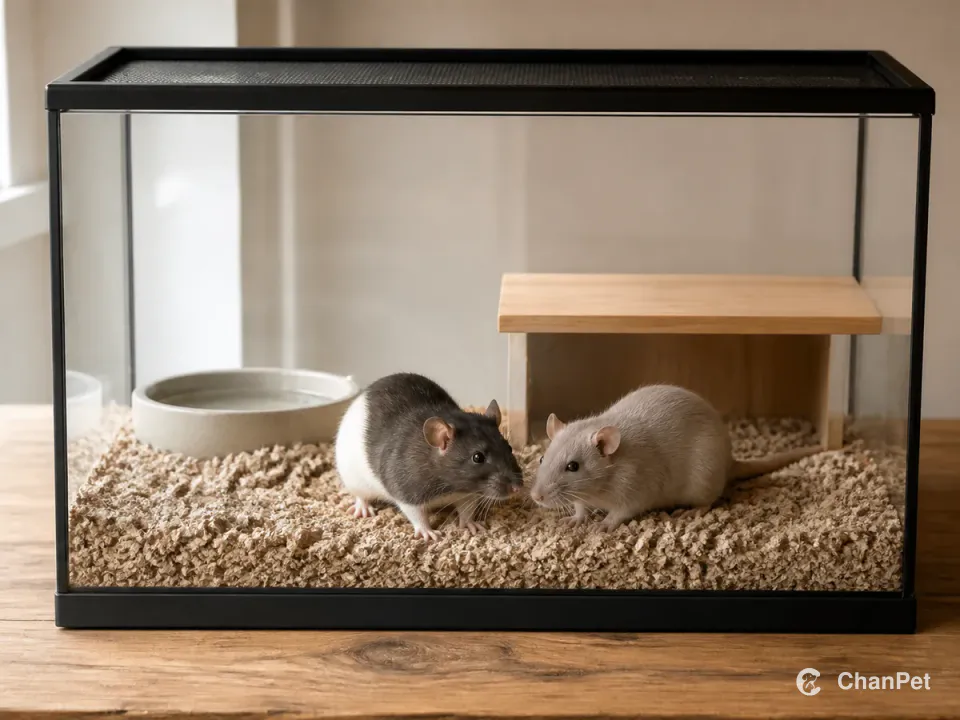
Companions and a secure home belong in the first setup; toys and decorative extras can build from there.[1][3]
A fit for a practical staged budget
Buy the things that hold a group together
Plan the money around the cage, companions, food, bedding and care reserve. Once those are ready, the fun additions can happen without weakening the animals' daily life.[1][2]
Common questions
Sources
Sources used in this article
- [1]Providing a Home for a RatMerck Veterinary Manual
- [2]Mice and Rats as PetsMerck Veterinary Manual
- [3]Housing rats in groupsRSPCA