Buy the safe home once
A cheap cage becomes expensive when it is too small, hard to clean or easy to escape. Ferrets need a secure place to rest, plus daily safe activity outside it. Merck and UC Davis both describe housing and supervised exercise as parts of ordinary care, not upgrades for later.[1][2]
Choose sturdy latches, washable sleeping areas and a room you can proof for play. You can add a tunnel or a second hammock later. Replacing an unsafe enclosure after the animal arrives turns a planned purchase into a rushed one.[1][2]
Food and health costs keep returning
A ferret's food, clean water, bedding and toilet supplies return every week. UC Davis advises a diet built for an obligate carnivore, while RSPCA also stresses fresh water and regular health care. These are the lines to protect when you make a monthly plan.[2][3]
Veterinary help belongs in the plan before there is a problem. Keep the contact details for a clinic that sees ferrets, and set aside a reserve that stays untouched during ordinary shopping. A new toy can wait. A sick animal cannot.[3][1]
Want to know what a ferret could cost in your own household? Use the cost calculator to separate setup, ongoing supplies and a veterinary reserve, then replace the estimate with local quotes.
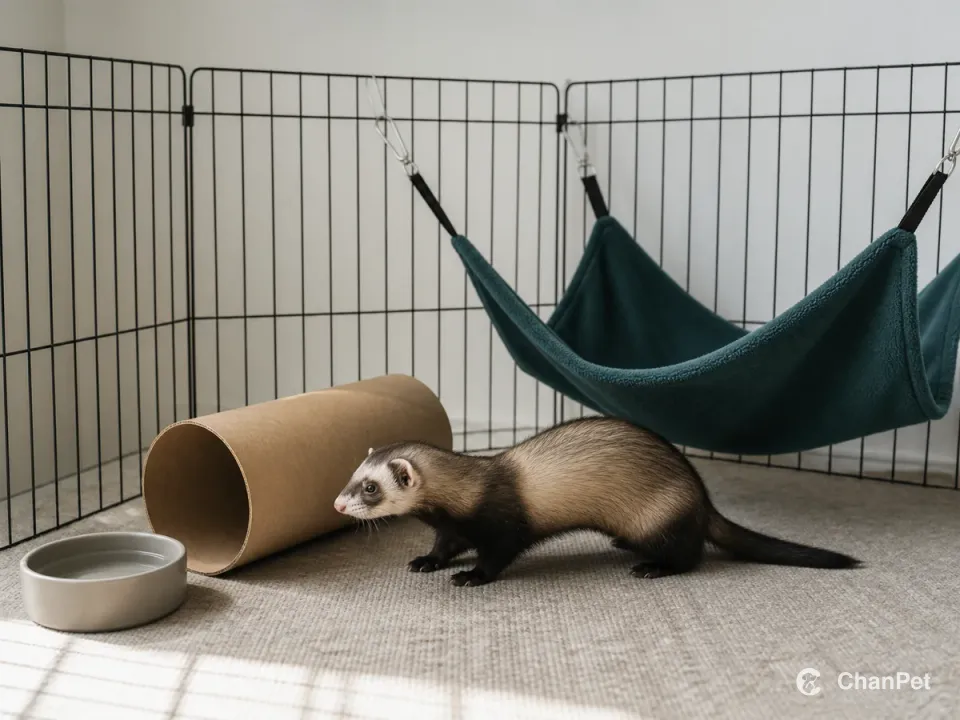
Set up durable basics for water, rest and exploration in the play area before adding anything extra.[1][2]
A pause is kinder than a stripped-down plan
The affordable choice is a plan that lasts
A ferret budget works when the dependable parts are already covered: a secure home, species-appropriate food, daily cleaning and a route to veterinary care. That leaves the fun extras in their proper place.[1][3]
Common questions
Sources
Sources used in this article
- [1]Management of FerretsMerck Veterinary Manual
- [2]Ferret CareUC Davis School of Veterinary Medicine
- [3]Caring For Your FerretsRSPCA