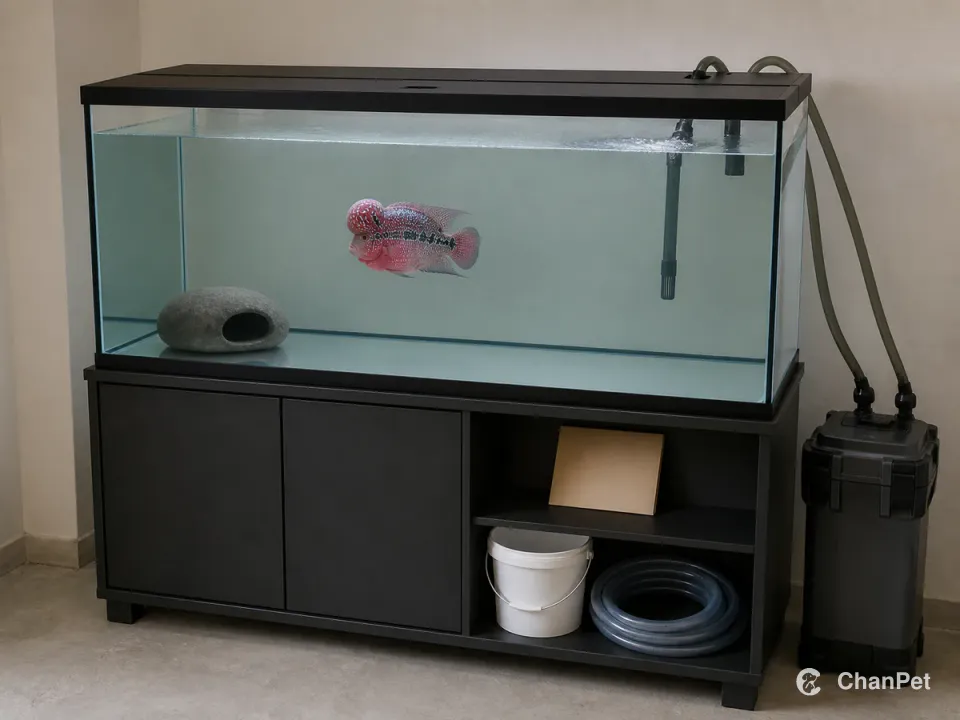
Budget-friendly care · 🐠 Fish

Can a Flowerhorn Cichlid fit a limited monthly budget?

Short answer: Flowerhorn Cichlid is a conditional fit for a tight budget — 3.9/5. It barely needs grooming, which really helps here. Below, the per-metric score, monthly cost and a checklist help you decide.

A limited budget can work only when survival-level setup comes before nice-to-have spending. Flowerhorn Cichlid scores 3.9/5 for budget fit.

Budget fit3.9/5Monthly cost plus required setup
Lowest monthly range$30–$80/moExcludes emergencies and premium purchase price
Budget pressure3/5Higher means a larger reserve
Do not cutSafety setupSurvival first, décor later
Get My Report100% Free • No sign-up
Open full profile
Category🐠 Fish
Lifespan8–12 yrs
Monthly cost$30–$80/month (China reference ¥150–¥400/month)
Care focusWater quality & filtration

A limited budget does not mean you care less about Flowerhorn Cichlid. The real risk is spending on the wrong things while cutting essentials.

Some purchases can wait; some directly affect survival, health or hygiene.

This page separates the safe floor, optional upgrades and false economies.

For Flowerhorn Cichlid, confirm this before deciding: Flowerhorns are interactive but territorial; community tanks and small tanks are poor fits.

1 · Direct verdict

Can a tight budget actually cover it?

Verdict: Flowerhorn Cichlid is a conditional fit for tight budgets, but the real question is not abstract ease; it is whether you can handle Budget pressure 3/5, Cleaning load 3/5, Space pressure 3/5.

Why it can work

  • Auspicious symbol
  • Unique colors and head bump
  • Large with personality
  • Long-lived

Where it can fail

  • Aggressive — solo only
  • Hump varies by genes/care
  • Needs 40+ gallon tank
  • Hybrid breed (ethics debate)

The decision hinge

If you can sustain this setup: Plan solitary housing, a large tank, strong filtration, water quality and aggression separation, keep reading; if not, pause first.

2 · Minimum setup

Buy what keeps the pet safe before what looks nice

This separates must-haves from later upgrades so budget and attention do not get swallowed by cosmetic purchases.

Must have

  • Buy survival-level setup first, then the pet, then décor and upgrades.
  • Hold an emergency reserve; “just enough to buy it” is not enough.
  • A cycled filtered tank, temperature control or heater, test kits and water-change tools.
  • Quarantine new fish or livestock; avoid untested mixing.
  • Plan solitary housing, a large tank, strong filtration, water quality and aggression separation.
  • Confirm warning signs, veterinary/rescue access and temporary isolation plans for Flowerhorn Cichlid.

Can wait

  • Aesthetic housing, décor, branded storage and nonessential upgrades can wait.
  • Separate one-time equipment, monthly supplies, routine care and emergency funds; site estimate: $30–$80/month (China reference ¥150–¥400/month).
  • If the budget only covers purchase/adoption and food, not medical care, replacements, boarding or emergencies, delay adoption.

3 · Correct order

In week one, aim for stability before closeness

Many failures are not from lack of love; they come from doing things in the wrong order.

  1. 01

    Buy non-negotiables first

    Survival-level setup comes before décor and upgrades.

  2. 02

    Then adopt or buy

    Do not buy too many because they are cheap, or accept visibly sick animals.

  3. 03

    Control week-one risk

    Track water temperature, ammonia/nitrite, appetite and abnormal swimming.

  4. 04

    Review month one

    Check whether supplies, cleaning and medical reserve are actually affordable.

4 · Common failure points

The outcome usually turns on these underlying factors

These failures are usually not a lack of care; one link in setup, budget, rhythm or judgment was not made stable early enough.

Essential setup is cut

Owner pattern
Buy only food and the pet, skipping filtration, heat, housing or basic healthcare.
Consequence
Cheap upfront can become illness, death or repeated replacement.
Better move
Buy non-negotiable safety setup first.

The cheapest animal is already sick

Owner pattern
Choose by price without checking source, behavior or health.
Consequence
The first “saving” can become a medical bill or loss.
Better move
Use reputable sources and delay if necessary.

Too many because they are cheap

Owner pattern
Use quantity to create companionship or visual impact.
Consequence
High density magnifies odor, fighting, water quality and disease.
Better move
Keep fewer animals in a stable system.

Species-specific needs get ignored

Owner pattern
Flowerhorns are interactive but territorial; community tanks and small tanks are poor fits.
Consequence
The problem often grows during the first week or first maintenance cycle.
Better move
Plan solitary housing, a large tank, strong filtration, water quality and aggression separation.

More options for the same scenario

How Flowerhorn Cichlid compares with nearby options

Flowerhorn Cichlid stands out because it barely needs grooming; the trade-off is that it runs pricey. These are the most useful next comparisons, not random links.

Cost and time visuals

Cost and time: protect the floor before cutting spend

A limited budget can work only when survival-level setup comes before nice-to-have spending. Flowerhorn Cichlid scores 3.9/5 for budget fit.

Key takeaway$30–$80/month (China reference ¥150–¥400/month)

Budget care is not the lowest possible price; it protects survival-level setup and delays cosmetic spending.

Cost split

Rhythm or risk

Sick animal risk
3/5
Missing essentials
3/5
Overcrowding
3/5
No emergency reserve
3/5

Next: if the monthly cost, daily time and highest risk are acceptable, move to the checklist.

Pre-arrival checklist

Check first, then decide

The first three are hard requirements. Do not start with “I’ll fix it later.”

Check items to get a live next-step suggestion.

Authority summary

Fish authority summary

For Flowerhorn Cichlid, this means environment, hygiene, veterinary access and legal boundaries come before looks, price or interaction.

  • Merck Veterinary Manual centers fish health management on water quality, nutrition, sanitation and quarantine, so quiet and low-touch does not mean low responsibility.
  • Cycling, filtration, water changes, ammonia/nitrite checks and quarantine for new fish often matter more than interaction training.
  • CDC notes that fish and aquarium water can carry germs that make people sick; tank cleaning requires hand hygiene and extra caution for higher-risk people.

Safety boundaries

Accept the boundary before the preference

Low interaction does not mean low responsibility for fish: cycling, filtration, water changes, ammonia/nitrite monitoring and outage planning matter.

Educational pre-adoption screening only; not a substitute for veterinary, trainer, medical or local legal advice. Consult a professional for allergies, immunocompromise or child-safety risks.

FAQ

Questions readers search for

Is Flowerhorn Cichlid easy to keep for beginners?

Bumpy-headed lucky cichlid — feng shui favourite in Chinese culture. For this page, the verdict is “Conditional fit” (3.9/5), not a blanket recommendation; the main trade-off is Aggressive — solo only.

Can Flowerhorn Cichlid bite, attack or become destructive?

Risk rises with stress, pain, feeding, breeding or forced handling. Use calm handling, escape control, barriers or leash management; do not test Flowerhorn Cichlid by provoking it or placing it with vulnerable animals Do not let children, visitors, cats or dogs “test” the animal.

How long does Flowerhorn Cichlid live?

Typical lifespan is about 8-12 years. Plan budget, travel care, moves and senior care across the full life, not just the purchase stage.

How much does Flowerhorn Cichlid cost per month?

Site reference: $30–$80/month (China reference ¥150–¥400/month). Real cost changes with location, food, supplies, equipment replacement, boarding and emergency reserve, so purchase price is not enough.

What does Flowerhorn Cichlid eat, and how should I feed it?

Flowerhorn Cichlid needs species-appropriate aquatic food in small amounts. Overfeeding is a water-quality problem, so remove uneaten food and watch ammonia/nitrite risk.

How much space and setup does Flowerhorn Cichlid need?

Plan solitary housing, a large tank, strong filtration, water quality and aggression separation. Start with: A cycled filtered tank, temperature control or heater, test kits and water-change tools; Quarantine new fish or livestock; avoid untested mixing.

Does Flowerhorn Cichlid smell, make noise, shed or create mess?

Flowerhorn Cichlid is quiet, but the tank will smell if filtration, stocking, feeding or water changes are wrong. Use testing and partial water changes; do not solve water problems by constant full tear-downs.

Is Flowerhorn Cichlid affectionate or handleable?

Bumpy-headed lucky cichlid — feng shui favourite in Chinese culture. Flowerhorn Cichlid is mainly an observation pet; “interaction” means stable water, careful feeding and watching for abnormal swimming or conflict.

Can Flowerhorn Cichlid live with others, kids, cats or dogs?

Mixing Flowerhorn Cichlid requires matching temperature, water parameters, adult size, aggression level, swimming speed and quarantine. Fry or smaller tankmates may be eaten or bullied.

What health problems or warning signs matter for Flowerhorn Cichlid?

Flowerhorn Cichlid's main watch items are: Aggressive — solo only, Hump varies by genes/care, Needs 40+ gallon tank and Hybrid breed (ethics debate). Water quality is the first health check; poor water can look like many different diseases.

What should I do in the first week with Flowerhorn Cichlid?

In week one, track ammonia, nitrite, temperature, appetite, breathing and tank conflict. Do not overfeed or repeatedly rearrange the tank.