Buy the home that works before the home that photographs well
The first list can stay short: a secure enclosure, deep safe bedding, a hide, food and water equipment, a solid wheel and cleaning supplies. Merck's hamster housing guidance puts safe, suitable accommodation ahead of any decorative idea. These are the pieces that make a normal evening possible.[1]
A painted castle or colour-matched tunnel may be fun later. A lid that closes, bedding that supports burrowing and a wheel that runs properly solve the urgent problems. Build the reliable home first, then add interest slowly as you learn what the hamster uses.[1]
Treat food and bedding as steady supplies
Food and bedding return to the list long after the first enclosure purchase. RSPCA recommends a complete hamster diet and fresh water. Keep both in a dry, easy-to-check place, so a busy week does not turn into an empty bowl or a last-minute store run.[2]
Buying a huge pile of unfamiliar food to save a little can create another problem. Choose a supply you can store well and replace consistently. A modest recurring plan is more useful than a one-time haul that becomes stale or inconvenient.[2][1]
Want to know what a golden hamster may cost? Use our cost calculator to separate the enclosure, bedding, food and veterinary buffer, then refine it with local quotes.[2][1][3]
Leave a health buffer beside the shopping list
A small mammal can get sick quickly. The CDC advises speaking with a veterinarian about care that is right for your animal and household. Keep room in the plan for professional advice instead of hoping every change can be solved with another bag of bedding.[3]
The simple order is useful: secure home, deep bedding, food, water, cleaning supplies and veterinary preparation. Once those basics feel comfortable, you can choose extra toys or a prettier setup without putting the hamster's real needs second.[1][2][3]
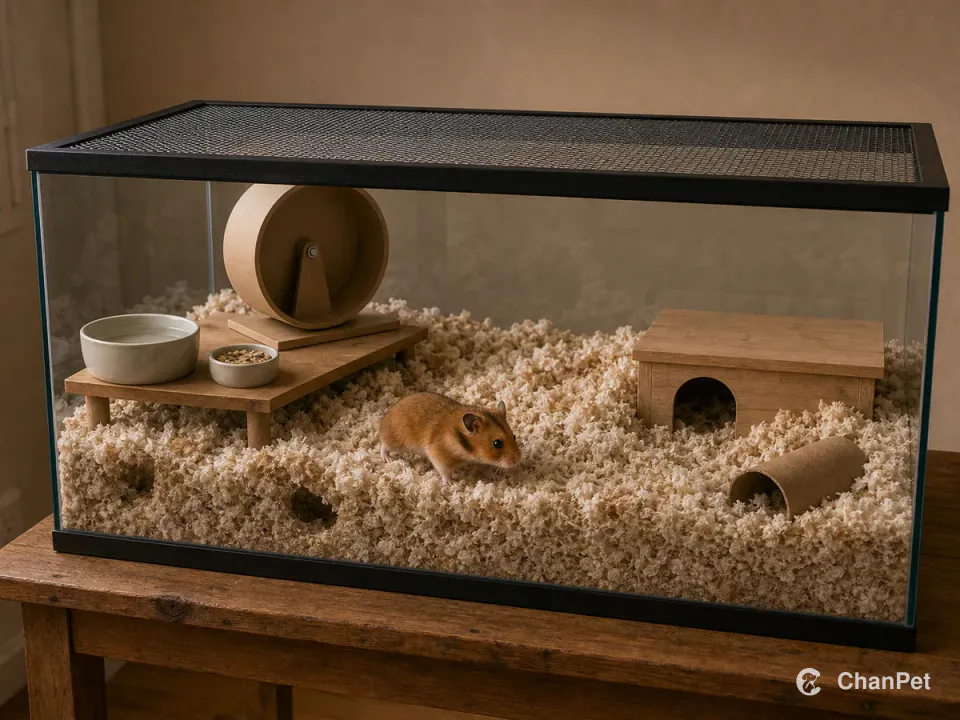
Fund the complete solitary enclosure, deep bedding, stable solid wheel, water, food, and hide first because the hamster uses them every day.[2][1][3]
Save for the working setup before setting an adoption date
Put the money behind the hamster's real evening
Want to check whether a golden hamster fits your budget? Start a smart match and include setup, ongoing supplies and care preparation.
Common questions
Can I start with a small temporary home and upgrade later?
Prepare a safe, suitable home before the hamster arrives. Deep bedding, a hide, a wheel and a secure enclosure are part of the first setup, not later decoration.[1]
Can I save money by buying all food in bulk?
Buy an amount you can keep dry, fresh and easy to use. A reliable regular supply makes it easier to maintain a complete hamster diet and fresh water every day.[2]
Sources
Sources used in this article
- [2]What To Feed a Pet HamsterRSPCA
- [1]Providing a Home for a HamsterMerck Veterinary Manual
- [3]Small MammalsCenters for Disease Control and Prevention