Fund the things the cat uses every day
Start with food that fits the cat's life stage, clean water, litter and a litter setup the adult cat can use comfortably. Cornell explains that feeding plans change with age, activity, treats and health. A simple, repeatable food routine is more useful than a cupboard full of impulse purchases.[1]
Maine Coons also need regular grooming supplies. GCCF highlights routine grooming for the breed. A sound comb and brush protect time and comfort every week, while a novelty bed or themed bowl can wait until the basics feel secure.[2]
Track body shape before changing the food
A Maine Coon's large frame can hide a gradual change in body fat. Cornell advises using a cat's individual needs, rather than a bag label alone, to guide food decisions. Keep treats in the same note as meals and ask the veterinary team for help when the picture changes.[1]
The WSAVA guide uses three physical clues: how the ribs feel, the waist from above, and fat across the abdomen. It gives you a shared language for a veterinary conversation. Use the same view over time instead of reacting to a single photo or a number on a scale.[3]
Thinking about changing food to stretch the budget? Use our WSAVA international nine-point body-condition check to compare the ribs, waist and abdomen before you change the plan.[3]
Leave room for care you cannot schedule
A low-budget plan still needs regular veterinary care and a reserve for an unexpected concern. A Maine Coon's size and coat bring visible daily needs, yet health questions also arrive without warning. Keep the carrier usable and the records together, so a visit feels possible when you need one.[2][1]
Spend on durability where it affects safety or repeat use. A stable scratcher, a brush that glides through the coat and a roomy carrier can support many ordinary days. Add extra furniture or toys slowly, after food, litter, grooming and veterinary care have a dependable place.[2][3]
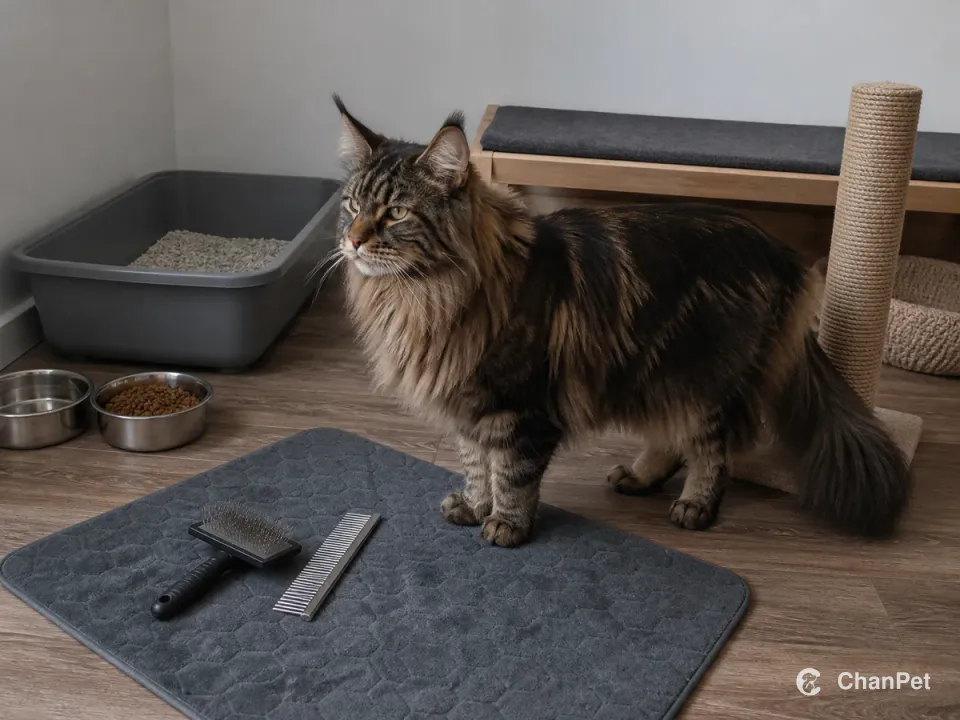
Fund the food, roomy litter setup, and grooming tools a large cat uses every day; decoration and upgrades can wait.[2][1]
A good fit when basics stay protected
Make the basic week affordable before adding extras
Wondering what it costs to care for a Maine Coon? Start by protecting food, litter, grooming and veterinary care. Then use your local prices to decide how much room the rest of the household budget has.[2][1]
Common questions
Can I use the feeding guide on the bag as a fixed amount?
Which grooming items should come first?
Choose a gentle brush or comb you will use regularly. Maine Coons have a long coat that benefits from routine grooming, so a dependable tool comes before decorative extras.[2]
Sources
Sources used in this article
- [2]Maine CoonThe Governing Council of the Cat Fancy
- [1]Feeding Your CatCornell University College of Veterinary Medicine, Cornell Feline Health Center
- [3]Body Condition Score: CatWorld Small Animal Veterinary Association