Buy the secure home before the look
Start with the enclosure that closes securely and gives the snake usable cover. Milk snakes use sheltered spaces, so hides and a stable floor are part of the actual home. A themed background can wait until the door, vents, locks, and cleaning access work well.[1][2]
Treat the heat system as essential equipment. Use a safe thermostatic setup and monitoring tools you can understand. Merck guidance describes the enclosure as a connected environment, so heat, cover, ventilation, water, and cleaning should be planned together.[3][2]
Keep the repeat purchases on paper
The secure milk snake setup is only where the spending begins. Food, water supplies, substrate, cleaning items, records, and replacement equipment return over time. Keep those needs beside the heating plan so the regular care remains visible after the first shopping trip.[1][3]
Keep a little space in the budget for a thermostat, latch, or other part that needs attention. The goal is a reliable routine, not a habitat held together by postponed repairs. Simple equipment that you can maintain beats a more elaborate setup that strains the budget.[3][2]
Plan support before a problem
Find a reptile-experienced veterinarian before a concern becomes urgent. Keep a reserve for professional advice or care, just as you would keep one for an equipment issue. A clear support route makes an unexpected change easier to address calmly.[3][2]
If the secure enclosure, heating, food, and support reserve already stretch the budget, pause. A milk snake benefits from a complete, plain habitat much more than from a fast purchase followed by months of catching up.[1][3]
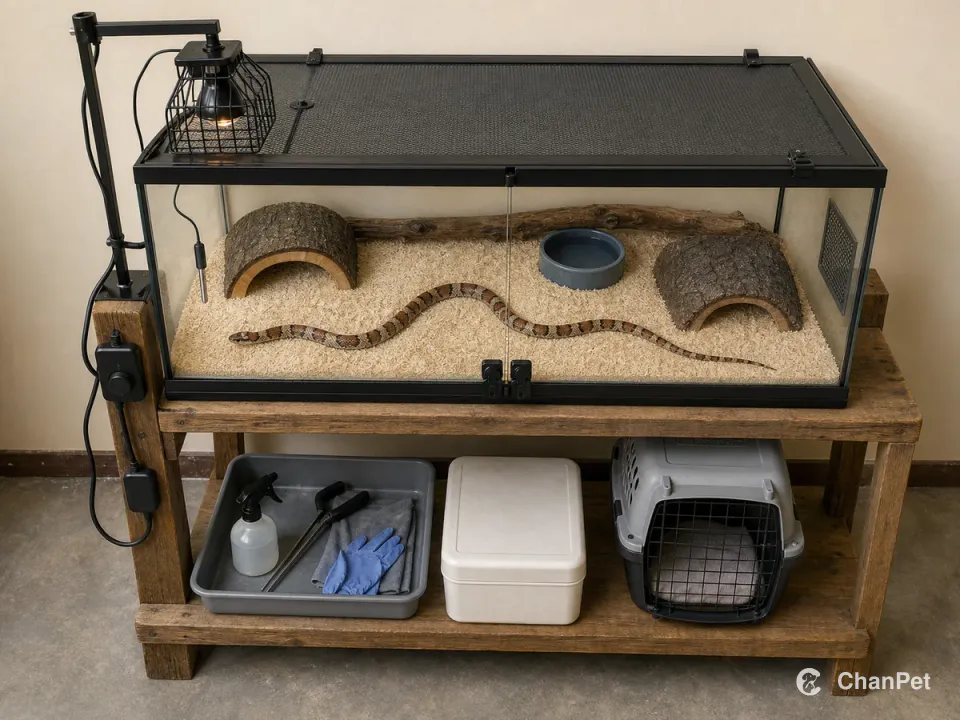
A tight budget still has to protect secure housing, controlled heat, hides, water, prey hygiene, and veterinary preparation.[1][3][2]
The essential habitat is the best use of the budget
Use Smart Match to compare space, time, budget, and long-term care support before choosing.
Want to match a pet to the budget you can protect?
Use Smart Match to compare milk snakes with other pets around ongoing care, home setup, and the reserve you can keep for surprises.
Common questions
What should I buy before decorative items for a milk snake?
Sources
Sources used in this article
- [1]Milk snake — Lampropeltis triangulumKansas State University Behavioral Ecology Research Group
- [3]Management and Husbandry of ReptilesMerck Veterinary Manual
- [2]Providing a Home for a ReptileMerck Veterinary Manual