The cheapest mistake is choosing without information
Before buying a bed or a matching leash, ask for the dog's records. Find out what it eats, what care it has received, what equipment it already uses, and whether a behavior concern is known. AVMA selection guidance points future owners toward matching a dog with their resources and home.[1]
A mixed-breed label does not erase health costs. AKC's health overview makes clear that health concerns can occur in dogs from both mixed and purebred backgrounds. The practical budget question is therefore about this dog's known needs and the care you can keep funding.[2][1]
Protect the supplies that work on a Tuesday
Spend first on things that make daily care workable. That includes a safe lead and collar or harness, bowls, food storage, waste bags, a place to sleep, and grooming or cleanup supplies suited to the dog. A fancy item can wait when a basic item will be used every morning and evening.[1]
Training belongs in the same category as a lead. A dog who can walk, settle, and respond around ordinary life is easier to care for in any home. Reserve time for it early, because waiting until a problem becomes loud or destructive often makes every next step harder.[1][2]
Use body condition to avoid blind spending
The WSAVA nine-point dog body-condition chart is free to use as an observation tool. Feel the ribs, check the waist, and look at the abdomen in the same way each time. A simple record gives a veterinarian a better starting point than a sudden concern with no timeline.[3]
Save the old vaccination, parasite-control, and veterinary papers alongside your own notes. They show where care has already been given and what still needs discussion. A small reserve is easier to protect when you can see the likely routine, rather than guessing from a rescue photo.[1][3]
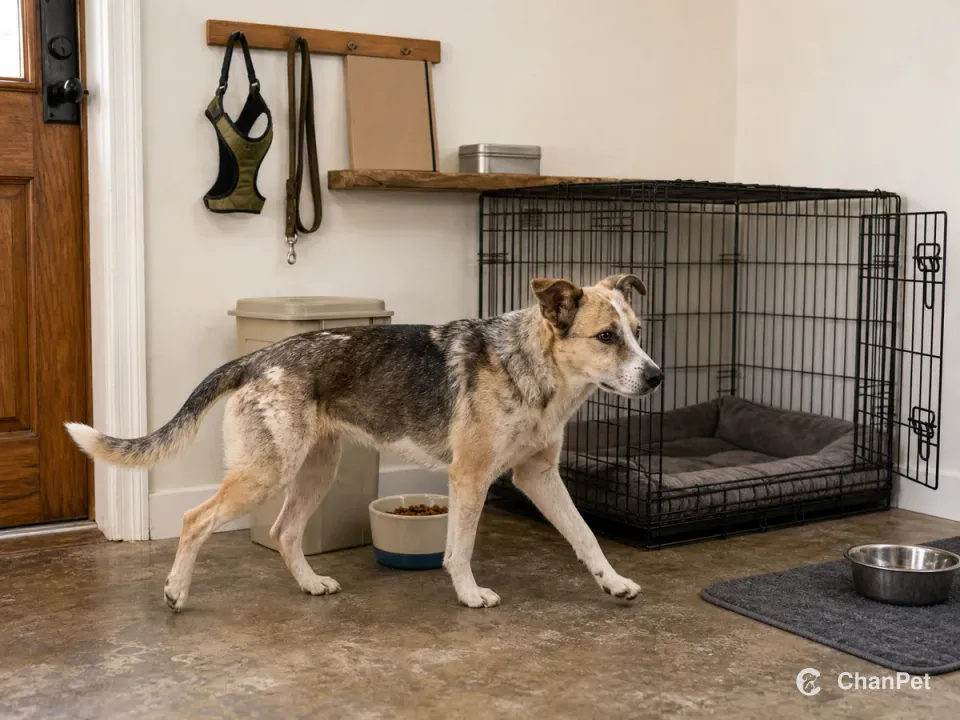
Start with this dog's size, body condition and known records. A fitted travel crate, reliable walking gear, continuing food and a protected reserve keep the budget tied to real needs.[1][3][2]
A realistic budget keeps care steady after the welcome home photo
Put the basics ahead of the extras
Know the dog, protect the daily supplies, and leave room for care beyond the first purchase. That is what makes a limited budget honest and kind.[1][2]
Common questions
Does a mixed-breed dog usually cost less to care for?
Which costs should come before extras?
Prioritize basic safety and daily care: suitable walking equipment, food storage, bowls, a sleeping place, cleanup supplies, training, and routine veterinary planning. Decorative upgrades can wait.[1]
Sources
Sources used in this article
- [1]Selecting a DogAmerican Veterinary Medical Association
- [3]Body Condition Score: DogWorld Small Animal Veterinary Association
- [2]Are Mixed-Breed Dogs Healthier Than Purebred Dogs?American Kennel Club