Spend on the place it climbs, not the backdrop
A plain clear enclosure is fine when the lid is secure, air can move and the mantis has vertical room. University of Kentucky guidance describes a container taller than the animal with a firmly placed branch for hanging and molting.[1]
A very cheap container becomes expensive when the perch falls or the lid makes feeding awkward. Put your first money into something stable and easy to use. Artificial plants, dramatic backgrounds and extras can come later.[1][2]
Live food is the line item that returns
The ongoing question is not the first enclosure purchase. It is whether you can obtain appropriately sized live prey again next week. Mantids eat living insects, and suitable prey changes as a growing animal gets larger.[1][3]
Avoid buying a large quantity of feeders just because it looks cheaper. Uneaten prey still needs removal, so a smaller, planned supply is often easier to manage than an overflowing container of insects.[1]
An egg case is not a bargain starter kit
An ootheca can appear to offer many pets for very little. It can also hatch a crowd of nymphs that need food and separation. Extension sources describe early cannibalism when hatchlings remain confined together.[2][3]
For a tight budget, one known mantis makes the costs legible. You are setting up for one animal's height, food and observation instead of waking up to an unplanned rearing project.[2][1]
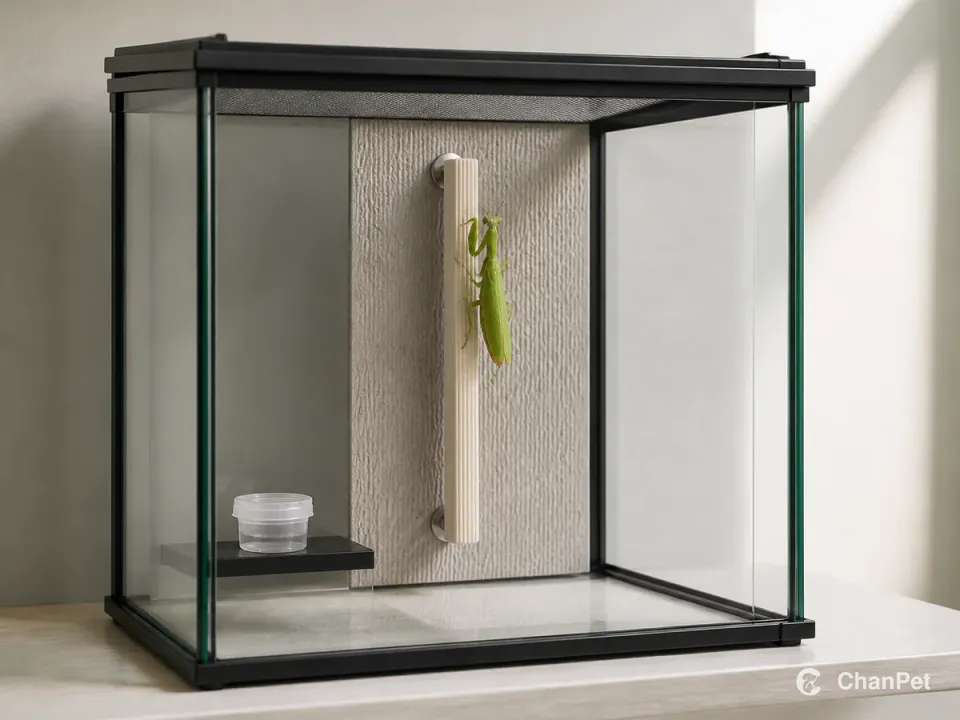
Start with a secure ventilated enclosure, a solid climbing point, and a reliable feeding setup; decoration can wait.[1][2]
A modest start works when the priorities stay honest
Fund its safe routine before its look
A reliable lid, a branch that stays put and the next feeding are better first purchases than a styled display. That is a budget plan a mantis can actually use.[1][3]
Common questions
Sources
Sources used in this article
- [1]Kentucky Bugs: Care and FeedingUniversity of Kentucky Entomology
- [2]Praying Mantis MantidaeConnecticut Agricultural Experiment Station
- [3]Praying MantisIowa State University Extension and Outreach