Buy a working forest floor
Start with the parts that let the skink live under cover: a secure enclosure, substrate, water, hides, ventilation, and monitoring. These are the building blocks of a habitat that supports the species. Make the enclosure work as a quiet environment before you turn it into a display.[1][2]
Pay for access as well as appearance. You need to reach water, clean waste, inspect the substrate, and service the ventilation without clearing out the skink's hiding places. A simpler habitat that you can maintain safely is a better use of the budget than a crowded showpiece.[2][1]
Keep food and monitoring in the monthly plan
The recurring list includes appropriate food, water, cleaning supplies, substrate care, and the tools that tell you how the habitat is behaving. Lizard nutrition belongs in that continuing plan. The skink's food response and environment need observation after the first setup is complete.[3][2]
Keep a modest reserve for a damaged tool, replacement item, or a change that requires a faster response. A reliable care system gives you room to act before an environmental problem becomes a prolonged compromise.[2]
Make specialist support part of the cost
Find a reptile-experienced veterinarian before you need one and include that support in the plan. A shy skink may show a concern through a subtle change in feeding, skin, or behavior. Early professional access is part of responsible care.[1][2]
If the core habitat, food, and support reserve exceed the budget, wait. A red-eyed crocodile skink needs steady care more than it needs a fast arrival or expensive décor.[1][3]
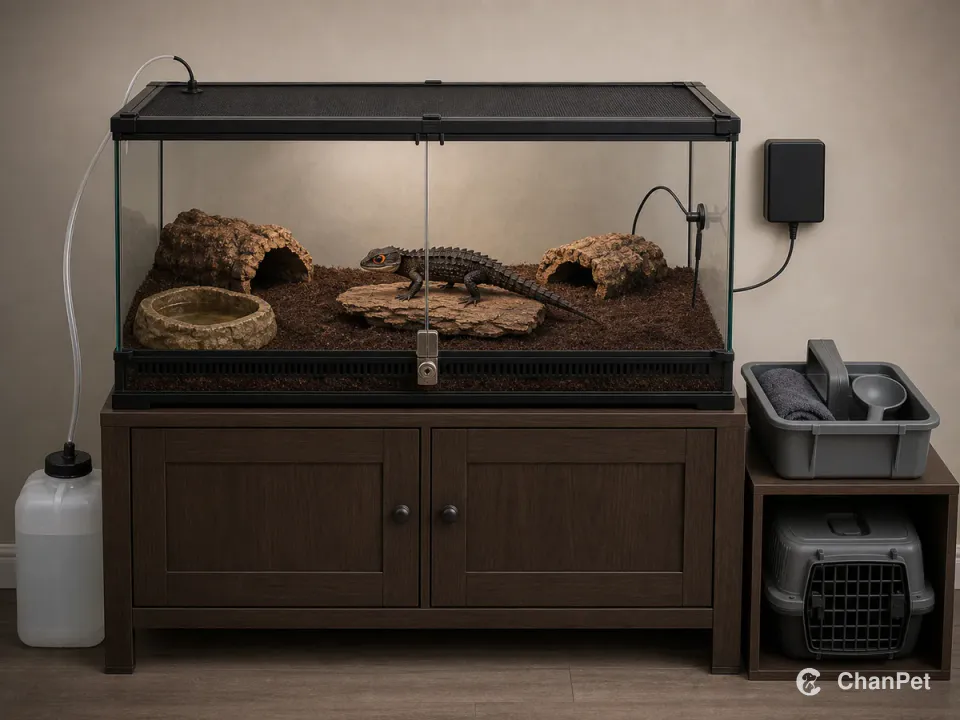
The budget must cover a locked humid, ventilated habitat, water, monitoring, cleaning and experienced veterinary support before the skink arrives.[1][2][3]
The complete habitat is the essential purchase
Compare animals around habitat equipment, food, cleaning, and the support you can confidently fund.
A complete plain habitat is the more generous choice
Common questions
Which crocodile skink purchases should come before decorations?
Sources
Sources used in this article
- [1]Crocodile Skink Species ProfileThe Maryland Zoo in Baltimore
- [2]Management and Husbandry of ReptilesMerck Veterinary Manual
- [3]Nutrition in LizardsMerck Veterinary Manual