Buy a safe home once
Put the enclosure, its escape-proof lid, suitable substrate, ventilation and a hide at the top of the list. Kentucky Entomology recommends one tarantula per enclosure and advises against yard soil because it may carry contaminants.[1]
Do not buy a generic box before you know the animal. Florida Extension says tarantula species have widely different environmental requirements. The scientific name makes a better shopping list than an attractive color or a sale price.[2]
Treat feeder insects as a recurring job
A tarantula eats live prey. Kentucky lists store-bought crickets as a common option and says the feeder should stay appropriately sized for the spider. That is a regular care task, not a one-time starter purchase.[1]
Keep the water dish and basic maintenance supplies simple and dependable. Decorative rocks, elaborate backgrounds and fragile ornaments can wait. The enclosure should first give the spider room, cover and stable footing.[1][2]
Reserve room for a problem
The budget also needs an answer for an exposure or a sick animal. The National Library of Medicine advises medical or poison-control guidance for concerning tarantula-related injuries, especially possible eye involvement.[3]
Avoid turning a money worry into unsafe handling. Keep the tarantula in its enclosure, wash after enclosure work and know where to seek expert help. A small reserve protects that routine when something changes.[3]
Want to know what to reserve for tarantula care? Use our cost calculator to separate the enclosure, feeder insects, recurring supplies, and an emergency reserve, then refine the estimate with local prices.[1][3]
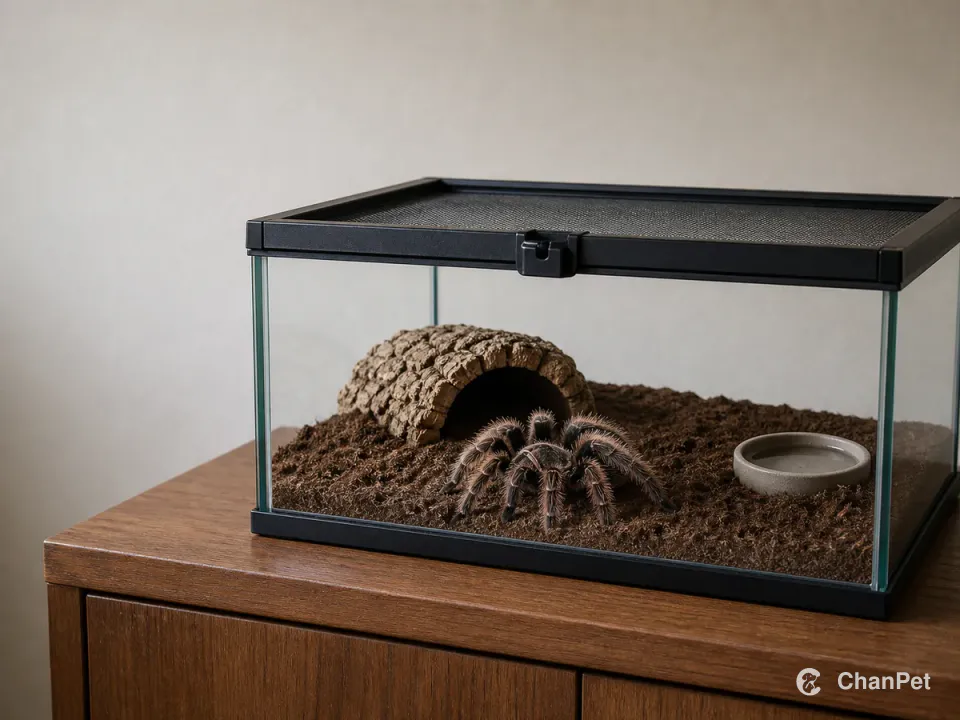
A complete basic habitat starts with a secure lid, substrate, cover and a shallow water dish.[1][2]
The inexpensive choice still needs a complete setup
The best savings come from skipping the wrong things
Skip the showpiece decorations before you compromise the closure, substrate or feeder routine. A simple, well-planned enclosure makes a more responsible home than a cheap setup that needs constant patching.[1][2]
Common questions
Can I use garden soil to save money?
Kentucky Entomology advises against outdoor soil because it may contain pesticides and microbes that can harm the spider. Choose an appropriate clean substrate instead.[1]
Sources
Sources used in this article
- [1]Exotic Bugs: Care and FeedingUniversity of Kentucky Department of Entomology
- [2]SpidersUniversity of Florida IFAS Extension
- [3]Tarantula Spider ToxicityNational Library of Medicine, NCBI Bookshelf