Price the environment, not the animal
The animal may be the smallest line on the first receipt. Its living environment is the larger commitment. Budget for a secure enclosure, climbing routes, light, water provision, climate tools and the equipment you need to clean and check the setup.[1][2]
Build the complete system before the chameleon arrives. A young animal does not make a partial enclosure safe. Buying the missing pieces later means the animal waits inside the very problems you planned to solve.[1][2]
Light and diet cannot be budget extras
The research on juvenile veiled chameleons studied ultraviolet light and dietary management alongside metabolic bone disease. That is enough reason to treat lighting and feeding decisions as health care. They deserve a planned replacement and review process from the start.[3]
Live feeder insects and the supplies that keep them usable also belong in the ongoing budget. You need room to source them, store them and clean up after the feeding routine. A pet that eats live prey comes with a small care system of its own.[2][1]
Reserve money for expert advice
Locate a reptile-experienced veterinary practice before you need an urgent appointment. Keep its contact details with your habitat notes and leave some financial room for a visit when the chameleon changes. A general internet search cannot examine an individual animal.[2]
If the full plan does not fit today, choose a different reptile or wait. The responsible budget is the one that keeps the enclosure functioning after the novelty of the first week has passed.[2][1]
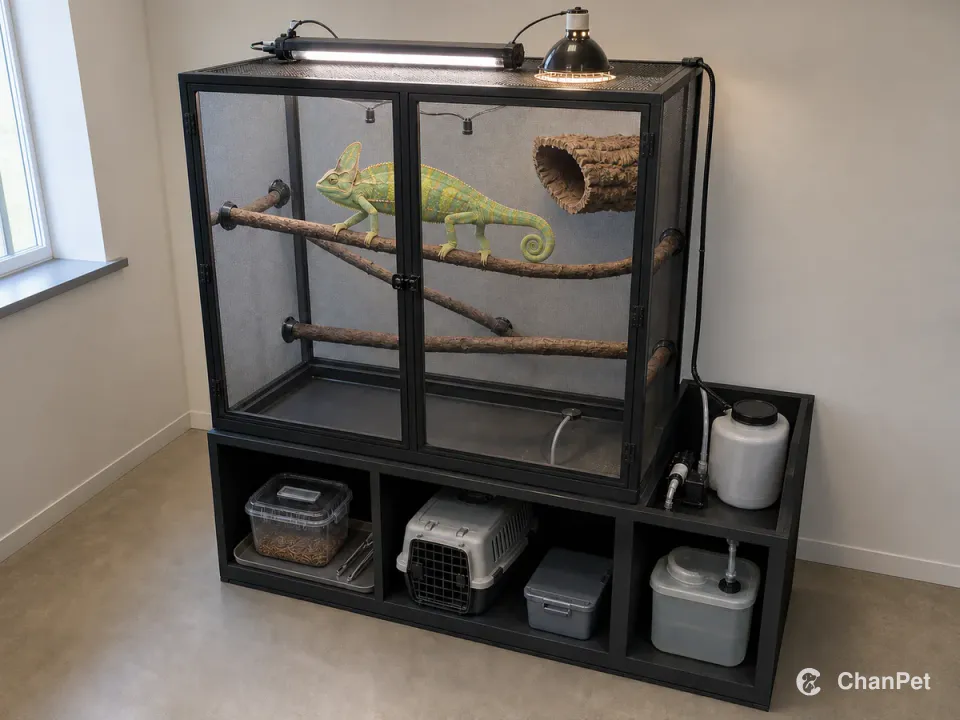
The full enclosure, light, water system, live prey, transport, and veterinary preparation must work before ownership begins.[3][2][1]
A complete habitat is the basic purchase
Compare animals around the full recurring care system you can provide, not the price of one animal.
Wait until the essentials feel ordinary
Common questions
Which purchases need to happen before a veiled chameleon arrives?
Why should I plan lighting replacements in advance?
Ultraviolet exposure and dietary management are part of the veiled chameleon's health picture. Lighting equipment needs ongoing review rather than a one-time purchase.[3]
Sources
Sources used in this article
- [3]Nutritional Metabolic Bone Disease in Juvenile Veiled Chameleons (Chamaeleo calyptratus) and Its PreventionThe Journal of Nutrition
- [2]Selecting a ReptileMerck Veterinary Manual
- [1]Providing a Home for a ReptileMerck Veterinary Manual