Fund a habitat that can run for years
The vertical enclosure, secure door, climbing structure, lighting and temperature-and-humidity monitoring are the foundation. RVC treats those items as one husbandry system. They are not optional upgrades for later.[1]
Smithsonian describes White's tree frogs as tree-dwelling animals. A low, temporary box may cost less at first, yet it usually creates repeated upgrades. Buy the usable vertical home before the finishing touches.[2][1]
Live food and health access keep returning
The food plan is a living supply chain. Insects need buying, housing, nutrition and removal when unused. Count that recurring work and cost before you decide that a frog is the low-cost pet in the store.[1]
Keep room for health help. Clinical reports show that skin and environmental problems can require veterinary diagnosis. The nearby amphibian-aware clinic matters more than another plastic vine.[3][1]
Want to know what a White's tree frog could cost in your household? Use the cost calculator to separate habitat, live food and a health reserve, then replace the estimate with local quotes.
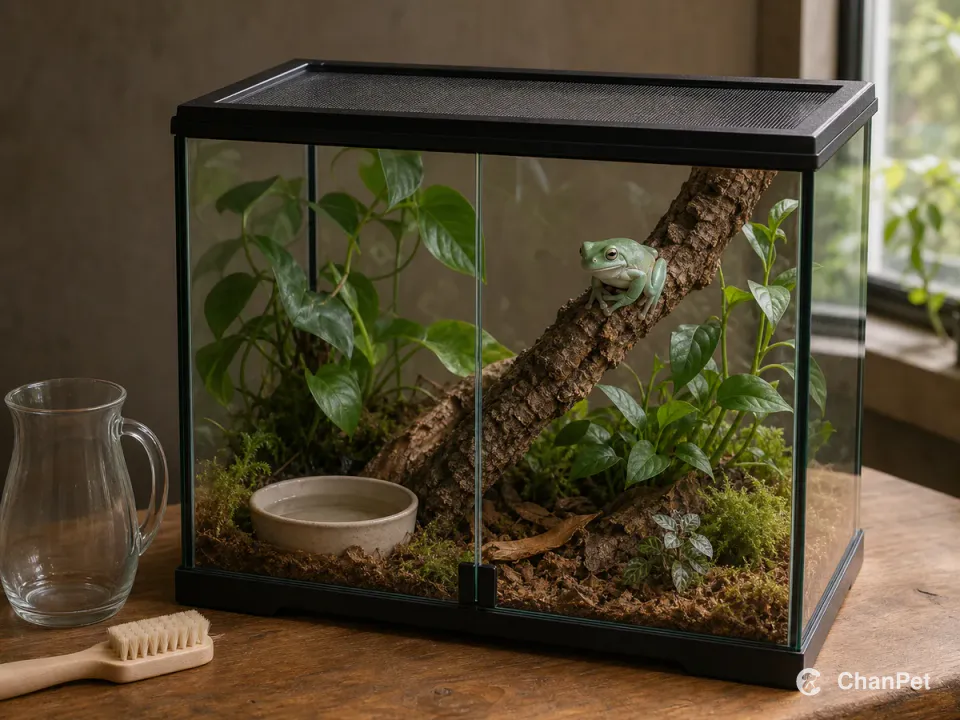
A secure enclosure, water dish, climbing branch, and substrate make the setup work; decor can wait.[1][2]
Wait for the complete start
The sensible budget protects the working parts
Put the money into the environment, live food and health reserve first. Decor can grow slowly; the frog's basic care should be ready now.[1][3]
Common questions
Sources
Sources used in this article
- [1]White's Tree Frog care sheetRoyal Veterinary College
- [2]White's tree frogSmithsonian's National Zoo and Conservation Biology Institute
- [3]First recorded outbreak of Veronaea botryosa in North American amphibians: Clinicopathologic features of a rare cause of phaeohyphomycosis in captive White's tree frogsJournal of Veterinary Diagnostic Investigation / PubMed Central