The coat gives you a weekly job
The Bichon Frise Club of America recommends frequent brushing, regular bathing, and scissoring. Put the brush sessions in the week before the coat looks messy. This keeps the dog comfortable and keeps your grooming sessions short enough to enjoy.[1]
A shorter companion clip can make the daily routine easier to manage. It still needs gentle brushing. Keep the tools beside a good light, so you can work through the coat and see what you are doing.[1]
A food routine needs a notebook, too
WSAVA's nutrition guidance brings food history, body condition, and muscle condition into one conversation. Keep the food brand, treats, appetite, and activity changes in a note. A few simple entries make routine veterinary visits more useful.[2]
Use part of the daily food plan for training when it suits the dog. That keeps rewards visible instead of turning into a handful that appears from nowhere each evening.[2]
The dog still needs a day beyond the brush
The FCI standard describes a lively companion dog. A short walk, time to sniff, a small shared game, and a quiet nap can give that energy a useful place. The schedule works best when these parts happen at familiar times.[3]
Keep the routine small enough to survive a hectic Tuesday. Fresh water, a walk, coat care when due, a clean rest space, and a little time together form the real maintenance list.[3][1]
The parts of Bichon care that keep returning
- Short brushing sessions through the week.
- Regular bathing and clipping appointments.
- Food, treats, activity, and body-condition notes.
- Walks, small games, and quiet rest every day.
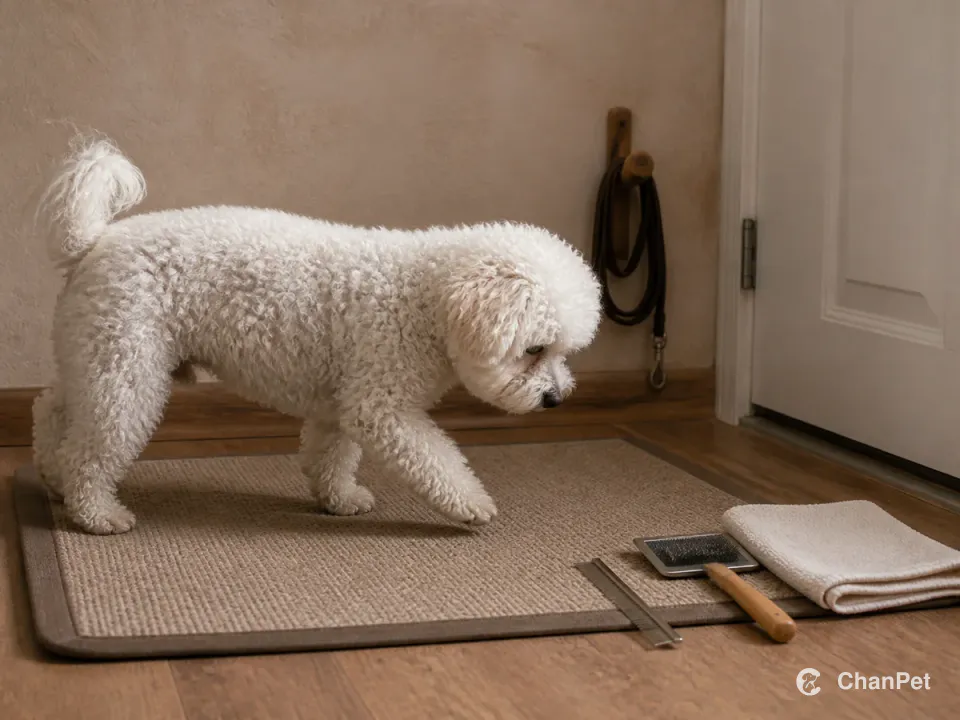
Keeping a comb and brush by the entry mat turns the walk home into a brief, repeatable coat-care cue.[1]
A good fit when grooming feels like ordinary care
The routine stays light when it stays regular
Bichon care has no single huge daily task. It has several small ones that work well when they return at familiar times. Put the brush and the walk on the calendar, then let the rest of the week build around them.[3][1]
Common questions
Can I rely on professional grooming alone?
Professional bathing and trimming are useful, while the Bichon still benefits from frequent brushing between appointments. Short home sessions keep the coat easier to manage.[1]
What should I keep in a food note?
Record the food, treats, appetite, activity, and any body or muscle changes. WSAVA uses these details alongside a physical assessment in a nutrition conversation.[2]
Sources
Sources used in this article
- [3]FCI Standard No. 215: Bichon FriseFédération Cynologique Internationale
- [1]Bichon Frise Health StatementBichon Frise Club of America
- [2]WSAVA Global Nutrition GuidelinesWorld Small Animal Veterinary Association