Keep the daily loop short
A quick morning or evening loop covers the jobs that matter most: refresh water, serve the planned food, scoop the litter and look at the cat. British Shorthairs often look composed even when they are asking for attention in quieter ways. Seeing the cat every day gives you a better sense of its normal appetite, posture and energy.[1][2]
Keep the scoop, bags and cleaner together, then wash your hands after litter, bowls or other cat supplies. CDC recommends daily litter cleaning and good hand hygiene. A small routine is easier to keep than a big clean-up after odors and tracked litter have spread through the home.[3]
Brush while the coat is easy
The British Shorthair's coat is short, dense and generally straightforward to groom. During moulting, a regular gentle brush lifts loose hair before it becomes a layer on bedding and chairs. Use the same few minutes to look at the skin, ears and paws without turning care into a wrestling match.[1]
A brush is also a chance to notice a shift in body shape. The breed's round face and solid frame can make gradual change easy to miss in photographs. Watch the cat in motion as well as at rest, and bring any concern to its regular veterinary visit rather than relying on a single glance.[1][2]
Put future care on the calendar
Routine veterinary care changes across a cat's life. A kitten, an adult and an older cat come with different questions, so keep records and book the next visit before the previous one fades from memory. A clear calendar also makes it easier for a pet sitter or another adult to follow the cat's usual care.[2]
Travel care needs the same level of planning. Leave a written food and litter routine, the cat's veterinary contact and a note about its favorite resting spots. The person stepping in can then tell the difference between a British Shorthair taking a quiet nap and a cat that is behaving out of character.[2][3]
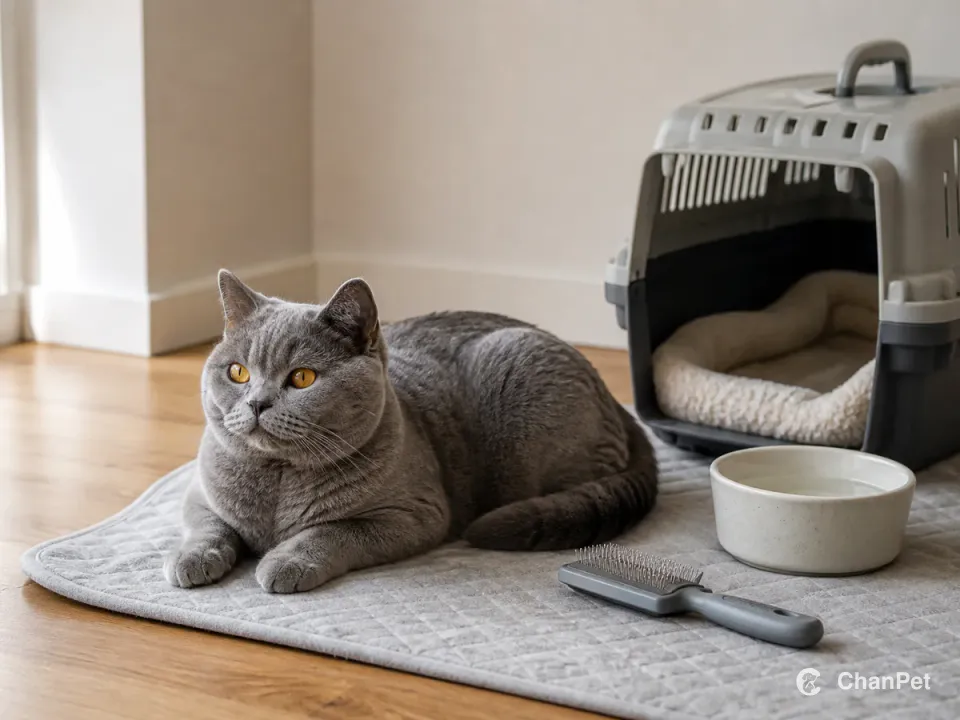
Keep water, grooming and the carrier within easy reach, and the small daily care jobs are easier to keep up.[1][2]
Low maintenance means small work done on time
Make the routine easy to repeat
Keep the supplies together, brush before shedding feels overwhelming and write the next veterinary visit into the calendar. That is what makes British Shorthair care feel calm rather than neglected.[1][2]
Common questions
Can an automatic litter box replace daily care?
How often does a British Shorthair need brushing?
The short dense coat usually needs more attention while it is moulting. Let the amount of loose hair and the cat's comfort guide the routine, and keep each session brief and gentle.[1]
Sources
Sources used in this article
- [1]BritishThe Governing Council of the Cat Fancy
- [3]CatsCenters for Disease Control and Prevention
- [2]Feline Life Stages: Veterinary Checkups at All AgesFeline Veterinary Medical Association