The climate keeps working
The snake's warm side, cooler side, water, hides, ventilation, and substrate keep working every day. A brief check catches a dry water bowl, a shifted hide, or a temperature that needs attention.[1][2]
Enclosure security belongs in the same rhythm. Check the lid, clips, doors, and cable gaps whenever you feed, clean, or adjust the habitat.[1][2]
Meal days need follow-through
Frozen-rodent feeding requires storage, thawing, a calm offering routine, cleanup, and handwashing. The care continues after the meal through observation and space for digestion.[3][1]
Keep notes on meals, sheds, waste, water, and normal behavior. A small record makes it easier to spot a change and gives a reptile veterinarian useful history.[2][1]
Small cleaning tasks add up
Water changes, waste removal, substrate checks, and feeding-surface cleanup keep the enclosure usable. These short tasks are easier when the supplies and handwashing step stay in one predictable place.[1][2]
Calm handling also takes practice. An experienced exotic veterinarian can help when changes in appetite, skin, breathing, movement, or behavior need a closer look.[3][2]
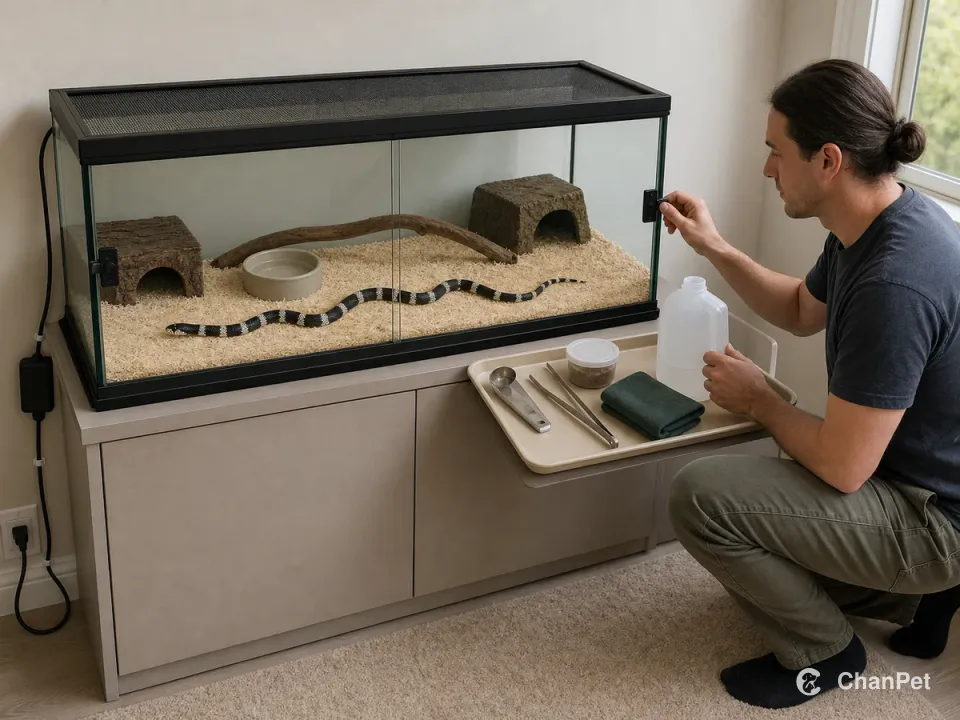
Latch checks, water, temperature wiring, and cleanup tools follow one visible routine around the closed enclosure.[1][2][3]
A compact snake still needs visible care
Use Start Smart Match to compare your available time, care rhythm, food routine, and cleanup habits with a California kingsnake.
Give the enclosure a small daily slot
A few focused minutes for climate, water, security, food, and cleanup keep a California kingsnake's care system steady. That regular rhythm is the real fit question.[1][2][3]
Common questions
Why does a kingsnake need daily checks between meals?
Sources
Sources used in this article
- [1]A Captive Care Guide, Teaching Curriculum and Animal Care References for Amphibians and ReptilesUniversity of Michigan
- [2]Management and Husbandry of ReptilesMerck Veterinary Manual
- [3]Snakes as PetsTexas A&M University College of Veterinary Medicine & Biomedical Sciences