Make feeding a small check-in
Feed a modest amount, then pause long enough to see what happens. Do the shrimp come out from cover? Does food sit untouched? Is more collecting on the bottom than you expected? Those small moments tell you about the tank and keep feeding from becoming invisible.[1][2]
Do not solve a quiet tank by adding more food. Uneaten food belongs to the water system, and it can undo the stable conditions you worked to build. A measured routine is easier to adjust than a habit of feeding by mood.[2]
Give water the same calendar space
Put testing and water changes on a repeating calendar. Keep the results with a note about feeding and anything you changed in the tank. A small aquarium can look still while its water is shifting, so visible notes help you respond with care instead of guessing.[2][1]
Clean in small passes. Remove debris you can see, service the equipment as needed and avoid turning a normal maintenance day into a complete reset. The shrimp benefit when their environment changes in a controlled, observed way.[2]
Watch the colony with a long view
Look for patterns across weeks rather than judging the tank by one afternoon. See where shrimp forage, whether they are using cover and whether the group seems to be changing. Observation is one of the pleasures of shrimpkeeping, and it gives maintenance a purpose.[1][3]
If the group grows, do not assume the tank can take unlimited additions. Cherry shrimp have established populations outside aquariums in some places, which shows how adaptable the species can be. Keep the whole colony in managed care and plan ahead if numbers rise.[3]
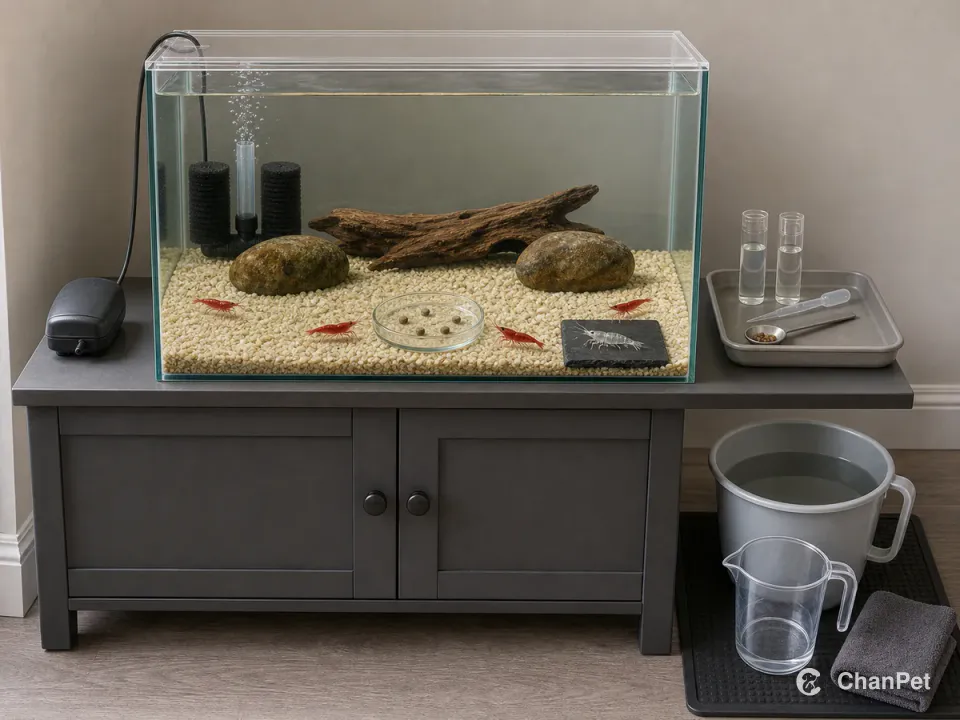
Equipment supports the cycle; daily observation still covers water, feeding, molts, and small water changes.[1][2]
Small routines make the tank feel easy
The shrimp are quiet; the routine should stay visible
A good cherry shrimp tank is made from regular small actions: light feeding, water checks, gentle cleanup and a minute spent looking closely. That routine protects the water and lets you enjoy the colony changing over time.[1][2]
Common questions
Can I leave cherry shrimp alone if the water looks clear?
What should I do if the cherry shrimp colony grows?
Keep the colony in managed aquarium care, monitor the tank and make a rehoming plan if needed. Never release shrimp into natural water.[3]
Sources
Sources used in this article
- [1]Cherry Shrimp Neocaridina davidi (Bouvier 1904)University of Florida IFAS Extension
- [2]Providing a Home for FishMerck Veterinary Manual
- [3]Population dynamics of the invasive freshwater shrimp Neocaridina davidi in the thermally polluted Gillbach streamLimnologica (peer-reviewed research)