Give it a quiet daily round
The daily round takes only a few focused minutes, yet it matters. Look at the thermometer and hygrometer, check the water and food area, and notice whether the gecko used its climbing route overnight. Crested geckos become active after dusk, so evening is a natural time to learn its normal pattern.[1][2]
Misting, airflow and drying work together. WWF and the University of Calgary describe a habitat that provides humidity while staying properly ventilated. Make a simple habit of looking for the same signals every day instead of adding water whenever the glass looks dry.[1][2]
Weekly work keeps the system easy
Take out old food, refresh dishes and remove soiled substrate before a smell or moldy patch takes hold. Wipe the places you reach often, then inspect branches and foliage for anything loose. Small resets protect the enclosure from turning into one exhausting cleanout.[2][3]
Food prep belongs on the same weekly list. Crested geckos eat fruit-based foods and small invertebrates, so there are dishes to wash and supplies to keep fresh. A short written list helps a busy household see when the routine has started to slip.[1][2]
Travel still needs a care plan
A full food dish and an automatic device cannot replace a person who can spot a tipped bowl, a failed light or a wet enclosure. Before a trip, show one trusted carer where the measurements are, what normal evening behavior looks like and which clinic you would call.[1][2]
Leave the routine in plain language: food, water, misting, checks and the signs that call for help. A carer who has opened the enclosure with you once is far more useful than someone reading a long message after a problem appears.[3][2]
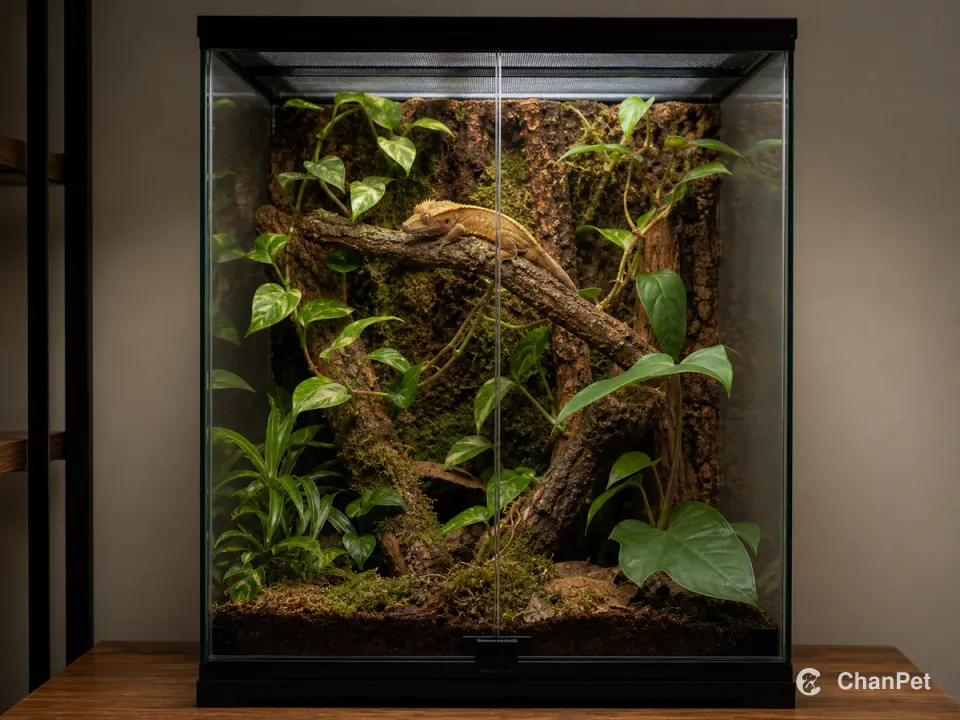
A quiet home still needs someone who pays close attention each day.[1][2]
Low effort still needs a reliable rhythm
The routine is light when it stays regular
Keep the enclosure clean, the measurements visible and a backup carer prepared. Those small habits preserve the calm, contained appeal that brings many people to a crested gecko.[1][3]
Common questions
Sources
Sources used in this article
- [1]Crested geckoWorld Wildlife Fund
- [2]Reptiles and HusbandryFaculty of Veterinary Medicine, University of Calgary
- [3]Reptiles 101: Adopting with CareCummings School of Veterinary Medicine at Tufts University