Notice the small movement changes during ordinary care
UFAW describes intervertebral disc disease as an important Dachshund welfare concern. Keep a brief note on normal walks, turns, resting, and willingness to use the household route, so the baseline stays easy to remember.[1]
A new reluctance to climb, jump, turn, or settle can deserve prompt veterinary advice, especially alongside pain, weakness, a tense posture, or sudden yelping. A short video and time note can help describe the change clearly.[1]
Pair food notes with a short weekly care check
WSAVA nutrition guidance uses diet history as part of regular assessment. Keep meals, treats, appetite, and stool changes in one note, then bring the note to veterinary visits when the routine needs review.[2]
After a walk, take a few minutes to brush the coat, check paws, and look over the low household route. Small care checks work best when attached to a task you already complete each day.[1][2]
Build alone time gradually instead of saving it for a long day
Practice short departures while the schedule is flexible. RSPCA advises increasing alone time gradually and rewarding relaxed behavior, which gives a Dachshund a calmer way to learn the rhythm of the house.[3]
A quick video check can show pacing, trembling, or continued vocalizing after you leave. Use that information to make the next practice easier or to seek help from a veterinarian or qualified behavior professional.[3]
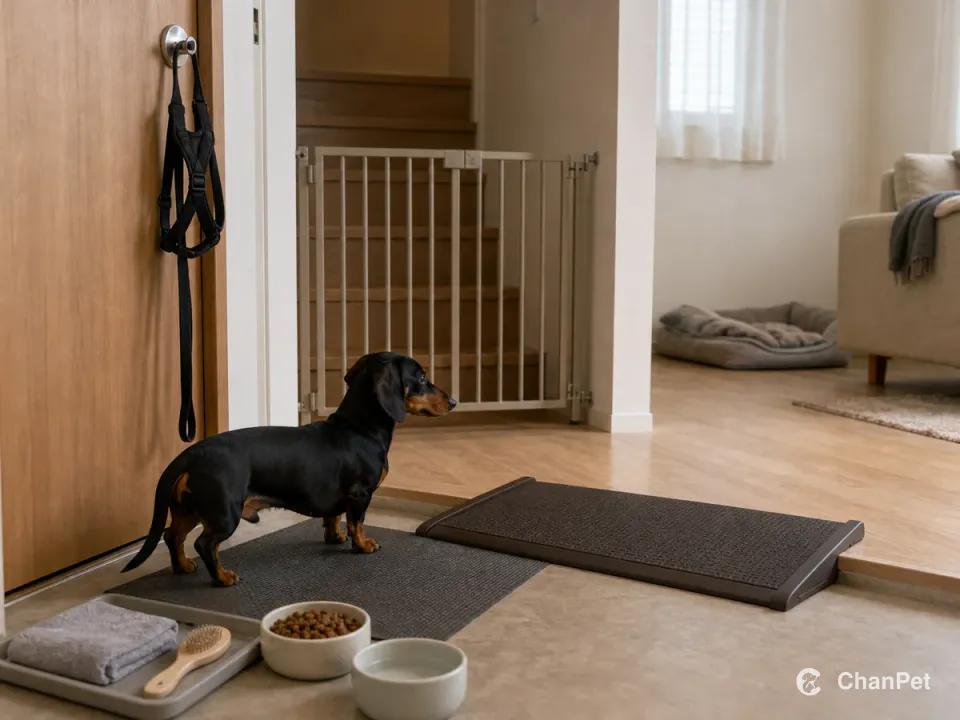
Stored outing gear, low-level access, return-home cleaning, measured food, and a quiet floor bed spread movement checks and small care tasks across each day.[1][2][3]
A Dachshund feels manageable when observation becomes part of the routine
Make a short weekly care note
Keep the route, food, coat check, and alone-time practice in one place for a week. The note will show whether the routine stays comfortable during ordinary days and where veterinary guidance may help.[1][2]
Common questions
Which Dachshund movement changes deserve quick veterinary advice?
A new reluctance to climb, jump, turn, or settle can matter, especially with pain, weakness, a tense posture, or sudden yelping. Record what changed and contact your veterinarian promptly.[1]
How can I build a calmer alone-time routine?
Start with brief departures, reward relaxed behavior, and increase time gradually. A video check can show whether the dog remains settled or needs an easier next step.[3]
Sources
Sources used in this article
- [1]Dachshund - Intervertebral Disc DiseaseUniversities Federation for Animal Welfare
- [2]WSAVA Global Nutrition GuidelinesWorld Small Animal Veterinary Association
- [3]How to Train Your Dog to Stay Home AloneRSPCA