A schedule needs a person behind it
Use a timer to make the light cycle consistent, then confirm the result each day. Look at the enclosure before you look for the gecko. Check the light, temperature and humidity readings, water, ventilation, and any signs of a spill or escaped insect.[1]
Then look at the gecko in its usual places. Giant day geckos are active during the day, so a brief daylight check can tell you more than a late-night glance. Record a change that lasts or worries you and contact a reptile veterinarian when needed.[2][1]
Insects turn up on the calendar
Live insects need their own care before they become food. You need a dependable place to keep them, a plan for feeding day, and a way to remove leftovers. That work returns even when the enclosure equipment seems to be running perfectly.[2][1]
Treat feeding as an observation moment rather than a quick chore. Notice how the gecko moves toward food and where it spends the day. Familiar routines make it easier to spot a change early.[2]
Small cleanups prevent a big reset
Remove waste and old food while you can still do it with a small tool and a few minutes. Wipe the areas you can safely reach, refresh water as required, and keep a simple list of supplies. A well-built habitat still benefits from light, frequent maintenance.[1]
Wash with soap and running water after handling the enclosure, its contents, or food. This protects people because reptiles and their environment can carry germs. Give a travel caregiver the same clear routine before you leave town.[3]
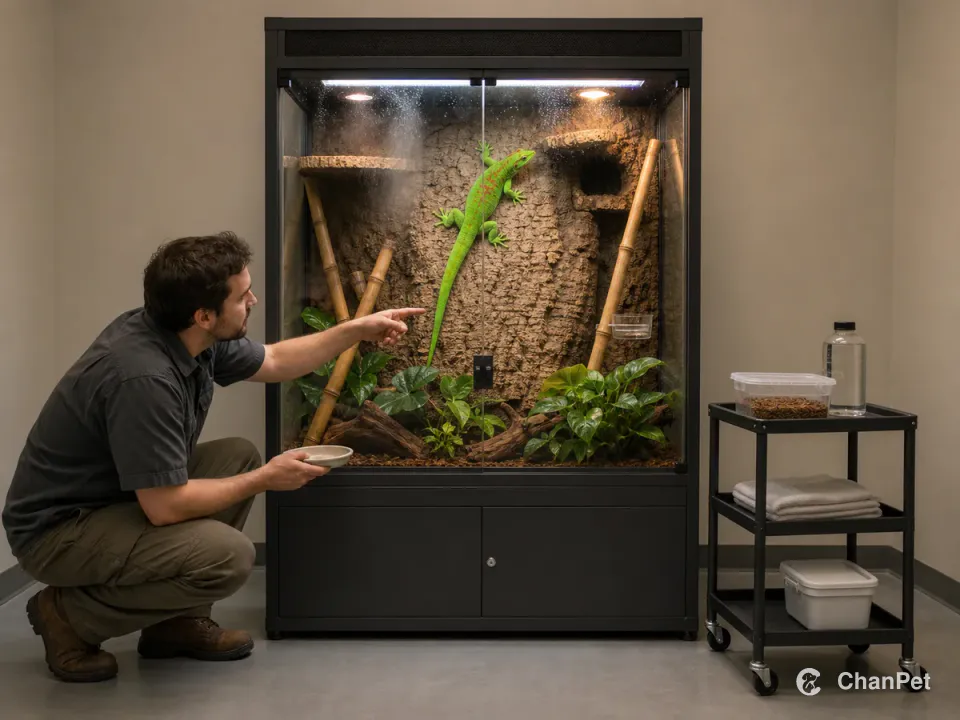
Timers run the light and mist; the caregiver still checks the gecko, leftover food, and moisture every day.[2][1][3]
Useful equipment still needs daily eyes
Compare animals around the daily checks, cleanup, and travel support you can genuinely keep up.
The habitat works best with a daily keeper
Common questions
Do timed lights make a giant day gecko low maintenance?
Sources
Sources used in this article
- [2]Madagascar Giant Day GeckoSacramento Zoo
- [1]Management and Husbandry of ReptilesMerck Veterinary Manual
- [3]Reptiles and AmphibiansCenters for Disease Control and Prevention