Make the daily check short and real
Each day, read the temperature and humidity, replace water as needed, and look for uneaten food or fresh waste. Do it at a time when the gecko is usually awake, so you also see a little of its ordinary movement. Five careful minutes beats a long inspection once a month.[1][2]
Use the same small note every time: conditions, food, water, waste, and behavior. You are looking for a change from that gecko's own normal, such as a missed meal, a different climb, or a condition reading that keeps drifting.[1][2]
Give cleaning a place on the calendar
Spot-cleaning keeps small messes from disappearing under foliage or into substrate. Set aside a separate weekly block to inspect branches, dishes, enclosure surfaces, and the equipment that controls the habitat. Regular access matters because a vertical enclosure has more places where dampness can hide.[2][1]
Keep cleaning supplies and enclosure tools for this job only. Reptiles and their environments can carry germs even when the habitat looks clean. Wash hands with soap and running water after working inside the enclosure.[3]
A quiet gecko still needs a backup
A low-noise pet can make a packed week look easy. The enclosure has no way to tell you that its water dish is empty or a reading is off. Put the daily check into the same part of the day as another fixed habit, then make it visible on the calendar.[2][1]
Name one backup person before you need one. Show them how to read the gauges, refresh water, handle food, close the enclosure, and wash up afterward. A written checklist is kinder to both the caretaker and the gecko than a rushed text from the airport.[2][3]
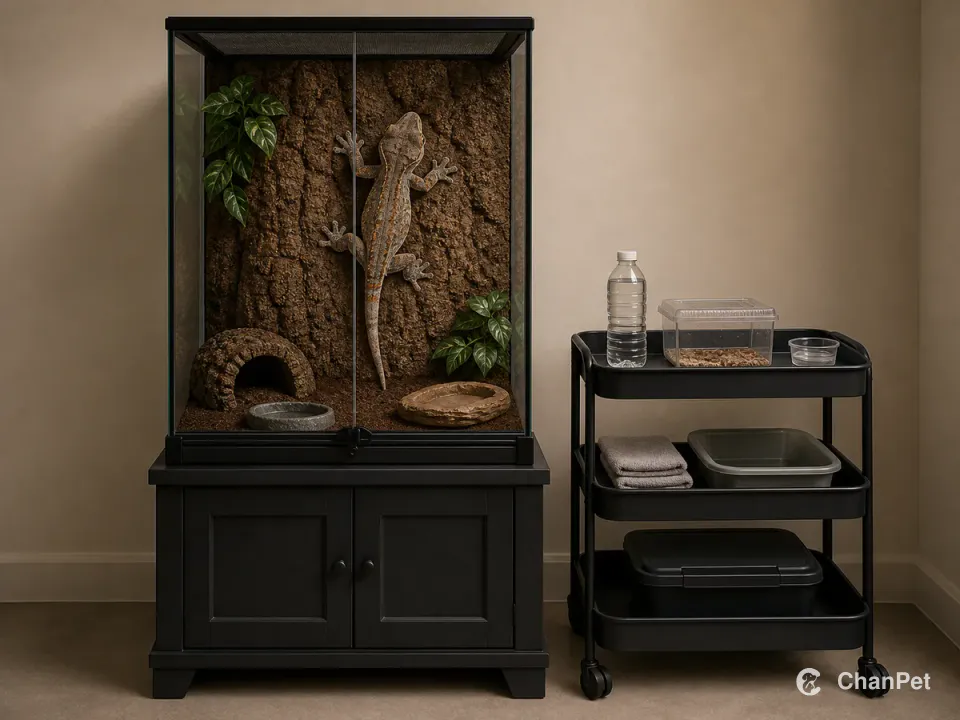
Water, food, wiping, and waste each have a fixed place, making the short daily check easier to sustain.[2][3]
Choose daily steadiness over a short chore list
Compare animals around the tasks you can repeat every day, rather than the tasks you can manage on your best week.[2]
Small care jobs work best when they stay small
Common questions
Can I skip a day if the enclosure looks fine?
Sources
Sources used in this article
- [1]New Caledonian Gargoyle GeckoBowling Green State University Herpetarium
- [2]Management and Husbandry of ReptilesMerck Veterinary Manual
- [3]Reptiles and AmphibiansCenters for Disease Control and Prevention