Read the enclosure before looking for the python
Start your daily check with the habitat. Look at the temperature and humidity records, water, ventilation, perch stability, and the areas that collect waste. This tells you whether the tree-level environment is holding before you ask the snake to do anything for you.[1][2]
Then observe the python from outside. Notice where it rests, how it holds the perch, and whether its posture looks usual. A short daily record gives a later change a context that one hurried weekend inspection cannot provide.[2][1]
Make water and waste small, regular jobs
Refresh water and clean waste using a quiet, planned process. Work around the snake's perch whenever you can. Small regular care keeps the enclosure readable and reduces the need for a disruptive reset that changes the snake's familiar routes.[1][2]
Use the same notebook for water, waste, shedding, and climate conditions. When something changes, the record can show whether the environment changed first. That is the kind of evidence a reptile veterinarian can use alongside an examination.[1]
Food preparation is part of the routine
Plan frozen-thawed prey before feeding day. Thaw and prepare food safely, have the right tools ready, and feed on a calm routine. Green tree pythons take small mammal prey, so food handling and the habitat record belong in the same care plan.[2][3]
Record the date, prey, feeding response, and any leftovers. An automated light or misting system can keep one schedule. It cannot document appetite or decide how a change relates to the snake's environment, so daily human observation remains essential.[1][3]
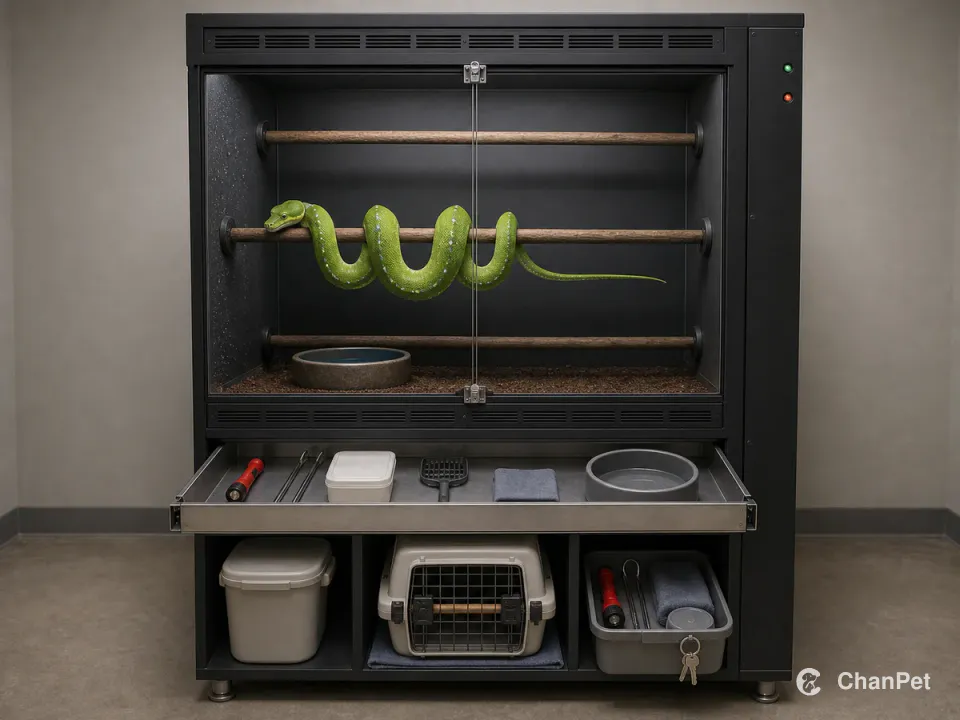
Quiet does not mean low maintenance: climate, water, food remains, cleaning, posture, and travel handoff all need regular checks.[2][1][3]
The record is part of the care, not extra paperwork
Compare animals around habitat checks, food preparation, cleaning, and the attention you can reliably give each day.
A good record makes the quiet changes visible
Common questions
Can I catch up on green tree python care at the weekend?
Sources
Sources used in this article
- [2]Green Tree PythonBowling Green State University Herpetarium
- [1]Captive Management, Reproduction, and Disease of the Green Tree PythonAssociation of Reptile and Amphibian Veterinarians
- [3]Nutrition in ReptilesMerck Veterinary Manual