The daily work is short and visible
There is no leash walk, no shed hair on the sofa and no training session to squeeze in before work. Instead, look into the enclosure. Check the water, remove food that has spoiled, and notice whether the substrate or glass looks different.[1]
That routine stays small when you do it often. It becomes stressful when it slips for several days and you have to work out what changed. A lower-maintenance pet still benefits from a keeper who notices the ordinary baseline.[1][2]
Equipment helps, but it cannot observe
A meter, timer or organized supplies can make the setup easier to run. None of them can tell you whether a water dish is dirty, a shell has become unsuitable or a crab's behavior has changed. Those are the parts that still need a person.[1][3]
Natural behaviors also make patience part of the job. LHCOS centers its care ethic on conditions that allow digging, hiding and other species-typical behavior. A neat-looking enclosure should still leave room for those choices.[2]
Travel care starts before the suitcase
A weekend away is different from a long trip. New Jersey's emergency guide advises keepers to prepare food, water and a temporary container in advance. That is useful preparation for an unexpected outage as well as planned travel.[4]
Choose one backup person and show them the enclosure while you are still home. They need a short written list: where the water goes, what to check, and how to reach you if something seems wrong. That is enough to make care far more reliable.[4][1]
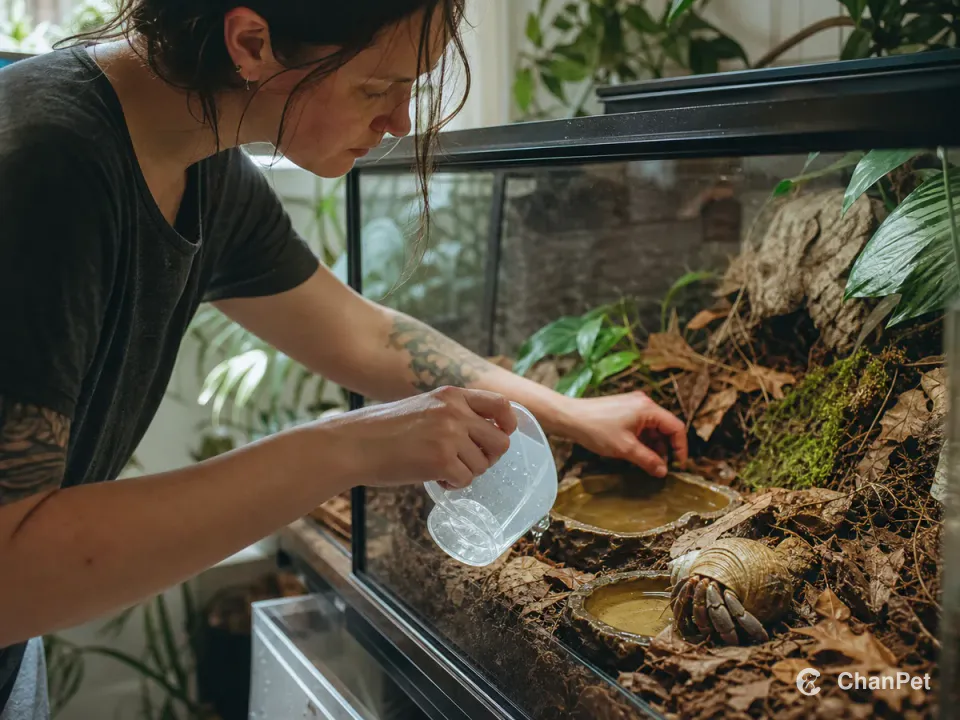
Refreshing water and checking the substrate are short recurring jobs that stay manageable only when they happen on schedule.[1]
Try the routine before you acquire the animal
For two weeks, put a daily enclosure check and a weekly cleaning slot on your calendar. If that rhythm fits naturally, the care may feel manageable. If it already keeps getting skipped, choose a later time to begin.[1]
Lower effort works when the rhythm stays steady
Land hermit crabs can remove the outdoor demands of pet care. Keep the short enclosure routine intact, and the work stays modest instead of piling up.[1][4]
Common questions
Sources
Sources used in this article
- [1]How Do You Build a Home for Hermit Crabs?Smithsonian's National Zoo and Conservation Biology Institute
- [4]Hermit Crabs: Animal Emergency PreparednessNew Jersey Department of Agriculture
- [2]Land Hermit Crab Owners Society Member Code of EthicsLand Hermit Crab Owners Society
- [3]Land hermit crab (Coenobita clypeatus) densities and patterns of gastropod shell use on small Bahamian islandsMissouri State University / Journal of Biogeography