The small jobs happen every day
Fresh water, measured meals and a scooped litter box are ordinary parts of living with a Ragdoll. Put them in a simple morning or evening routine. A large cat produces a litter task that becomes much harder when it waits several days for someone to have spare time.[1][2]
Wash hands after handling litter and before preparing food. CDC also recommends keeping the cat's care area clean and arranging regular veterinary care. Those are plain household habits, yet they matter most when several people share the same kitchen and bathroom.[3]
Brush before the coat gets ahead of you
The Ragdoll's medium-length coat needs regular grooming. GCCF lists weekly grooming as normal breed care. Keep a comb where the cat relaxes and work in short sessions. The neck ruff, belly, underarms and rear legs deserve a quick look because loose coat can gather there.[1]
A brush is also a practical health check. You may spot debris, a tender patch, a new lump, or a mat before it becomes a difficult home project. Stop when the cat has had enough, and ask a veterinary team for help with skin pain or a coat problem you cannot manage safely.[1][3]
Keep food decisions current
A familiar food bowl can hide a changing routine. Cornell recommends considering a cat's life stage, activity, health and body changes when planning food. Keep the food and treat information somewhere easy to find. It gives a veterinary visit something more useful than a rough guess.[2]
Ragdolls often like to stay near their people, which can make play feel optional on a busy day. Keep one short play session in the schedule anyway. A wand toy, a tossed soft toy or a small food puzzle offers movement and attention without turning care into a full evening project.[1][2]
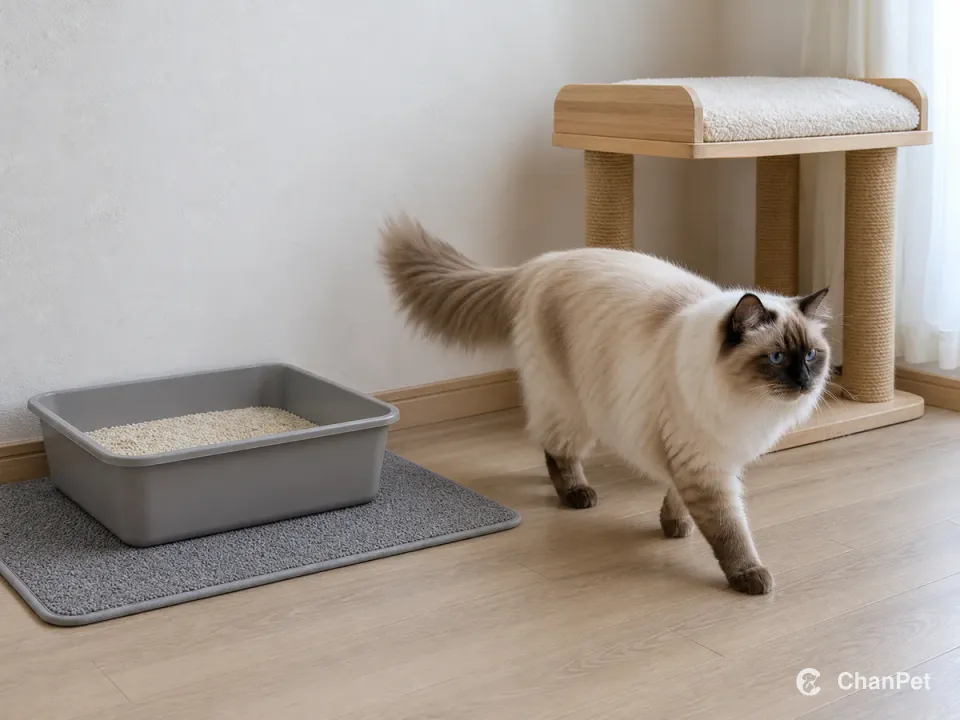
Daily litter care is one of the small jobs that keeps a Ragdoll's routine easy to follow.[1][3]
Choose this cat when the routine feels ordinary
Low drama comes from a routine you can see
Living with a Ragdoll feels easier when meals, litter, coat care and a little play are already folded into the week. The routine is simple, but it is still real care.[1][2]
Common questions
Does a Ragdoll need daily brushing?
GCCF lists weekly grooming as routine care. Some cats need an extra brush during shedding or when the coat starts to tangle. Short, frequent checks help you respond while the cat is still comfortable.[1]
Sources
Sources used in this article
- [1]RagdollThe Governing Council of the Cat Fancy
- [3]CatsCenters for Disease Control and Prevention
- [2]Feeding Your CatCornell University College of Veterinary Medicine, Cornell Feline Health Center