Look at the habitat before looking for the skink
Start by reading the enclosure: water, substrate moisture, ventilation, cover, and leftover food. This order lets you see whether the forest-floor environment is holding together before you look for a shy animal under a hide.[1][2]
Then observe the skink without forcing contact. Notice the usual hide, posture, movement, and skin. Quiet observation gives you a better picture of a shy skink than repeatedly pulling it into the open.[3][1]
Make water and food small, repeatable jobs
Refresh water and remove old food on a routine that does not require rebuilding the habitat. Prepare the task first, work around cover, and return the enclosure to its calm state. Small frequent care reduces the need for a disruptive overhaul later.[1][2]
Use feeding as an observation point. Record what you offered, whether the skink ate, and what you saw afterward. Food response has more meaning when it sits beside water, substrate, skin, and activity notes from the same week.[1][2]
Review the week without chasing perfection
Once a week, compare your notes on food, skin, waste, water, and enclosure conditions. The goal is a readable pattern, not a perfect spreadsheet. A series of small observations can show whether one part of the habitat needs attention.[1][2]
If a change persists, use the record when you contact a reptile-experienced veterinarian. A shy skink gives subtle information. A clear timeline makes it easier to separate a one-day variation from a concern that needs professional help.[1][2]
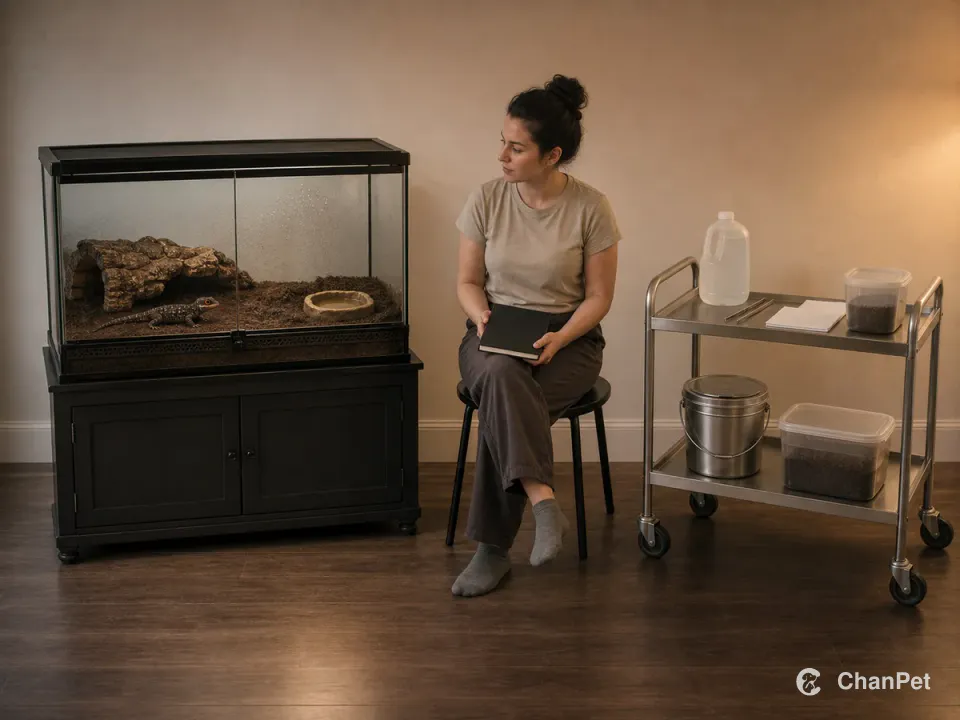
A gentle daily look keeps water, shelter, skin, substrate, and behavior visible before small maintenance tasks begin.[1][3][2]
Quiet care still needs a steady pair of eyes
Compare animals around daily checks, food, cleaning, and the environmental care you can keep consistent.
The quiet habitat needs regular attention
Common questions
Can I check a crocodile skink only on weekends?
Sources
Sources used in this article
- [1]Red-eyed Crocodile SkinkRoyal Veterinary College Exotics Service
- [3]Vocalization of the Crocodile Skink, Tribolonotus gracilis (De Rooy, 1909), and Evidence of Parental CareContemporary Herpetology
- [2]Management and Husbandry of ReptilesMerck Veterinary Manual