Small checks have big value
Refilling water, checking food and looking at the enclosure can be a quick nightly habit. That simple baseline lets you notice a loose lid, a wet patch or a wheel problem before it turns into an avoidable disruption.[1][2]
Because Roborovskis are often active after dark, your brief check can happen when the hamster is naturally awake. That timing makes observation easier and avoids disturbing daytime rest.[2][1]
Do not make the wheel the sacrifice
University of Michigan species information reports substantial overnight wheel activity in laboratory Roborovskis. A wheel, cover and routes to explore are part of what keeps a small habitat usable, not accessories to remove when life gets busy.[2]
Behaviour research includes Roborovskis among several hamster species because they are active animals with species-specific patterns. Low maintenance should mean a clear routine, not the smallest possible environment.[3][2]
Clean in a steady rhythm
Address damp or dirty areas, refresh food and water stations and keep the enclosure safe. A regular light routine is kinder to both you and the animal than waiting until all the work piles up at once.[1][3]
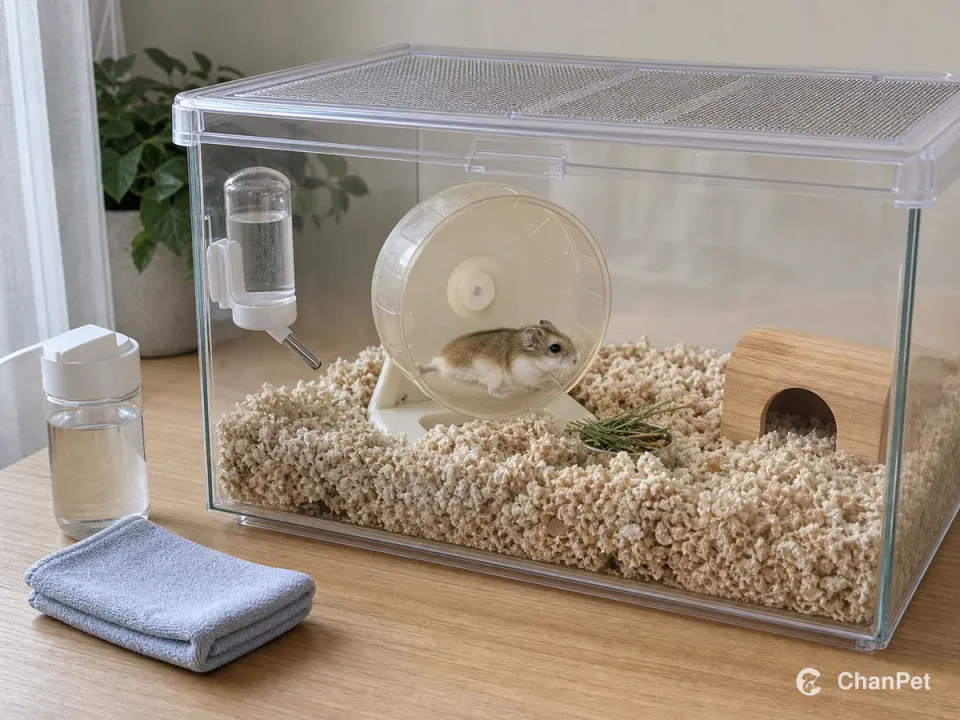
The wheel, hide and clean bedding all stay part of the small daily routine that keeps the enclosure usable.[1][3]
A fit for short routines that preserve a full hamster life
Save time without stripping out the important parts
A few consistent checks and regular small clean-ups keep the care light. Leave the wheel and exploration space in place, and the hamster can use its evenings well.[2][3]
Common questions
Sources
Sources used in this article
- [2]Phodopus roborovskii (desert hamster)Animal Diversity Web, University of Michigan Museum of Zoology
- [1]HamstersMerck Veterinary Manual
- [3]Comparative analysis of optional hunting behavior in Cricetinae hamstersBehavioral Sciences