The short coat brings a small ritual
CFA lists the Russian Blue as a shorthaired cat with a dense, silver-tipped coat. A brief brush session is often enough to keep it part of the routine. It also gives you a quiet chance to notice flakes, mats, or a spot the cat dislikes being touched.[1][2]
Keep grooming relaxed. Pick a time when the cat is already settled, make a few gentle passes, and stop before it becomes a wrestling match. The useful habit is a calm check-in, not a long spa session.[1][2]
Meals are a daily measurement
The food bowl says more than whether dinner was popular. Cornell advises owners to use a cat's age, appetite, activity, and body changes when they discuss portions with a veterinarian. Keep meals measured enough that you can see a real change.[3][2]
Set the food and water routine in a place the cat can reach easily. Replace water, wash bowls, and take treats seriously as part of the daily total. The plan stays simple when everyone in the household follows the same feeding rule.[3]
Use the weekly look to catch the small details
Choose one day to wash bowls, refresh the carrier, check the brush, and look at claws, coat, and favorite resting places. A regular look makes the home easier to maintain, and it makes a new change stand out sooner.[2][1]
Changes in appetite, activity, litter habits, or comfort deserve a note. Feline life-stage guidance treats small behavior changes as useful veterinary information. You do not need a diagnosis at home; you need a clear account of what you saw.[2]
A trip needs a familiar person
A food dispenser can help with part of a routine. A person still needs to see the cat, refresh water, deal with litter, and notice a change. Choose that person before travel dates appear on the calendar.[3][2]
Leave a one-page guide for the carer. Include the normal food, the bowl and litter routine, the carrier location, and the veterinary contact. Have the carer meet the Russian Blue once while you are home, when the handoff is still easy.[1][2]
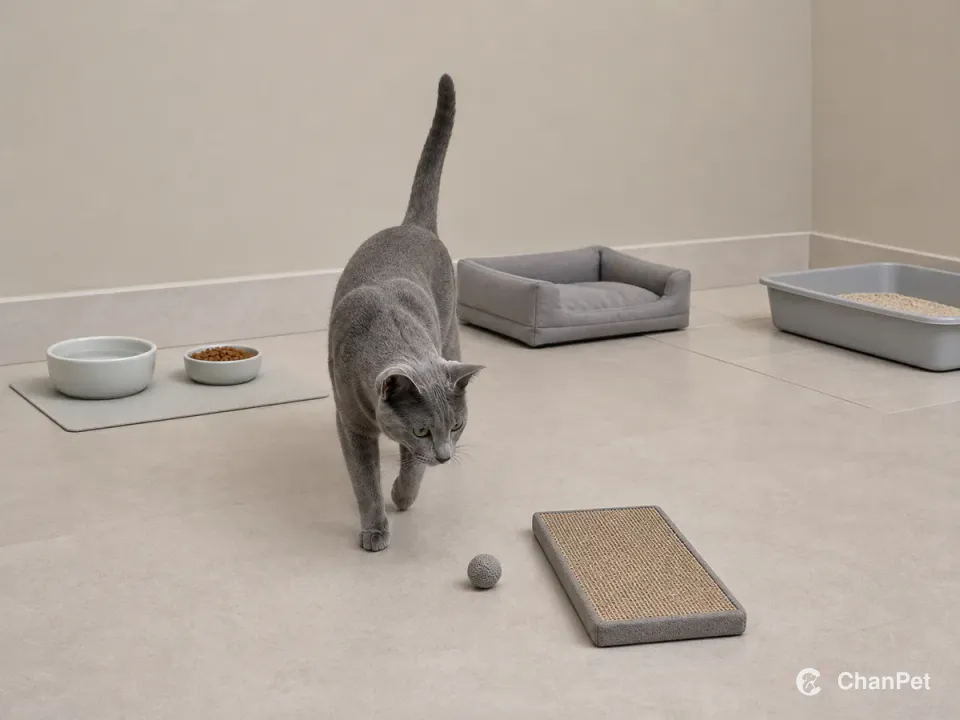
Food and water, a separate litter area, brief play and a resting spot turn short-coat care into a repeatable daily rhythm.[1][2][3]
A compact routine still needs a regular owner
Try writing the routine on the busiest day of your week
If food, water, litter, and a short check still have a place on that day, the care plan has a good foundation. Smart Match can help you compare that rhythm with other pets.[3][2]
Common questions
Does a short coat make a Russian Blue a hands-off pet?
Sources
Sources used in this article
- [1]Russian BlueThe Cat Fanciers' Association
- [2]Feline Life Stages: Veterinary Checkups at All AgesFeline Veterinary Medical Association
- [3]Feeding Your CatCornell University College of Veterinary Medicine, Cornell Feline Health Center