Begin with the small daily check
Each day, look at the temperature readings, water dish, lid and substrate. UC Davis recommends a warm-to-cool gradient and emphasizes reliable, protected heat. A quick check catches a loose bulb or dry water dish early.[1]
Use that minute to look at the snake as well. You are learning its normal hiding, digging and resting pattern, which makes a real change easier to notice and describe to an exotic-animal veterinarian.[1]
Keep the enclosure interesting and clean
The work is more than removing waste. In a preference study, young hognose snakes spent more time in an enriched part of their enclosure that included loose substrate, water and objects.[2]
Spot-clean when you see soiled substrate, then refresh the enclosure on the schedule that its condition requires. Keep the hides and loose material usable after cleanup, so the snake retains familiar choices.[2][1]
Treat feeding as a real appointment
Feeding day includes more than putting prey in the enclosure. You need appropriate thawed whole prey, a clean routine and time afterward for the snake to digest without disturbance.[1]
The University of Illinois advises against feeding live rodents because they can injure a snake. Buying and storing appropriate frozen prey keeps that risk out of an already busy week.[3]
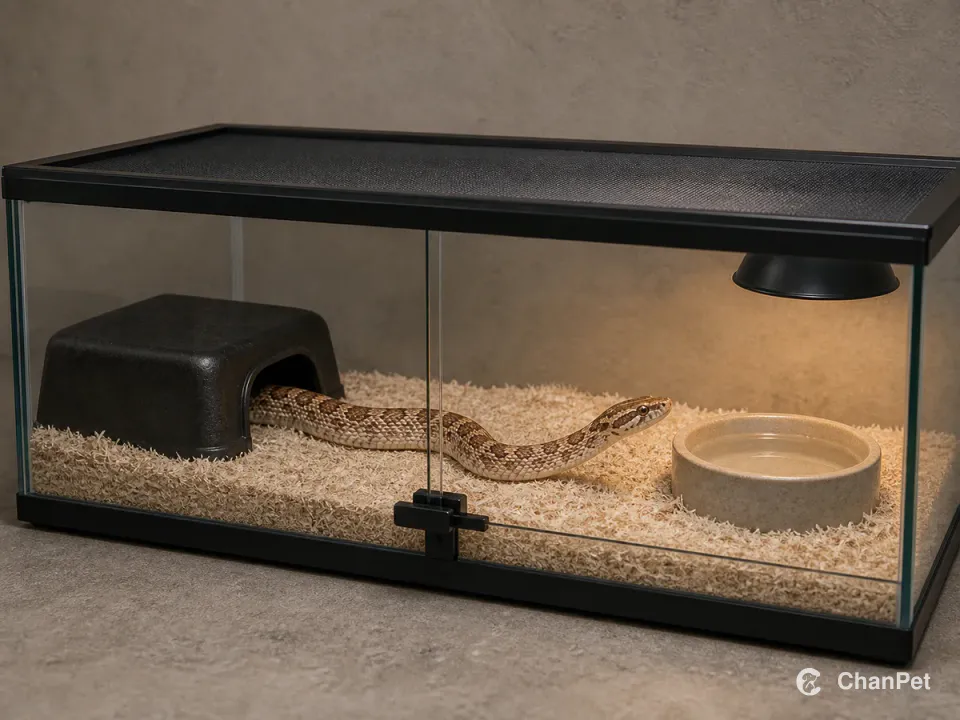
Clean water, dry substrate, a secure latch and a warm end share one closed enclosure. A short daily check keeps this quiet routine on track.[1][2]
Choose quiet care when you can repeat it
The routine stays small because it stays regular
The enclosure asks for attention every day, even though its care happens indoors. Safe heat, fresh water, usable substrate and careful feeding make quiet care genuinely manageable.[2][1]
Common questions
Sources
Sources used in this article
- [2]Western Hognose Snakes (Heterodon nasicus) Prefer Environmental EnrichmentAnimals
- [1]Avian, Small Mammal, and Exotics Animal Care and Feeding Guide: Snake Care and Feeding GuidanceUniversity of California Davis California Veterinary Emergency Team
- [3]Your Pet Snake's Diet: Dead or Alive?University of Illinois College of Veterinary Medicine