Short, dense fur still travels
The American Shorthair's coat is short and dense, rather than long and silky. Loose hair still collects on the throw, near a sunny window and under a favorite chair. A quick brush before it becomes a tumbleweed is easier than one huge clean at the end of the month.[1]
Keep a brush and lint roller where the cat already rests. A small routine after the evening meal keeps the coat from becoming a surprise. It also lets you notice a change in the skin or a patch of fur that needs a veterinary question.[1][2]
The tray makes the biggest difference
A quiet home can feel much less tidy when litter care slips. Scoop consistently, keep the tray away from food and watch for changes in the cat's routine. Cornell explains that house soiling may have medical, social or environmental roots, so details matter.[3]
Treat a sudden accident as information. Note the location, the timing and any change in household traffic before speaking with a veterinary team. A clean tray is important, yet it cannot solve pain, fear or a conflict with another animal by itself.[3]
Give claws an approved place to land
American Shorthairs can be calm companions, but they still need to stretch and scratch. Put a stable post close to the furniture that attracts them. A post near a favorite nap spot gives the cat a better option before the sofa becomes part of the routine.[1]
For a quieter evening, use a floor toy before bedtime and give the cat a settled place to rest. Keep food, waste and cleaning supplies handled with clean hands. CDC recommends handwashing after contact with cats, their food, waste or supplies.[2]
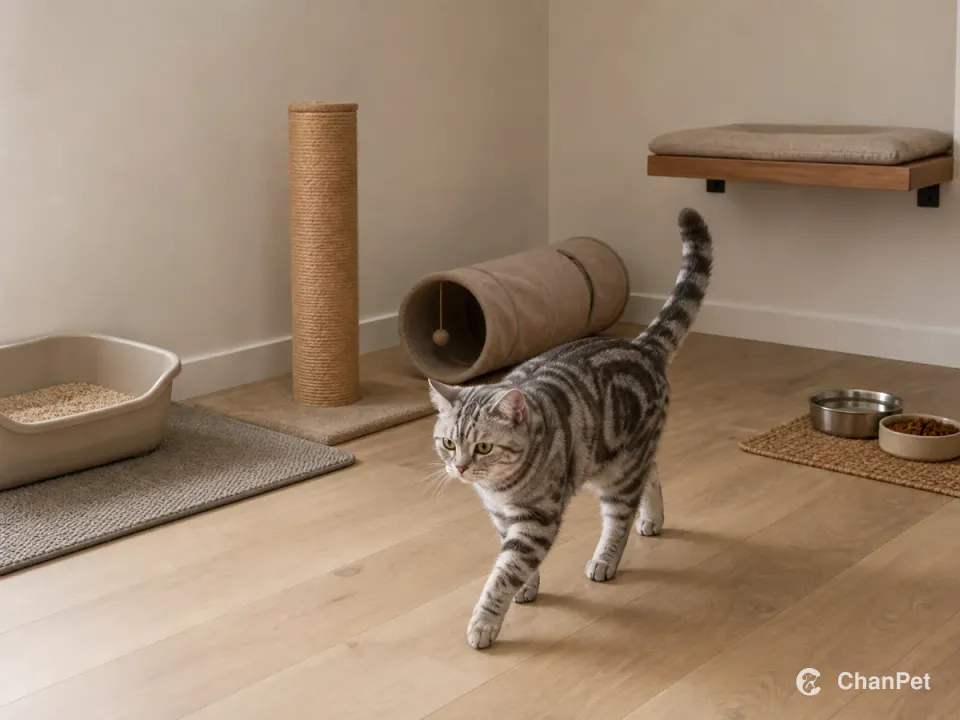
Separate litter, scratching and play areas give loose fur and routine cleaning a clear place in the day.[1][2][3]
A quiet home fit when cleaning is part of the comfort
Decide whether the everyday cleanup feels easy
Want a cat whose care suits your idea of a quiet home? Use a smart match to compare cleaning habits, play time and space before choosing.
Common questions
Will an American Shorthair shed around the home?
Yes. The coat is short and dense, and loose hair still reaches fabrics and corners. A brief regular brush makes the cleanup more predictable.[1]
What should I do when litter behavior changes?
Record the change and contact a veterinary team. House soiling can involve medical, social or environmental factors, and the location or timing may be useful clues.[3]
Sources
Sources used in this article
- [1]American ShorthairThe Cat Fanciers' Association
- [2]CatsCenters for Disease Control and Prevention
- [3]Feline Behavior Problems: House SoilingCornell University College of Veterinary Medicine, Cornell Feline Health Center