A short coat, a small routine
The Bengal's short, close coat keeps brushing simple. A soft brush now and then will lift loose hair and gives you a moment to check the skin. You will still find hair on a favorite chair and a sunny windowsill. The benefit is that the grooming job usually stays brief.[1]
Keep the brush where you already sit with the cat, not in a cabinet you forget exists. A few quiet strokes after play are easier than trying to turn grooming into a long weekend project. The same small habit helps you notice a new mat, tender place or debris caught in the coat.[1][2]
Litter is the clean-home anchor
The fastest route to a stale-smelling room is treating litter as a once-a-week job. Scoop daily, keep the tray easy to reach and wash it on a regular schedule. Cornell notes that new litter problems can have medical, environmental or social causes, so a sudden change deserves attention rather than blame.[3]
Place a mat at the tray exit, keep a small broom nearby and empty the waste promptly. These are ordinary housekeeping choices, yet they matter more than scent sprays in a small home. A cat that can reach a clean tray without crossing a loud or crowded space has one less reason to look elsewhere.[3][2]
Quiet comes after a good game
A Bengal's short coat will not fill the home with grooming work. Its activity can still fill an evening with running, jumping and a toy skittering around furniture. GCCF describes Bengals as intelligent and active. Give that energy a time and a place before you sit down to read or join a call.[1]
A sturdy scratcher and a secure climbing area can also save a quiet room from repeated corrections. Cats use their environment to scratch, stretch and look around. When the useful options are close at hand, you spend less time chasing the cat away from the objects you want to keep still.[2]
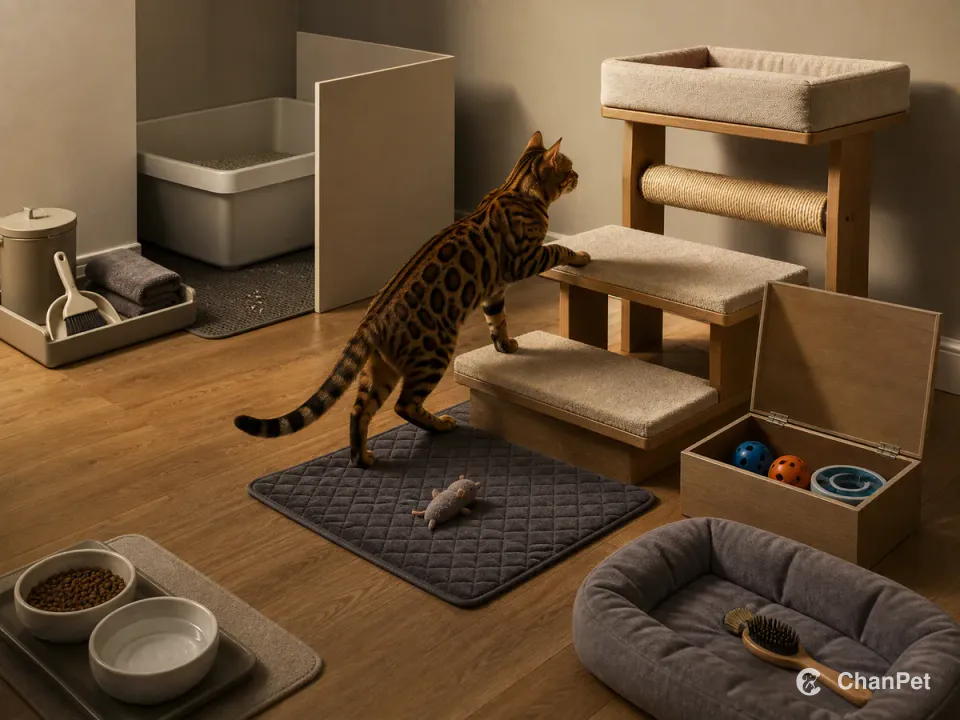
Use a sturdy activity route by day, store hard toys at night, then finish a brief litter-and-floor reset to keep the home tidy and calmer.[1][2][3]
Tidy is realistic; silent is less so
Choose the rhythm you want at home
Wondering whether a Bengal fits your tolerance for litter care, hair and evening activity? Start a smart match and compare the home you want with the routine a Bengal needs.[1][3]
Common questions
How much grooming does a Bengal need?
What should I do about a new litter accident?
Clean the area, look at what changed around the tray and keep notes on the pattern. Because house soiling can have health, environmental or social causes, contact a veterinary team if it continues or the cat seems unwell.[3]
Sources
Sources used in this article
- [1]BengalThe Governing Council of the Cat Fancy
- [2]Setting Up the Environment for SuccessFeline Veterinary Medical Association
- [3]Feline Behavior Problems: House SoilingCornell University College of Veterinary Medicine, Cornell Feline Health Center