Give loose fur a short route out
The British Shorthair coat is short and dense. Silver shading can make the coat look particularly crisp, yet the texture still leaves loose hair on a favorite chair, rug or blanket. Keep a brush where the cat already rests, and keep a lint tool where people get dressed.[1]
Do a brief brush and a quick floor pass on a regular day, rather than waiting for the room to look dramatic. That rhythm keeps fur from moving through every corner of the home. It also gives you a quiet chance to feel for changes in the cat's coat.[1]
Make the litter area easy to maintain
Give the litter box a calm corner away from food preparation. A mat at the exit catches much of the tracked litter, and supplies within reach make a daily scoop easier to finish. Cornell notes that litter habits can change with box cleanliness, location, litter, household shifts or health issues.[2]
Wash hands after litter care and keep the scoop and cleaner with the box. If the cat begins avoiding the box, look at the setup and recent home changes before replacing every product. Contact a veterinarian when discomfort or a sudden change may be involved.[3][2]
Put the busy sounds in the right place
A tidy home still has cat sounds: litter being covered, claws on a scratcher, a toy rolling under a table and paws landing from a perch. Put the litter box and scratcher away from a shared bedroom wall when the room allows. Felt pads under furniture soften a late jump.[2][1]
A coat pattern cannot promise a silent evening. Give the cat a short play session before you settle down, then leave a comfortable resting spot available. The home stays more peaceful when the cat has a familiar way to use its awake time.[1]
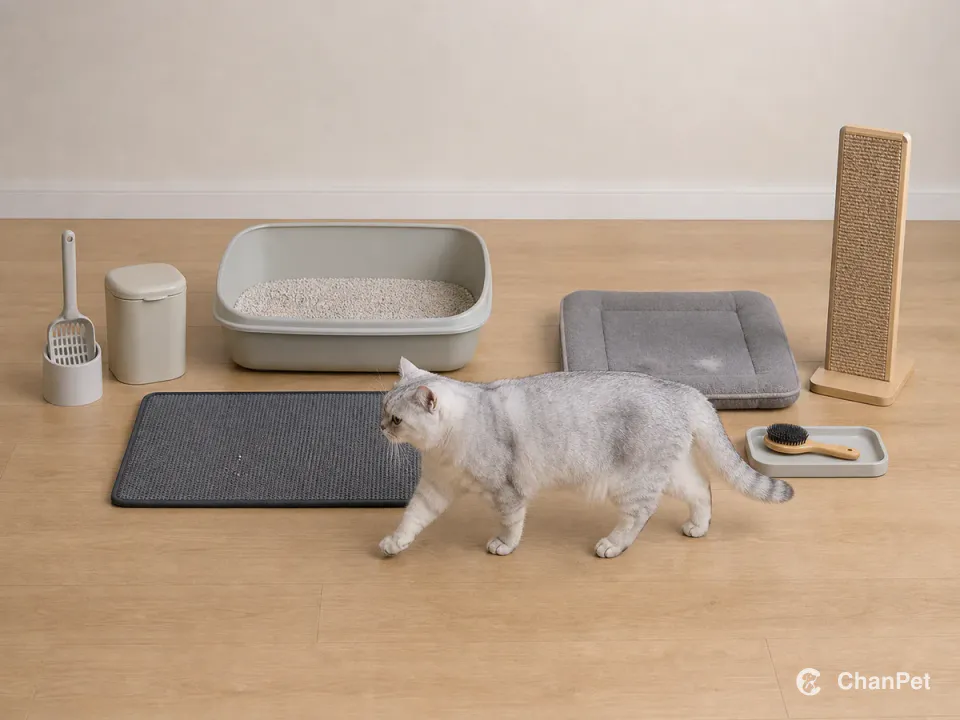
The litter mat catches tracked grains, while the scoop, closed bin, brush, and scratcher stay beside the places that need a quick daily reset.[1][3][2]
A tidy home comes from supplies that stay out
Build a home that resets quickly
The brush, lint tool, mat and litter scoop earn their keep when they are close at hand. Those few practical choices let a silver shaded British Shorthair share a tidy space without turning cleaning into a large event.[1][3][2]
Common questions
Does a short British Shorthair coat still shed?
Yes. The breed has a short, dense coat, so regular brushing and quick cleaning around favored resting spots help keep loose fur manageable.[1]
Sources
Sources used in this article
- [1]British Shorthair Show StandardThe Cat Fanciers' Association
- [3]CatsCenters for Disease Control and Prevention
- [2]Feline Behavior Problems: House SoilingCornell University College of Veterinary Medicine, Cornell Feline Health Center