Put the wet work in one care zone
The frogs bring very little sound. The care routine brings water, towels, food cultures, cleaning tools and an enclosure that needs air movement. Keep those supplies in one reachable place instead of letting them migrate across the kitchen and living room.[1][2]
Make the enclosure easy to service. You should be able to wipe a rim, check a fan, remove a bit of waste and see the substrate without moving a jungle of decorations. A tidy frog habitat begins with access, not with hiding every practical part.[1][3]
Damp substrate needs regular attention
Humidity does not excuse a neglected substrate. Look for overly wet pockets, old food and areas that need a light cleanup. The enclosure should hold the moisture the frogs need while remaining clean enough for you to read what is happening inside it.[1][2]
Fans and ventilation can make a small sound, and misting equipment may add a soft mechanical rhythm. Test those details before you commit to the enclosure location. A quiet home needs the equipment sound to feel manageable as well as the frogs to be silent.[1]
Live food is part of the cleaning plan
Food cultures and feeding containers need their own home and their own cleanup. Keep them organized, remove leftover food and make feeding a chance to look at the frogs. A clean routine protects the enclosure and makes the hobby feel less scattered around the house.[3][2]
If damp substrate, live food and equipment checks already sound disruptive, choose another companion. A dart frog can be quiet without being invisible, and good care should not depend on hoping the enclosure takes care of itself.[1][3]
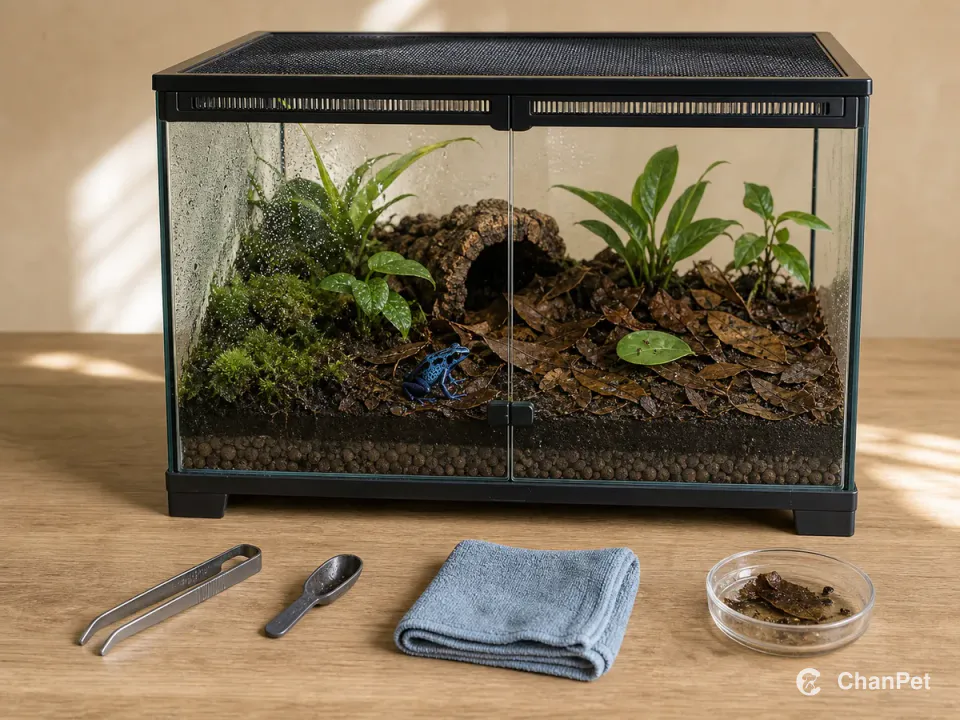
Quiet order comes from a visible loop: passive ventilation exchanges air around the damp zone, leftover live food is checked after feeding, and small tools handle each spot cleanup.[1][3][2]
Quiet frogs still need a visible care routine
Compare animal care needs against the cleaning, air and food routines your home can comfortably support.
A calm frog room is built from practical habits
Common questions
Will dart frogs make a quiet home messy?
Why does a damp frog enclosure still need ventilation?
Amphibian husbandry balances temperature, humidity and air movement. The enclosure needs enough moisture for the frogs and enough maintenance access to keep the habitat clean and stable.[1]
Sources
Sources used in this article
- [1]Environment and Husbandry for AmphibiansMerck Veterinary Manual
- [3]Poison Dart FrogSacramento Zoo
- [2]The Husbandry of Poison-Dart Frogs (Family Dendrobatidae)Association of Reptilian and Amphibian Veterinarians Proceedings