Contain the digging with a deep base
Gerbils need enough bedding to tunnel and nest, so a little loose material is part of keeping them well. A deep, solid-sided base contains much more of it than an open wire cage. Put a small brush and dustpan beside the enclosure for the bits that still make it out.[1]
Keep the enclosure dry and easy to reach. Damp bedding and stale food create more work than a normal digging mess. A daily glance at the water bottle and the favorite corners helps you remove the problem while it is still small.[2][1]
Put the wheel where its sound belongs
A wheel gives gerbils a useful outlet, and a working wheel makes a sound. Test it in the room before the pair arrives. A quiet office, a guest room, or a corner away from the lightest sleeper often suits the rhythm better than a bedside table.[1]
Check the wheel during the daily routine. Loose parts, a rubbing surface, or bedding jammed under it can make the sound sharper and can interrupt use. A quick adjustment beats discovering the issue after the room has gone quiet for the night.[1][2]
Let health changes guide the cleaning
A new strong odor, wetness, diarrhea, or a sudden change in how a gerbil moves calls for more than fragrance or a larger clean. Watch the pair closely and seek veterinary advice when a health change persists or seems urgent.[2][3]
Use cleaning to protect the enclosure, not to erase every trace of the gerbils' world. Prepare a safe place for the pair, remove soiled material, and reset the home calmly. That approach keeps the task practical and lets you notice what is changing from one clean to the next.[2][1]
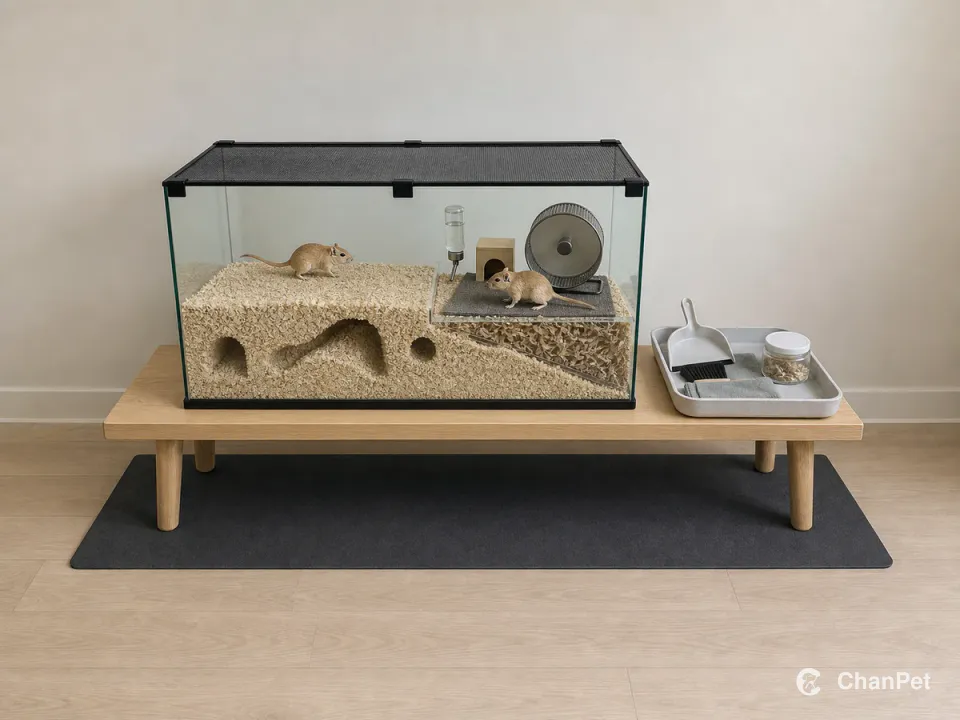
Deep bedding preserves tunnels while a stable wheel and short spot-cleaning routine contain noise, dampness, and shreds.[1][2][3]
A tidy fit for a home that accepts a little real life
Choose freshness over a spotless-looking cage
Set the enclosure where its wheel will be considerate, sweep the loose bedding as part of the day, and act early on dampness or a new odor. That keeps the room comfortable without taking away the digging that gerbils need.[1][2]
Common questions
Are gerbils quiet enough for a bedroom?
They can make wheel and digging sounds during quiet hours. Test the intended location first and choose another room when sleep is easily disturbed.[1]
Sources
Sources used in this article
- [1]Creating a Good Home For GerbilsRSPCA
- [2]Caring For Your Pet GerbilsRSPCA
- [3]Disorders and Diseases of GerbilsMerck Veterinary Manual