The snake is quiet; the habitat is visible work
A green tree python brings very little household noise. The care routine brings tall doors, water containers, a light or ventilation check, and the occasional cleanup at height. Give the enclosure a place where you can do that work without carrying tools through the whole home.[1][2]
Keep the upper habitat easy to see and reach. A python that uses branches needs a vertical home, and that home still needs service access. A tidy room is easier to keep when you can inspect vents, water, perches, and enclosure edges without moving the setup.[1][2]
Make waste and food one contained process
Prepare frozen-thawed prey, feeding tools, waste supplies, and a clean container before you open the enclosure. Returning those items to one care bin keeps the kitchen and living space from collecting small pieces of reptile work. It also lets you focus on the snake's perch during the task.[2][3]
Remove waste with a calm, regular routine and look at the surrounding habitat afterward. A small cleanup gives you a reason to notice water, ventilation, and the snake's usual position. Regular care is easier to live with than waiting for several jobs to collect at once.[2][1]
Make handwashing the last step
Reptiles and their habitat can carry germs even when everything looks clean. Wash hands with soap and running water after contact with the snake, enclosure, food, water, or tools. That short last step helps protect everyone who shares the home.[3]
Keep care supplies away from places used to prepare human food. A dedicated bin and a planned cleanup route make the boundary practical instead of easy to forget. This is especially useful on feeding days, when several objects move in and out of the enclosure.[3][2]
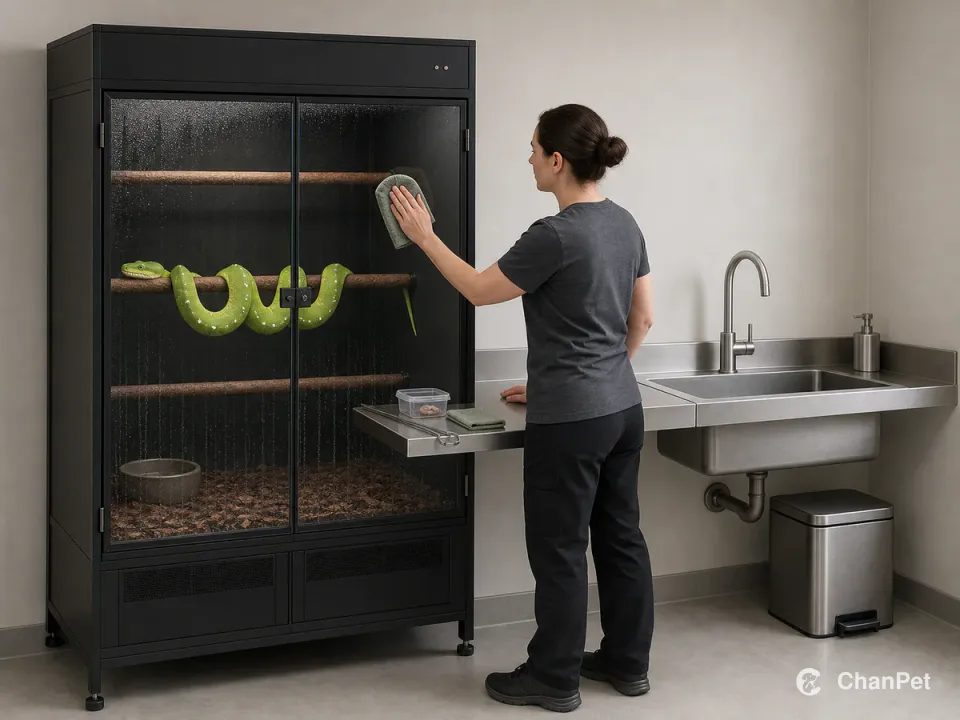
Quiet care still includes humidity, glass marks, food remains, cleaning, and a contained hygiene finish.[1][2][3]
Quiet living works when care has a contained place
Compare animals around enclosure upkeep, food handling, cleanup, and the care space your home can comfortably support.
The snake is quiet; the routine still needs room
Common questions
Will a green tree python make a quiet home noisy?
Sources
Sources used in this article
- [1]Morelia viridis (Green tree python)Animal Diversity Web, University of Michigan Museum of Zoology
- [2]Providing a Home for a ReptileMerck Veterinary Manual
- [3]Reptiles and AmphibiansCenters for Disease Control and Prevention