Set up a return-home station
A Husky comes home with more than a tired body after an outing. Keep a towel, brush, cleanup bags, and a washable mat near the entry. Wipe paws, check the coat for debris, put the lead away, and wash your hands before moving into the rest of the home.[1][2]
The double coat sheds in a regular rhythm and can shed heavily through seasonal changes. Short brushing sessions near the door or on a washable mat keep loose fur contained. A predictable reset after walks protects the sofa, floor, and next hour of your day.[1]
Plan quiet before the dog is alone
Husky voice varies by individual, and a dog that struggles with a sudden absence can be loud in a quiet home. RSPCA advises gradual alone-time practice with calm departures. Start with timeframes the dog can handle, then build the skill slowly beside regular exercise and settling time.[3][1]
Set the room up for rest before you leave. A familiar bed, water, and a calm transition from the walk make the change easier to understand. If sound or behavior changes sharply, note the timing and discuss it with a veterinarian or qualified behavior professional.[3][2]
Keep cleaning close to the dog routes
Do not fight the whole house at once. Follow the Husky's actual map: entry, bed, water bowl, favorite rug, and the spot where the dog settles after movement. A brush by the bed and a small bin for outdoor gear make the cleanup route feel lighter.[1]
Put hygiene into the rhythm, too. CDC recommends washing hands after contact with dogs, their waste, or related supplies. That simple step belongs beside the towel and brush, not as an afterthought once the dog has crossed the whole house.[2]
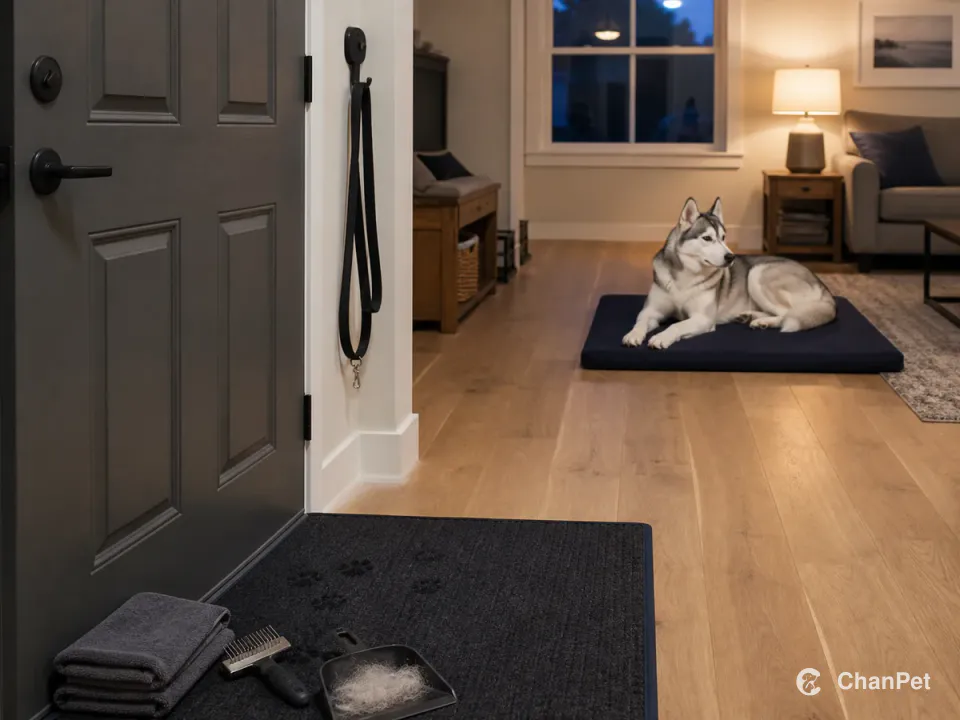
The entry mat catches paw marks, the towel and brush finish the reset, and the Husky settles on a quiet mat farther from the door.[1][2][3]
A quiet-home fit when the return-home jobs stay short
Choose the routine that keeps your home calm after the walk
Use Start Smart Match to compare your cleaning habits, sound tolerance, outdoor life, and time at home with a Siberian Husky.
Common questions
Will a Husky make a home hard to keep clean?
Sources
Sources used in this article
- [1]Siberian Husky Dog Breed InformationAmerican Kennel Club
- [2]DogsCenters for Disease Control and Prevention
- [3]How to Train Your Dog to Stay Home AloneRSPCA