Burrowing is not a messy habit to train away
Yellow-bellied marmots travel between burrows and surface activity, adjusting behaviour according to risk. Digging, retreating and exploring are not room-mess problems that training can remove from a wild animal.[1]
Marmot conservation settings include outdoor areas, artificial burrows, rocks and logs because the animal needs places to hide and investigate. A spotless indoor corner cannot offer the same structure.[2]
A tidy home and a wild routine pull apart
People seeking a quiet, clean pet usually need behaviour that stays within a small, predictable area. Marmots need outdoor choice, burrows, seasons and space. It is unfair to ask the animal to behave like a small indoor companion.[1][2]
Washing hands and keeping animal tools separate are sensible hygiene habits. Those steps do not turn a wild burrowing mammal into a pet that belongs beside a bed or sofa.[3][1]
Choose quiet without shrinking wildlife
For calm observation, consider isopods, pet snails or an appropriate fish setup. They still deserve care, but they do not require you to compress burrowing, outdoor life and hibernation into a corner of the house.[2][1]
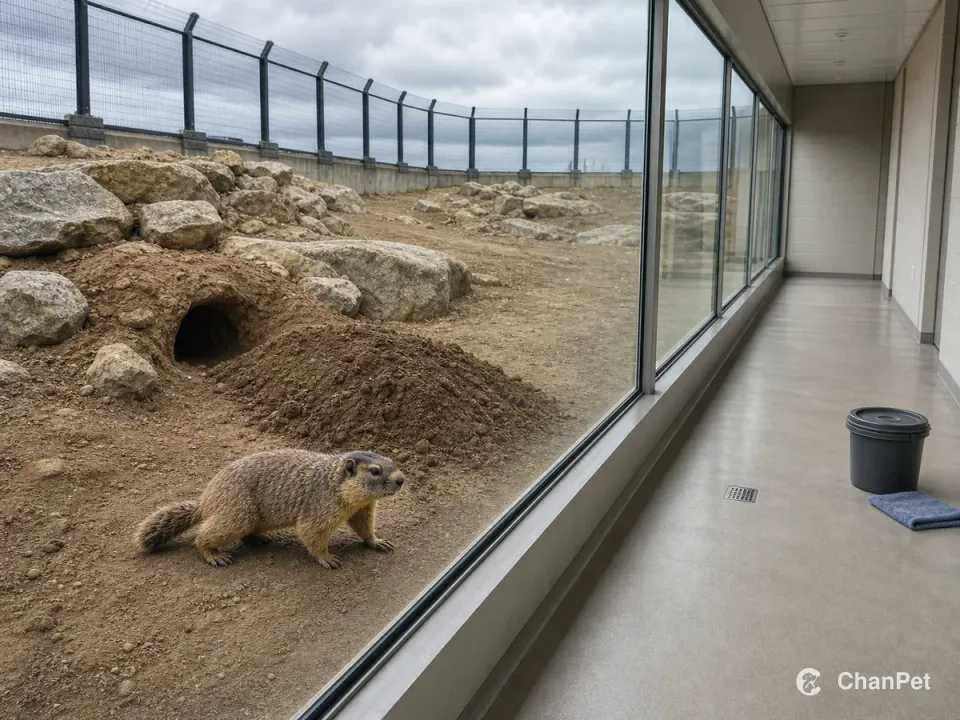
Soil, burrows and the viewing area stay separate without taking away the marmot's room to dig.[1][2]
A home and an animal both feel better with a true fit
A marmot does not belong in a bedroom arrangement
Common questions
Sources
Sources used in this article
- [1]A Marmot's LifeUCLA Rocky Mountain Biological Laboratory
- [2]Optimizing release strategies: a stepping-stone approach to reintroductionMarmot Recovery Foundation
- [3]Hygiene Practices Around AnimalsCenters for Disease Control and Prevention