Quiet does not mean the home runs itself
A Munchkin usually creates less noise than a dog, yet its home still needs daily attention. Hair, litter, food crumbs, and the routes around furniture all need care. A tidy space feels better to the people and makes the cat's movement easier to see.[1][2]
Short legs can make jumping, climbing, and grooming harder. Leave a clear floor-level route to the litter box, food, water, resting spots, and a safe scratching surface. Tidy is useful when it also means the cat has fewer obstacles to negotiate.[1]
The litter box should be easy to enter and clean
Cats with mobility problems benefit from a low-sided litter box. Place it in a quiet, accessible location and keep it away from food. A clean box matters too, because odor, box design, and location can all affect whether a cat chooses to use it.[2]
Scoop daily and keep the route to the box free of shoes, bags, and closed doors. If litter use changes, treat it as information. Medical problems, discomfort, the box, the litter, and the location can all be part of the story.[2][1]
Hair care is also a comfort check
Regular brushing keeps loose hair off furniture and gives you a chance to see the cat's skin and coat. It also helps you notice an area the cat is finding harder to reach. Keep the session short and let the cat pause rather than forcing a long grooming appointment.[1]
Choose a calm place for grooming at the cat's own level. A soft mat on the floor or a stable low surface can work better than carrying the cat onto a high counter. The goal is a clean coat and a comfortable body, not a perfect photo.[1]
Cleaning needs a health boundary
Cats can carry germs in their poop even when they look clean. Wash hands with soap and running water after litter, food dishes, or cleanup. Keep the litter area away from food preparation and change the box daily.[3]
Pregnant people and people with weakened immune systems need extra care around litter. Decide who owns the task before the cat arrives, then keep the supplies where that person can clean without stepping over the cat's low-access route.[3][2]
A clear route can reveal a change
Clear floors make it easier to see how the cat moves. A new pause at the litter box, a reluctance to use a low step, or a spot that goes ungroomed can be a useful reason to call the veterinarian. Do not wait for a big mess to start paying attention.[1][2]
A short note on grooming, litter use, and favorite routes can help a veterinary conversation. That record also helps a cleaner or sitter preserve the layout instead of placing supplies in the cat's usual path.[1][3]
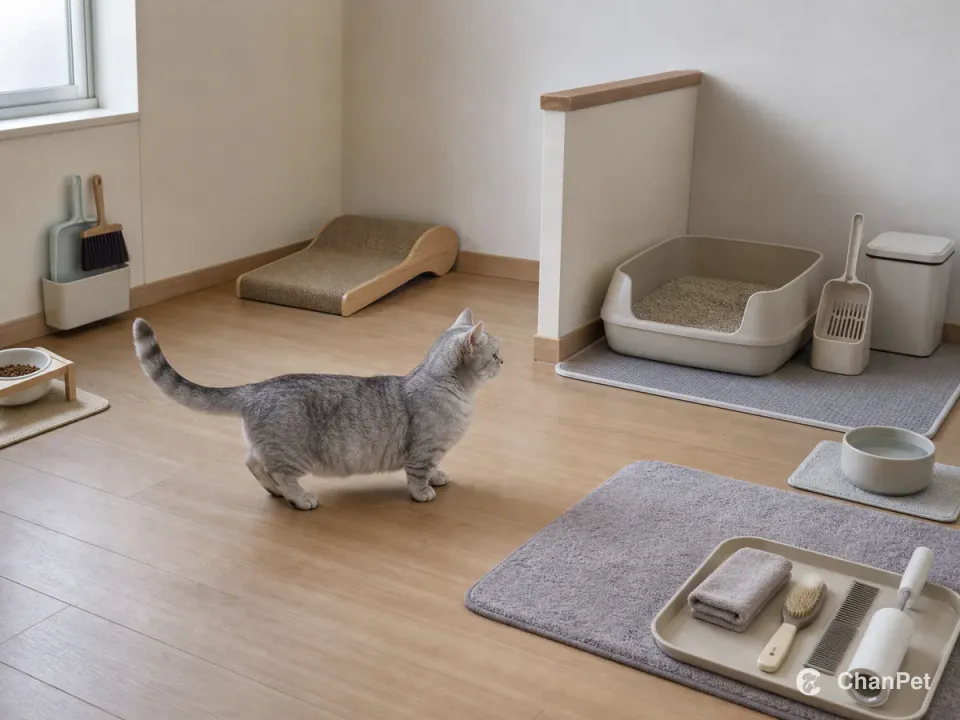
Daily litter tools stay beside the low-entry box, grooming supplies remain at floor level, and separated food, water and open flooring keep cleaning from blocking the cat's route.[1][3][2]
A tidy home should make life easier for the cat
Use the alternatives match to compare domestic shorthairs and British Shorthairs with your cleaning habits, space, and household health needs.[2][3]
Clean should also mean accessible
Common questions
What litter box helps a Munchkin cat?
How should I handle cat litter safely?
Scoop and clean the box regularly, wash hands with soap and running water, and keep the area away from food preparation. Pregnant and immunocompromised people need extra precautions.[3]
Sources
Sources used in this article
- [1]Dwarfism in catsCats Protection
- [3]CatsCenters for Disease Control and Prevention
- [2]Feline Behavior Problems: House SoilingCornell University College of Veterinary Medicine, Cornell Feline Health Center