Quiet is not the same as invisible
You will not hear a panther chameleon asking for breakfast. You will see the signs of the habitat instead: a water routine, an enclosure that needs airflow, feeder containers and the daily job of removing waste. A calm animal still has a living system around it.[1][2]
Give that system one dedicated place. Keep feeders and cleaning tools contained, and keep the enclosure away from food preparation. A chosen care zone is much easier to maintain than supplies scattered across the kitchen and living room.[3][2]
Ventilation and water need attention
A tree-dwelling chameleon uses a planted, branch-filled habitat rather than an empty tank. That habitat needs clean surfaces, sensible airflow and a water routine that does not leave stagnant or dirty areas behind. Deal with a damp corner early instead of covering it up with more decoration.[1][2]
Put cleaning on the calendar before the enclosure looks messy. A short daily check and a planned deeper clean are easier to keep up than a rescue session after several missed days. The same routine helps you notice a change in the chameleon's use of the space.[2]
Clean hands keep the routine safe
Wash your hands after handling the chameleon, its enclosure, water items or feeder containers. The CDC also advises keeping reptile supplies away from places where people prepare food. These habits protect the household without turning animal care into a stressful ritual.[3]
If the sight of feeder insects, the water setup or regular enclosure cleaning will frustrate you, choose another companion. A clean habitat is not a weekly cosmetic job. It is part of keeping the chameleon well.[2][1]
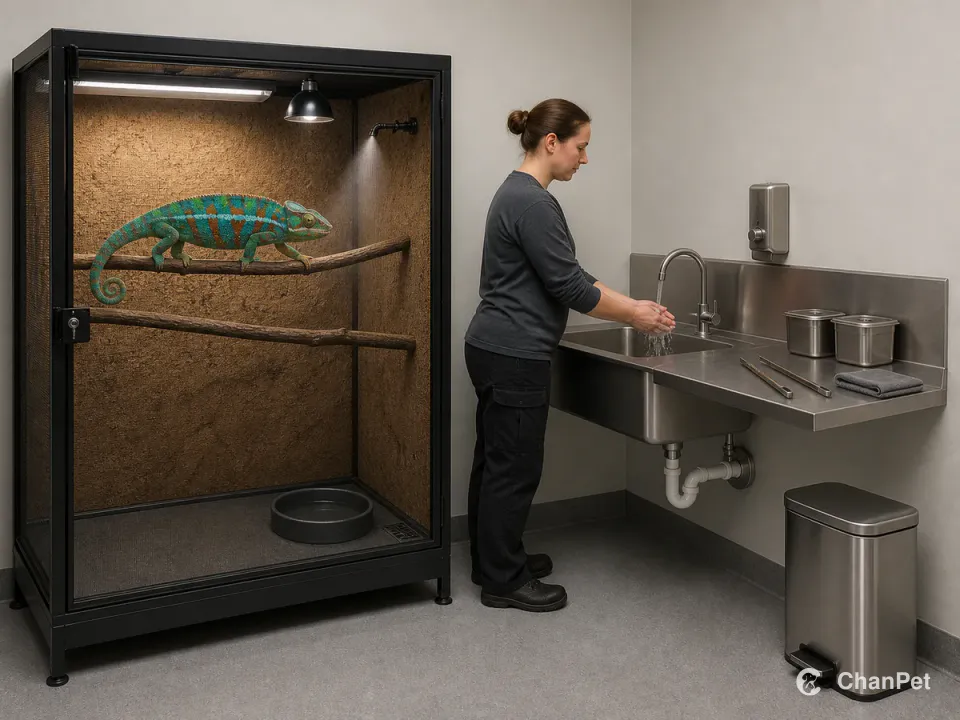
A fixed sink keeps feeder handling, water cleanup and hand washing in one care zone beside the quiet enclosure.[1][3][2]
A tidy home needs a tidy care zone
Compare animals whose everyday care fits the amount of household setup and cleaning you want to keep.
Quiet homes still need visible care
Common questions
Does a panther chameleon make a home quiet?
Where should reptile cleaning and feeder supplies go?
Keep supplies in a dedicated care zone and away from food preparation areas. Wash hands after working with the reptile, habitat or related supplies.[3]
Sources
Sources used in this article
- [1]Furcifer pardalisAnimal Diversity Web, University of Michigan
- [3]Reptiles and AmphibiansCenters for Disease Control and Prevention
- [2]Management and Husbandry of ReptilesMerck Veterinary Manual