Let the entry routine reveal eye changes early
A tidy entry routine can include a calm look at the Pug's eyes in even light after an outing. UFAW describes ocular concerns linked with the short-headed structure and prominent eyes of affected dogs.[1]
Look for a difference in eye opening, redness, tearing, squinting, face rubbing, or the eye surface. Persistent changes deserve prompt veterinary assessment, along with a photo and note about when they began.[1]
Keep cleaning and alone-time practice unhurried
Pugs shed, and a brush, paw towel, and covered supply bin can keep the home routine orderly. Pair brief coat cleanup with a quiet water-and-rest pause, so care finishes without adding extra bustle.[2]
RSPCA recommends building alone time gradually and rewarding relaxed behavior. Practice short departures from the clean, quiet rest area, then use a video check occasionally to understand how the dog settles.[3]
Choose a future quiet-home dog for health, not just tidiness
A quiet home helps current carers notice small changes, yet it cannot alter the ocular structure linked with risk. For a future dog, begin with health and comfort before assessing shed level or visual style.[1]
Bichon Frise, Toy Poodle, and Schnauzer offer alternatives for people seeking a small companion. Compare their grooming and daily interaction requirements, then choose the healthier direction that suits your actual household.[2][1]
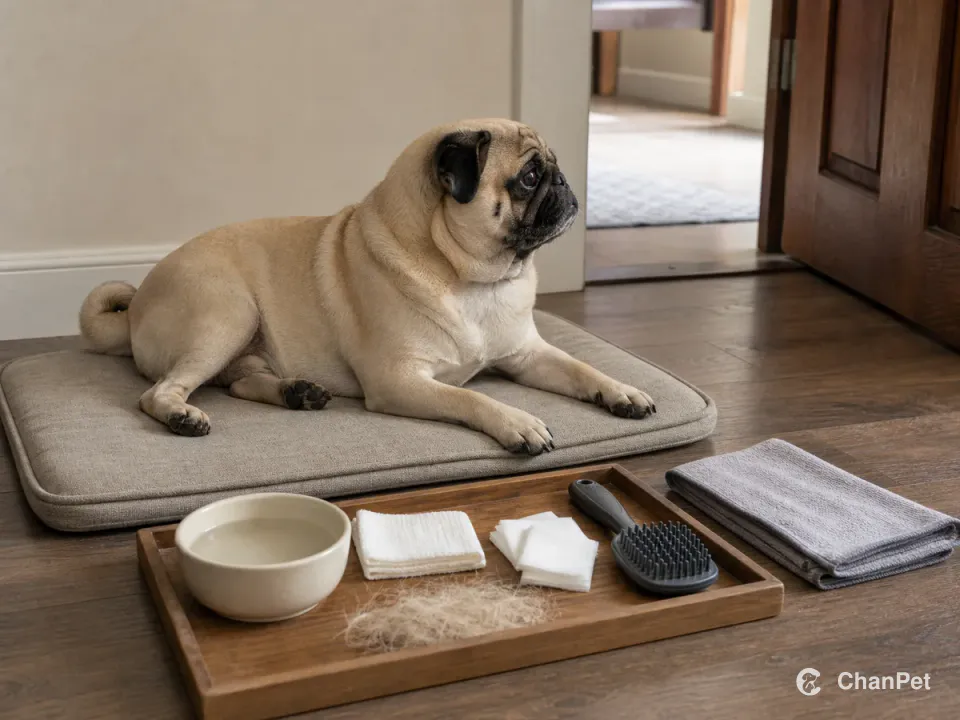
Quiet rest makes a Pug’s usual breathing easier to hear and observe, while the open doorway preserves a retreat. One tray keeps short-coat, eye-area and facial-fold cleanup in the same tidy routine.[2][1][3]
Keep a current Pug's care orderly, and choose a healthier small dog for the future
Make the quiet home routine a useful observation tool
Common questions
Which Pug eye changes should I take seriously in a tidy home?
Persistent redness, tearing, squinting, face rubbing, changed eye opening, or a changed eye surface deserves prompt veterinary assessment. A photo and time note can help the appointment.[1]
How can I practice alone time without disrupting a calm Pug home routine?
Start with brief departures from a quiet rest area and reward relaxed behavior. Video checks can show whether the dog settles or needs a shorter next practice.[3]
Sources
Sources used in this article
- [2]Pug Dog Breed InformationAmerican Kennel Club
- [1]Pug - Brachycephalic Ocular SyndromeUniversities Federation for Animal Welfare
- [3]How to Train Your Dog to Stay Home AloneRSPCA