Take the voice seriously before the cat arrives
CFA describes the Siamese as vocal, affectionate and active. The sound can be part of a close relationship, yet it can also carry through a quiet bedroom or an evening call. Listen to a Siamese in person if you can. A short online clip rarely tells you how the sound feels inside your own routine.[1]
Give the cat company and a few predictable moments of play, then let the home settle again. Siamese cats often like to know where their people are. A bed near your work area can let the cat join the day without seeking attention through every quiet hour.[1]
Make the litter routine easy to finish
A clean litter box changes the feeling of a home more than scented products do. Put it in a calm, accessible spot and scoop it on a routine you can keep. Keep a small mat and a closed bin nearby, so the few minutes of daily care end with the floor looking as you want it to look.[2]
A sudden accident or new odor deserves a calm check. Cornell notes that house soiling can involve health, the box, its location or a change in the environment. Clean the spot, review what changed and ask a veterinarian for help when the issue keeps returning.[2]
Give scratching a better target
Short fur means less brushing, while scratching still needs thought. Put a sturdy post or pad where the Siamese already stretches, greets you or watches the room. Cornell explains that cats may scratch furniture when the available surfaces or locations fail to meet that need.[1][3]
Protect the sofa while you make the new surface appealing. Notice whether the cat likes vertical or horizontal scratching, then reward use of the new spot with calm attention or a toy. A good scratching setup supports a cleaner room and gives the cat a normal way to mark and stretch.[3]
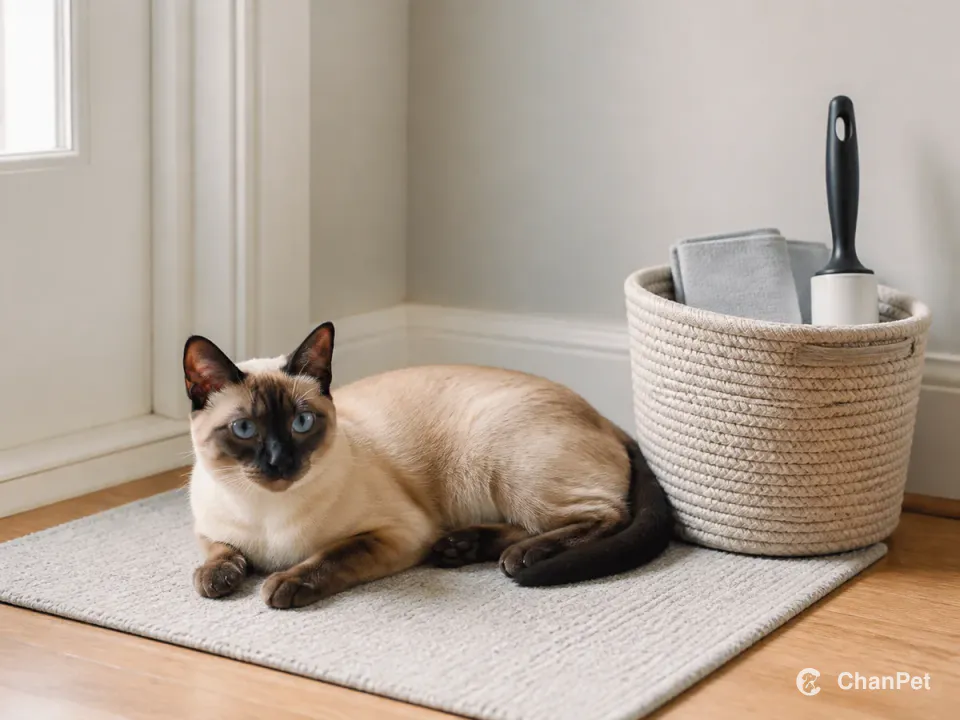
Keep the lint roller and daily wipe-down supplies in one spot, and short-coat care and entry cleaning fit naturally into the day.[1][2]
Choose the Siamese when tidy includes a little conversation
Keep the reset practical and the expectations honest
A Siamese can fit a tidy home when litter care, a good scratcher and a quick brush slot are already part of your day. The key question is whether a vocal companion will make your quiet home feel warmer or more crowded.[1][2]
Common questions
Will a Siamese keep a quiet home quiet?
Siamese cats are widely known for their vocal nature. Meet the individual cat and picture its voice during the times your home needs to be calm. The short coat makes grooming easy, while it does not change the cat's way of communicating.[1]
Sources
Sources used in this article
- [1]SiameseThe Cat Fanciers' Association
- [2]Feline Behavior Problems: House SoilingCornell University College of Veterinary Medicine, Cornell Feline Health Center
- [3]Feline Behavior Problems: Destructive BehaviorCornell University College of Veterinary Medicine, Cornell Feline Health Center