Test the sound before the fish arrives
The fish make almost no noise. The filter, air equipment and water movement may make a soft hum or splash, depending on the setup. Run everything in the planned room before the fish arrives, especially if the aquarium will sit beside a desk, bed or reading chair.[1]
A quiet tank should still be easy to reach. Do not surround it with furniture just to hide the equipment. You need access to check hoses, wipe drips and clean the filter before a minor sound or leak becomes a bigger household problem.[1]
Treat smell as a cue to check the system
A strong or unfamiliar tank smell calls for a look at the maintenance routine, leftover food, waste and filtration. Do the useful work instead of masking the room with fragrance. The aquarium stays more pleasant when water care is handled as it arises.[1]
Keep the water-change tools in one clean place and put absorbent towels nearby. When supplies are ready, a small spill or a routine water change becomes a short task. That is how an aquarium stays part of the room rather than taking it over.[1]
A simple layout is easier to keep clean
Choose decor with maintenance in mind. You should be able to see where food settles and reach places that collect debris. Goldfish work has examined how substrate affects foraging behavior, so the bottom of the tank deserves thought rather than a random layer added for a photo.[2]
Leave enough space for each fish and for the filtration system to do its job. Lionhead research shows that stocking density affects fish performance. A crowded tank asks more of your water-care routine and makes a calm, clean look much harder to keep.[3][1]
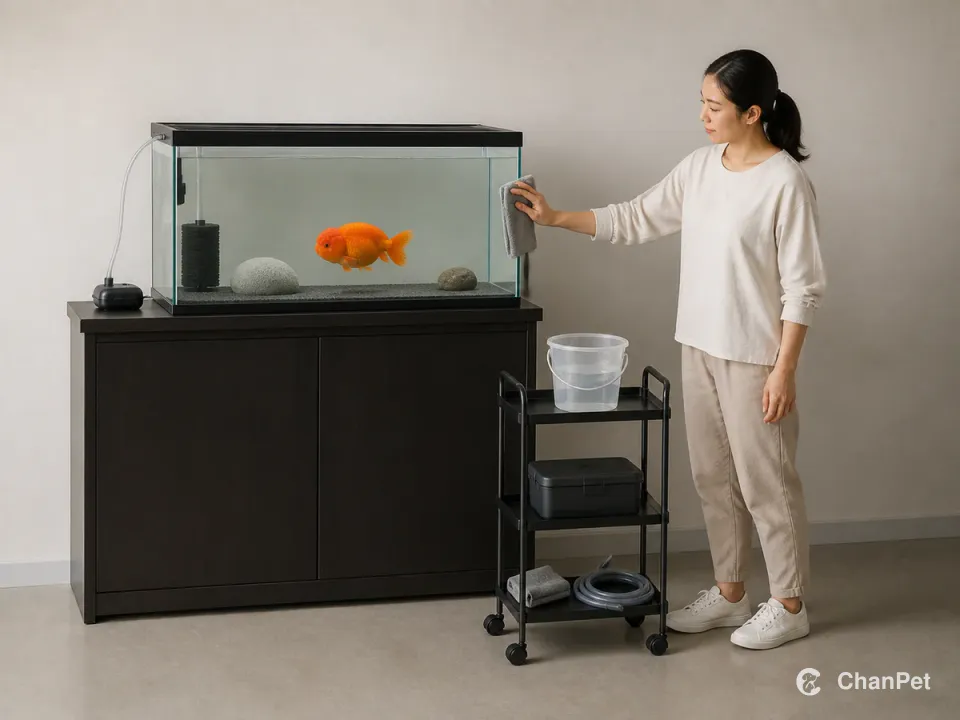
An accessible tank and one compact service trolley keep glass cleaning, water changes and tools in a short, visible routine.[3][1][2]
The cleanest aquarium is the easiest one to service
A clean tank comes from a visible routine
Thai lionheads bring very little sound, but the aquarium still needs a keeper who checks equipment, removes waste and makes water changes easy to do. Plan those pieces openly, and the tank can feel peaceful instead of demanding.[1][2]
Common questions
Will a Thai lionhead goldfish tank be noisy in a bedroom or office?
The fish itself is quiet. Equipment may create a hum or water sound, so run the filter and water system in the planned location before you commit to the final tank layout.[1]
What should I do if the aquarium starts to smell?
Use the smell as a cue to check leftover food, waste, water maintenance and filtration. Address the system rather than covering the odor with fragrance.[1]
Sources
Sources used in this article
- [3]Effect of different stocking densities on lionhead goldfish (Carassius auratus) nurseryRMUTSB Academic Journal
- [1]Management of Aquarium FishMerck Veterinary Manual
- [2]Goldfish in a tank: the effect of substrate on foraging behaviour in aquarium fishAnimal Welfare / Cambridge University Press