Put cleaning tools with the litter box
Give the litter box a quiet location with room for the cat to enter and leave. Keep the scoop, waste bags and floor cleaner beside it. The setup turns the daily scoop into a quick habit instead of a task that gets delayed until the house feels messy.[1][2]
Cornell identifies several factors that can change litter use, including cleanliness, placement, household changes and health. If the routine shifts, note what is different and ask a veterinary team for help. Punishment only adds stress to a problem that needs information.[1]
Give claws a surface the cat can find
Put a scratching surface close to the place the cat wakes up or stretches. Add a second option along another familiar route if space allows. A scratcher is easier for the cat to choose when it appears right where the need occurs.[2]
The white parts of a tuxedo coat come from genetics. They cannot tell you whether this cat prefers a tall post, a flat board or a rug-like surface. Offer sensible choices, then let regular use show you what to keep.[3][2]
Close the day in the same order
Before your own wind-down, offer a short play session, refresh water and check the box. The routine can fit your schedule, yet the same order makes it easier to see when a meal, a call or a litter habit has changed.[2][1]
Keep cat supplies away from food preparation and wash hands after litter work. Quiet, tidy homes rely on boring systems that happen every day. The system works best when each adult knows where the supplies are and what to do with them.[2]
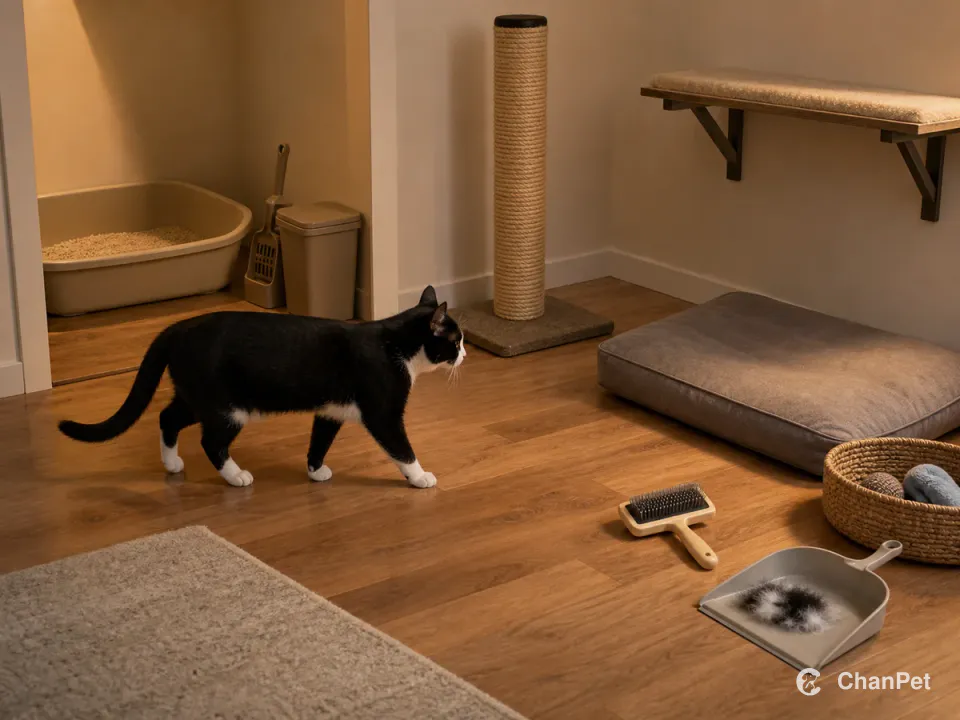
A clear evening route links the litter station, scratching post, fur-cleaning tools and quiet resting spots, making the daily reset easy to repeat.[3][2][1]
Quiet and tidy starts with reachable routines
The calm home is made from small placements
Store the cleaning tools where the job happens, give claws a useful target and repeat a simple evening order. Those choices keep life with a tuxedo cat much easier to manage.[2][1]
Common questions
Will a tuxedo cat shed more than another cat?
What should I do when a cat stops using the litter box?
Check for changes in cleanliness, placement, health or the household, and contact a veterinary team for guidance. A litter change deserves calm attention.[1]
Sources
Sources used in this article
- [3]Dominant White & White SpottingUniversity of California, Davis Veterinary Genetics Laboratory
- [2]CatsCenters for Disease Control and Prevention
- [1]Feline Behavior Problems: House SoilingCornell University College of Veterinary Medicine, Cornell Feline Health Center