Put the habitat system in one place
The chameleon will not interrupt a phone call with barking, yet its enclosure still needs a practical zone. Water equipment, feeders, cleaning tools and power connections belong where they can be handled without spilling into the kitchen or spreading across the living room.[1][2]
Keep the setup easy to inspect. A branch-filled vertical habitat needs airflow and surfaces you can clean, not a decorative jungle that makes every task hard to reach. Tree-dwelling behavior makes height and cover useful, while practical access keeps the care sustainable.[3][1]
Make water management a routine
Misting or drinking water needs a clear route in and out of the habitat. Watch for damp areas, check drainage and clean before residue builds. A fresh room comes from dealing with water at the enclosure, not from covering a problem with fragrance.[1]
Ventilation belongs beside the water plan. The habitat needs air movement without becoming a drafty corner of the room. Test the enclosure during normal household life and adjust the setup before the chameleon is relying on it every day.[1][3]
Keep feeders and cleaning out of food spaces
Live feeder insects bring their own storage and cleanup needs. Keep their containers, reptile dishes and enclosure tools separate from food preparation. Wash hands after working with the animal, habitat or related supplies.[2]
A small daily pickup and a planned deeper clean make the work feel manageable. If feeder storage, water maintenance and enclosure cleanup already sound intrusive, choose a companion whose home needs fit your idea of a quiet, tidy room.[1][2]
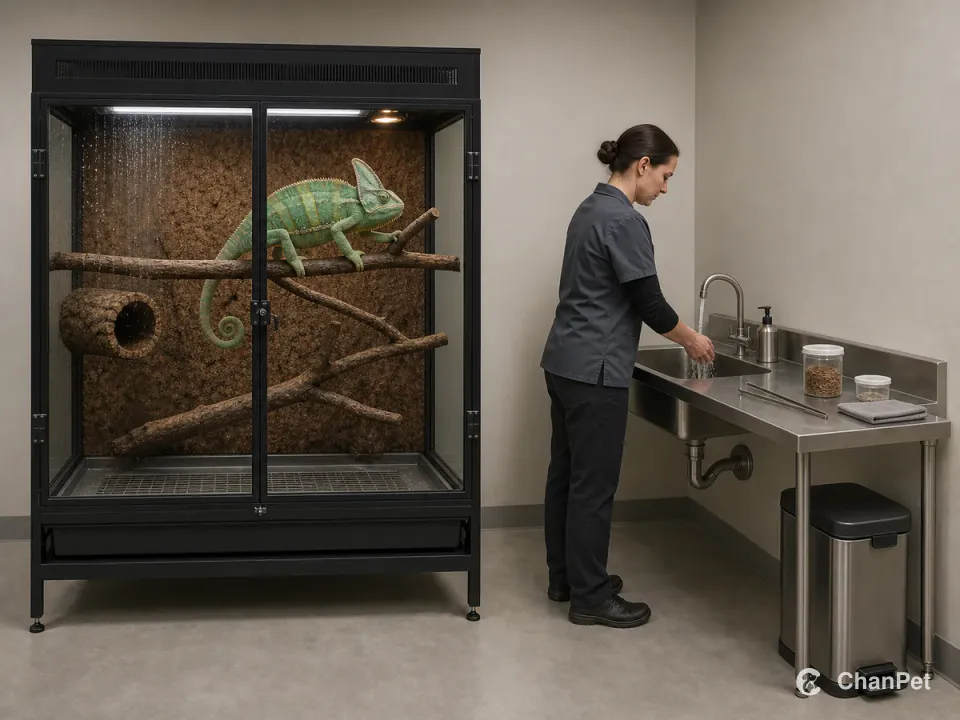
The animal stays quiet while water, feeder insects, waste, and hand hygiene move through one dedicated cleaning route.[3][2][1]
A quiet pet can still need a busy care corner
Compare animal care needs against the space and cleaning rhythm your household can comfortably keep.
Quiet works when the care space works
Common questions
Will a veiled chameleon make a home quiet?
Where should reptile feeders and cleaning supplies be kept?
Keep them in a dedicated care zone away from food preparation. Wash hands after working with the reptile, its habitat or related supplies.[2]
Sources
Sources used in this article
- [3]Chamaeleo calyptratus (Veiled Chameleon)Animal Diversity Web, University of Michigan
- [2]Reptiles and AmphibiansCenters for Disease Control and Prevention
- [1]Management and Husbandry of ReptilesMerck Veterinary Manual