Write the busy week down
Plan around the week with an early class, a late lab, a deadline and a sore throat. Write who serves breakfast, who scoops the tray, when play happens and what happens if you are gone overnight. A loose promise that someone will be around is not a care plan.[1]
American Shorthairs often enjoy people and moving games, according to TICA. A cat who greets you after class may also expect its usual play later that night. Short shared routines are easier to protect than a vague plan to make it up at the weekend.[2]
Choose a real backup person
Pick one person who has met the cat, knows the food and litter routine, and can enter your home if you are stuck away. Show them the carrier, the vet contact and the cat's ordinary hiding spots. Do this before exam season creates a crisis.[1]
Keep health records and appointment notes where that person can find them. Feline veterinary guidance treats preventive care as a life-stage conversation. Good records help a new caregiver describe what is normal for this particular cat.[3]
Make moving day less chaotic
A new lease or a trip home can turn a familiar cat routine upside down. Pack the carrier, food, litter and one familiar bed together. Set up one quiet room at the new place before opening the carrier, then let the cat explore in its own time.[1]
Keep a note of appetite, litter use and activity after a move. A student schedule changes quickly, but a cat's needs still change through kittenhood, adulthood and later life. Regular veterinary conversations help the routine keep pace with the cat as well as the semester.[3]
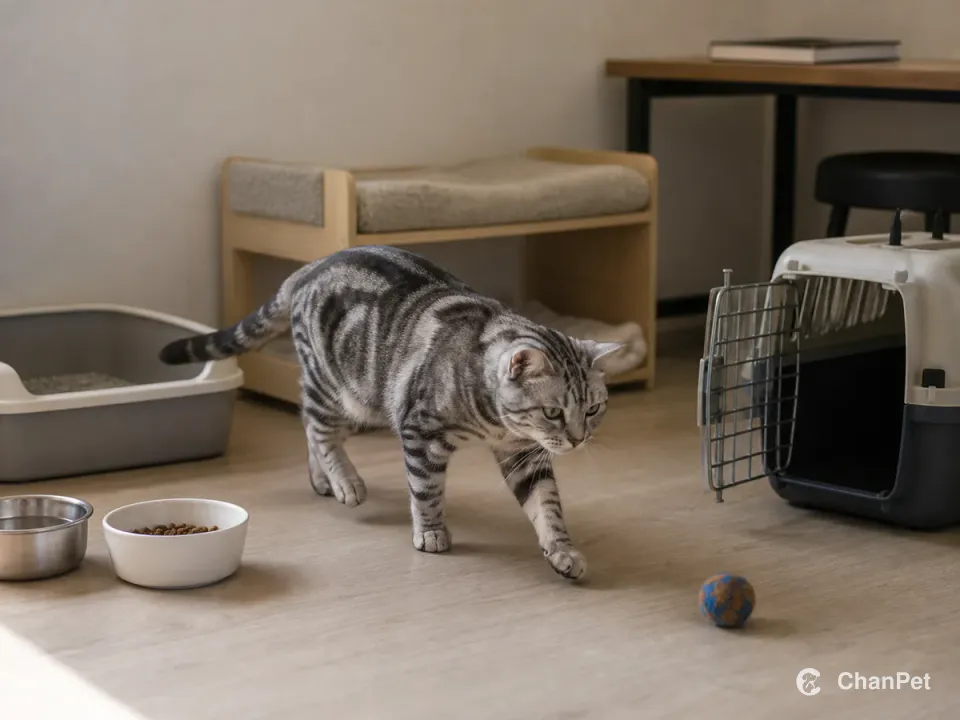
Fixed places for food, litter, rest and travel make daily care clearer through a busy week or a planned handover.[2][3][1]
A student cat for someone with stable housing and a backup
Test the plan against next term
Wondering whether an American Shorthair fits your classes, housing and travel? Use a smart match to compare the care routine with the life you actually have.
Common questions
What should a backup caregiver know?
They need the food and litter routine, the carrier location, veterinary contact details and a way into the home. Let them meet the cat before you need help.[1]
Sources
Sources used in this article
- [2]American ShorthairThe International Cat Association
- [3]Feline Life Stages: Veterinary Checkups at All AgesFeline Veterinary Medical Association
- [1]Choosing and Caring for Your New CatCornell University College of Veterinary Medicine, Cornell Feline Health Center