Adult care outlasts the timetable
A study timetable may change every few months. An adult boa still needs a secure enclosure, appropriate climate, fresh water, cleaning, observation, and safe handling through a long life.[1][2]
The adult snake's size also changes the home it needs. Strong locks, room for enclosure work, and a reliable cleaning route have to remain available through each new schedule.[2][1]
Breaks keep the food routine moving
Holiday travel changes the person doing the care, yet the frozen-rodent routine keeps going. Storage, thawing, feeding, cleanup, water, and body observation still need a clear plan.[2][3]
A move adds more than boxes and transport. It changes the enclosure's room, its secure setup, the feeding route, and the way the snake's climate and hygiene routine are maintained.[2][1]
Backup care needs knowledge
A backup carer needs more than a feeding date. They need to secure the adult enclosure, maintain water and climate, prepare food hygienically, clean safely, and recognize changes in the snake.[2][3]
The handover also needs experienced exotic-veterinary support within reach. A named person is only a real backup when they understand the size, strength, feeding, and health needs involved.[2][1]
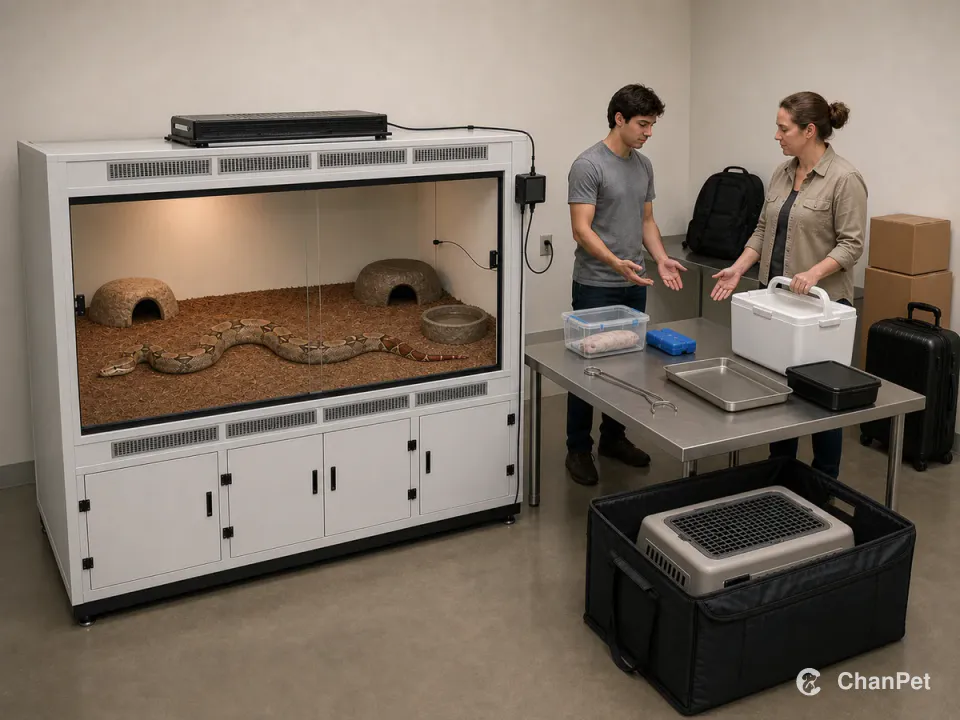
Adult housing, climate, frozen-prey hygiene and backup care must stay workable through classes, breaks and moves.[1][2][3]
Put continuity ahead of the calendar
Explore companions whose everyday care better suits your space, routine, and access to support.
A reliable plan is the relevant plan
Common questions
What must a boa backup carer understand?
Sources
Sources used in this article
- [1]Boa constrictorUniversity of Michigan, Animal Diversity Web
- [2]Boa ConstrictorBowling Green State University Herpetarium
- [3]Growth Rates of Juvenile Boa constrictor Under Two Feeding RegimesZoo Biology / PubMed