Map ownership across the whole term
Put class blocks, commutes, work shifts, gate checks, walks, grooming, and visitor coverage on one semester calendar. A Great Pyrenees needs adults who can take charge when the student’s timetable changes.[1]
Name a primary household caregiver and a second person who can handle the leash, doors, and appointments. Share the keys, feeding notes, exit routine, and veterinary contact details before a conflict appears.[1]
Build exam weeks and breaks into the plan
Plan spring break, summer housing, finals, and long lab days well before they arrive. A household caregiver needs to confirm availability for the dog’s normal movement, containment, and visitor routines.[1]
Create a written handover for each absence with meals, gate checks, walk timing, coat tools, and contact numbers. A detailed note gives a backup caregiver a usable starting point.[1][2]
Practice alone time before a long study day
Start alone-time practice in a familiar setup with short departures and calm returns. Increase the interval from steps where the dog remains comfortable.[3]
If pacing, vocalizing, or door work begins, shorten the next absence and review the setup. Study sessions and long campus days need a plan that reflects what the dog can actually manage.[3]
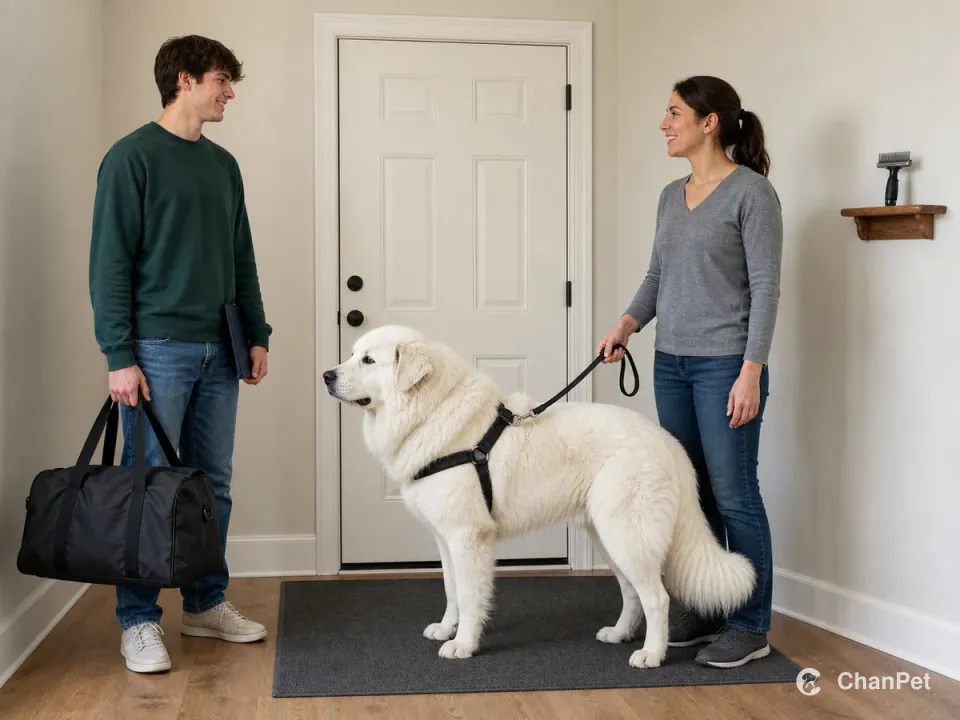
Before exams or travel, a familiar backup caregiver already owns the secure exit, walk, and coat-care routine for the large dog.[1][3][2]
The workable student plan has adult support already in place
Plan the break before the first assignment
Write down who owns care during exams, travel, housing changes, and ordinary late days. If those people can commit, the term has a stronger foundation.[1][3]
Common questions
Can a student be the only caregiver for a Great Pyrenees?
A student schedule changes with exams, travel, and housing. A large guardian dog needs reliable household support for gates, walks, care routines, and unexpected conflicts.[1]
How should a student begin Great Pyrenees alone-time practice?
Use short departures in a familiar setup, return calmly, and build from comfortable intervals. Adjust the plan earlier when the dog shows signs of stress.[3]
Sources
Sources used in this article
- [1]Great Pyrenees Dog Breed InformationAmerican Kennel Club
- [3]How to Train Your Dog to Stay Home AloneRSPCA
- [2]Position Statement on Humane Dog TrainingAmerican Veterinary Society of Animal Behavior