Plan from the busiest day
Put the earliest class, late shift, exam, travel day, and group deadline on one calendar. Add meals, litter, combing, a play break, and a check of the cat's climbing space. The gaps show where a Norwegian Forest Cat would need another person or a different plan.[1][2]
Set up the home before the calendar gets crowded. Stable height, food, water, litter, a hiding place, scratching, and a rest area give the cat familiar choices during a long study day. The room can carry part of the routine when your attention has to go elsewhere.[2][1]
Make roommates part of the plan
Write a short card for the shared home. Name the cat's food, comb, litter supplies, carrier, favorite safe spots, and the person to contact if you are delayed. Ask the backup person to meet the cat and try the routine while you are still home.[1][2]
Make handwashing after cat, litter, or supply handling part of the house routine, as CDC recommends. Keep the litter cleanup area away from food preparation. A visible habit works better than a rule that only lives in the cat owner's phone.[3]
Give breaks a real name
A semester break needs one responsible person, not a vague group promise. Choose someone who can enter the home, recognizes the cat's ordinary habits, and knows where the carrier and contact details are kept. Let that person see the food, litter, and combing routine before you leave.[2][3][1]
A move deserves a quiet base area first. Use familiar food, water, litter, bedding, and a hiding place before opening every room. The Norwegian Forest Cat can explore more confidently after those key resources make sense in the new space.[2][1]
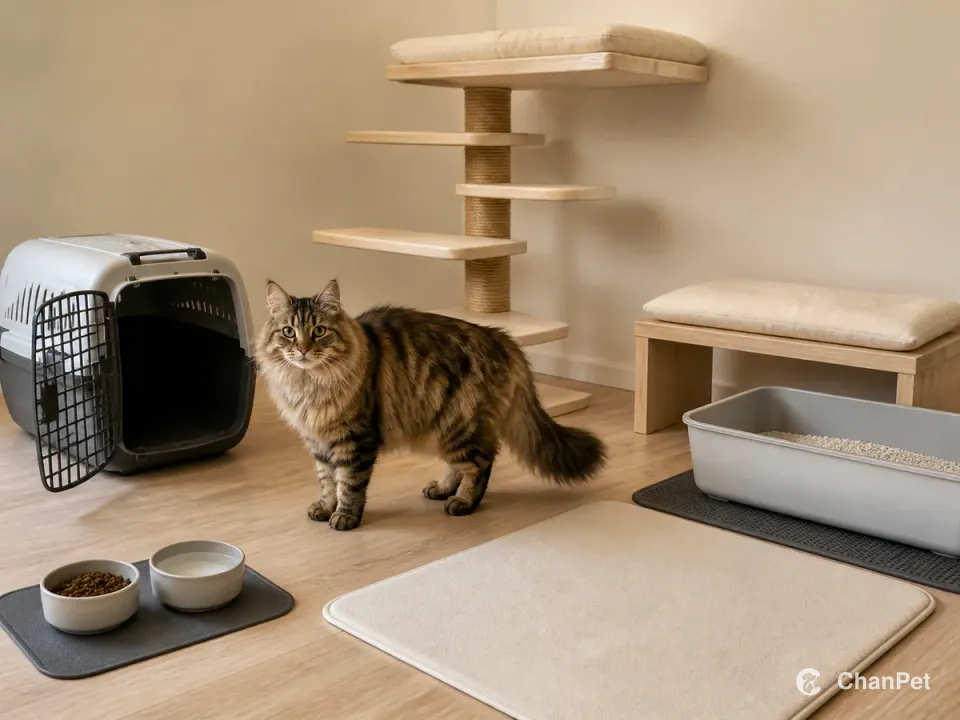
Fixed food, litter, high resting space and a grooming mat, plus an open carrier, give break handovers and moves a clear starting point.[1][2][3]
A student fit when the long-haired routine survives the hard week
Put the cat beside every term-break plan
Use Start Smart Match to compare your timetable, shared home, travel plans, and backup care with life alongside a Norwegian Forest Cat.
Common questions
Can a Norwegian Forest Cat live with student roommates?
Sources
Sources used in this article
- [1]Norwegian Forest CatThe Cat Fanciers' Association
- [2]Your Cat's Environmental Needs: Practical Tips for Cat CaregiversFeline Veterinary Medical Association and International Cat Care
- [3]CatsCenters for Disease Control and Prevention