Put the hardest week on paper
Use a real week, not the relaxed one at the start of term. Pick a day with an early class, a late lab, work, a group deadline and an evening away from home. Where do the feeder insects, water routine, lights, cleaning and observation sit on that actual day?[1][2]
A panther chameleon spends its day in a vertical habitat, moving through branches and cover. Its routine does not pause because an assignment expands into the evening. If the care plan only works on a blank calendar, it is not ready yet.[3][1]
Treat a move as a care event
Student rooms change fast. A new lease can mean a smaller room, a different heating system, a shared kitchen or a long trip home. The enclosure needs a safe destination, power, room above it and time to settle before the chameleon relies on it again.[1][2]
Do not make the animal the last box you pack. Map the move in advance, including where the habitat will stand, how equipment will travel and who can care for the chameleon if the schedule slips. A rushed move is hard on both the animal and the care system.[1]
Choose a caregiver before a crisis
A backup plan needs a name. One person should know the enclosure routine, feeder schedule, cleaning tools, veterinary contact and the signs you want reported. A person who happens to be in the apartment is not ready to care for a specialized reptile.[2][1]
If you cannot name that person before you acquire the chameleon, wait. A companion that can live more comfortably with your current housing, travel and support network will make student life less precarious for everyone.[2][3]
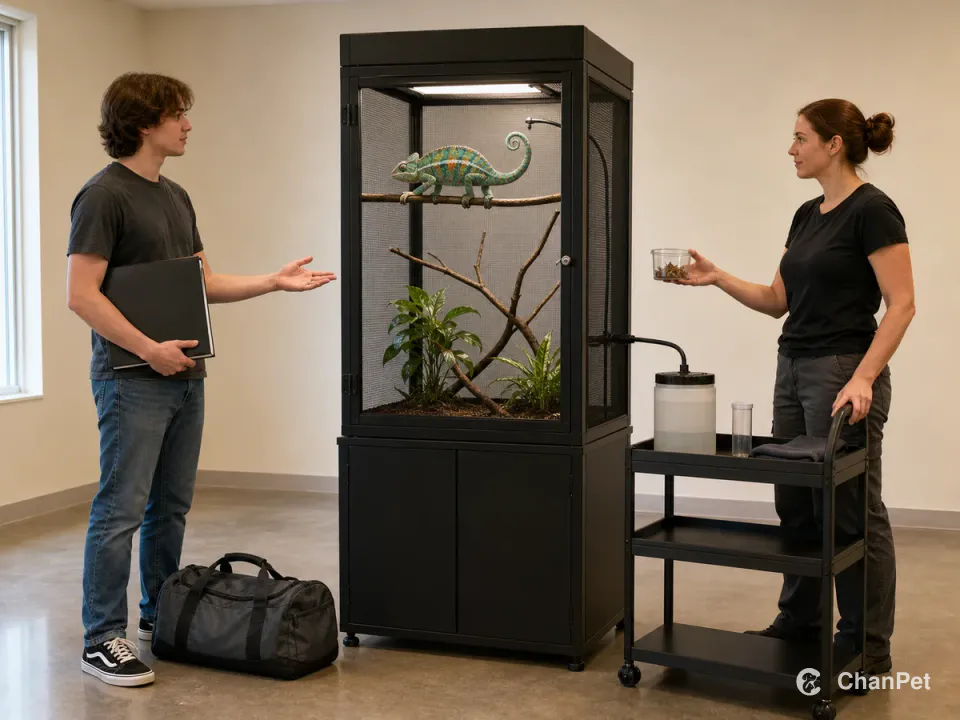
Before a break or move, the permanent enclosure stays settled while a trained backup takes over feeders, water, and daily observation.[3][1][2]
A changing life needs a robust plan
Compare animals whose care needs better suit your housing, breaks and changing timetable.
A good plan survives the term change
Common questions
Can I take a panther chameleon home for every school break?
Sources
Sources used in this article
- [3]Furcifer pardalisAnimal Diversity Web, University of Michigan
- [1]Providing a Home for a ReptileMerck Veterinary Manual
- [2]Selecting a ReptileMerck Veterinary Manual